
Last updated November 22, 2026
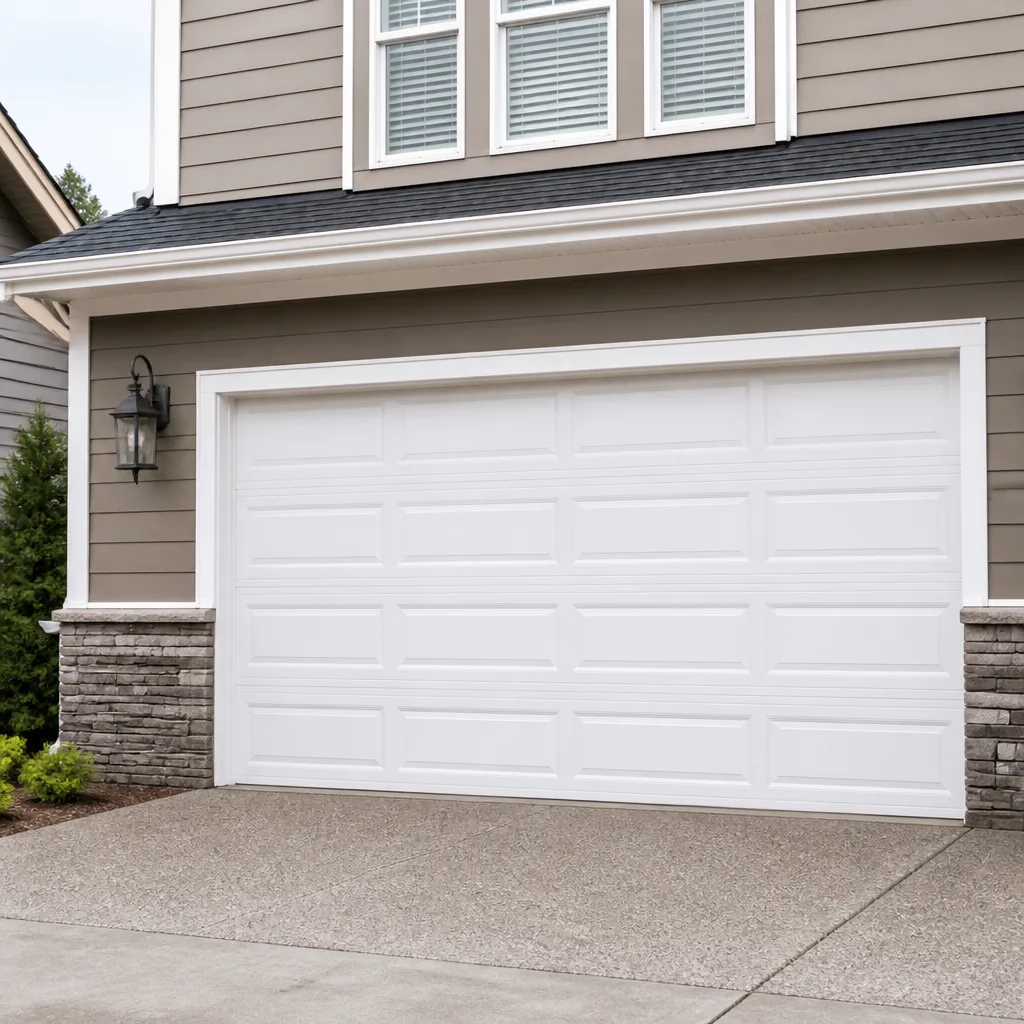 Raised-panel steel
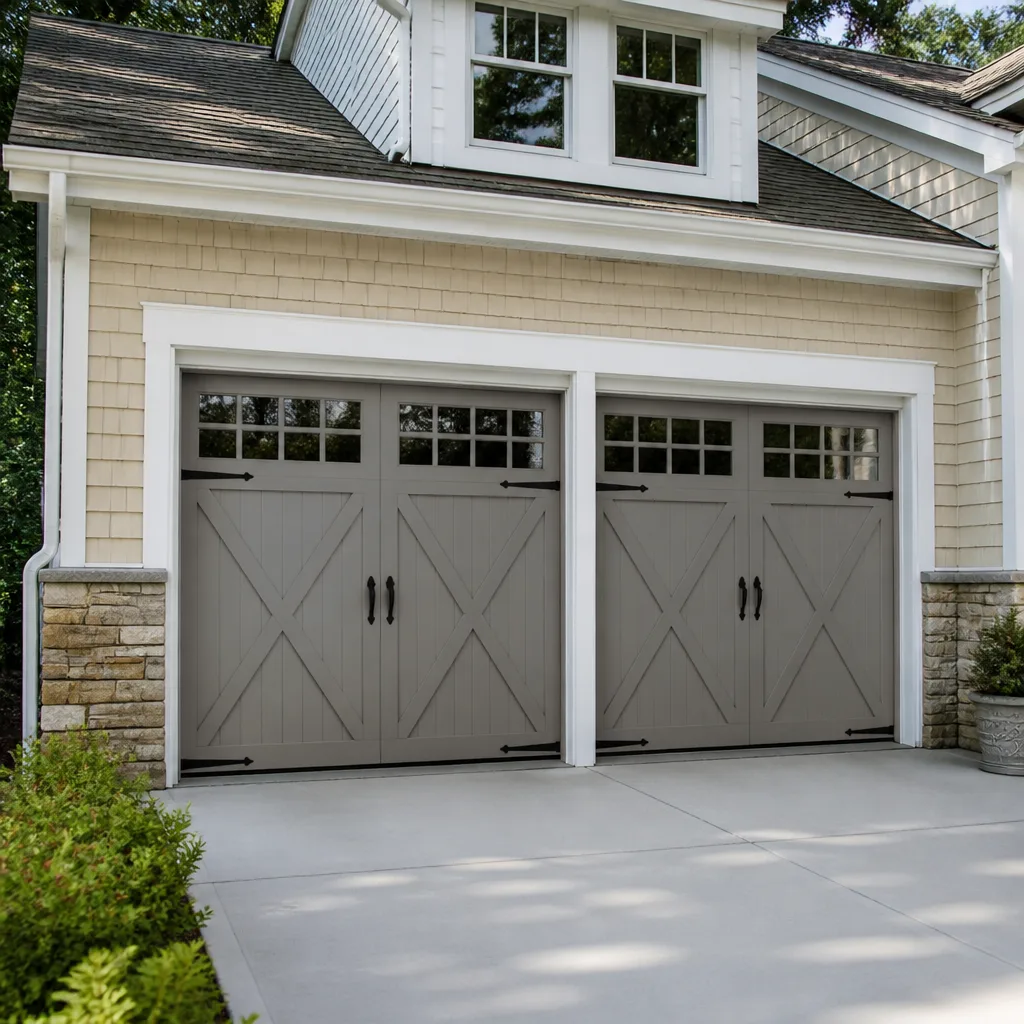 Carriage house
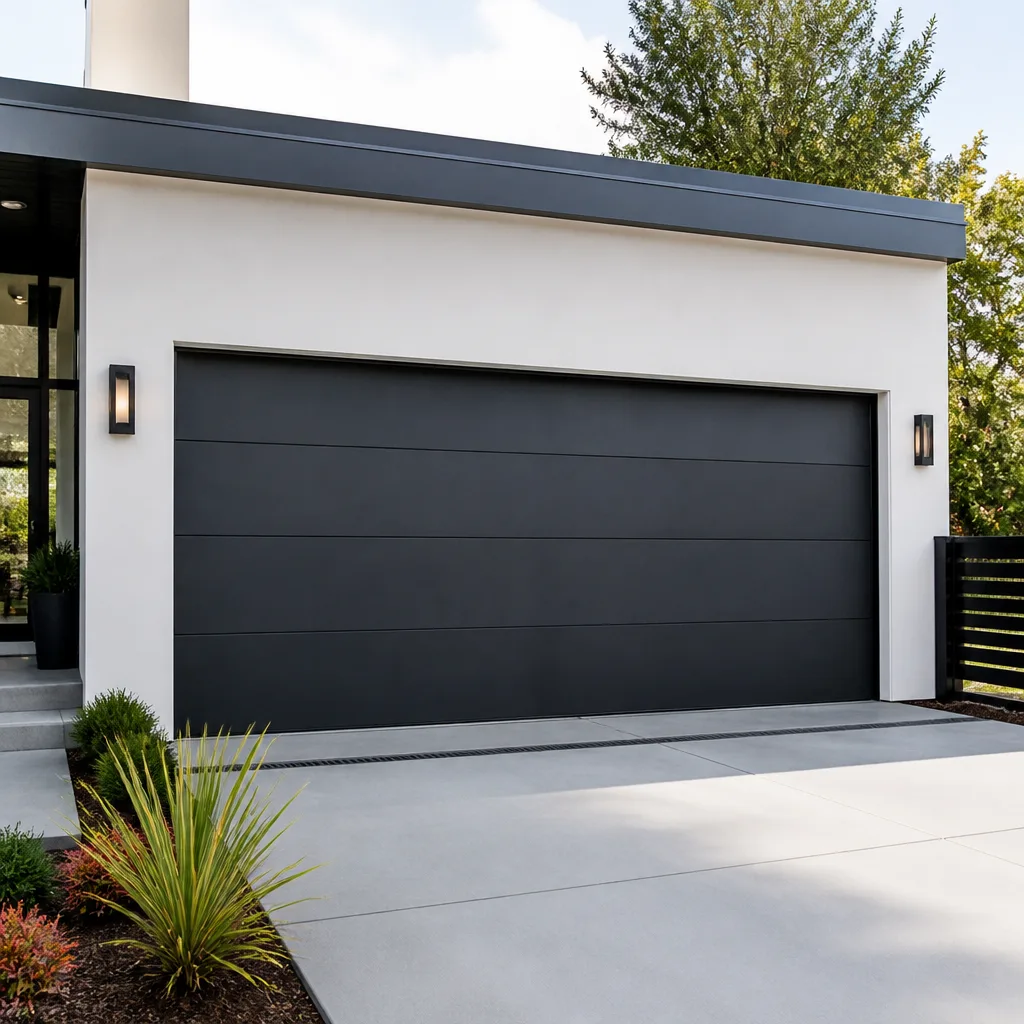 Modern flush
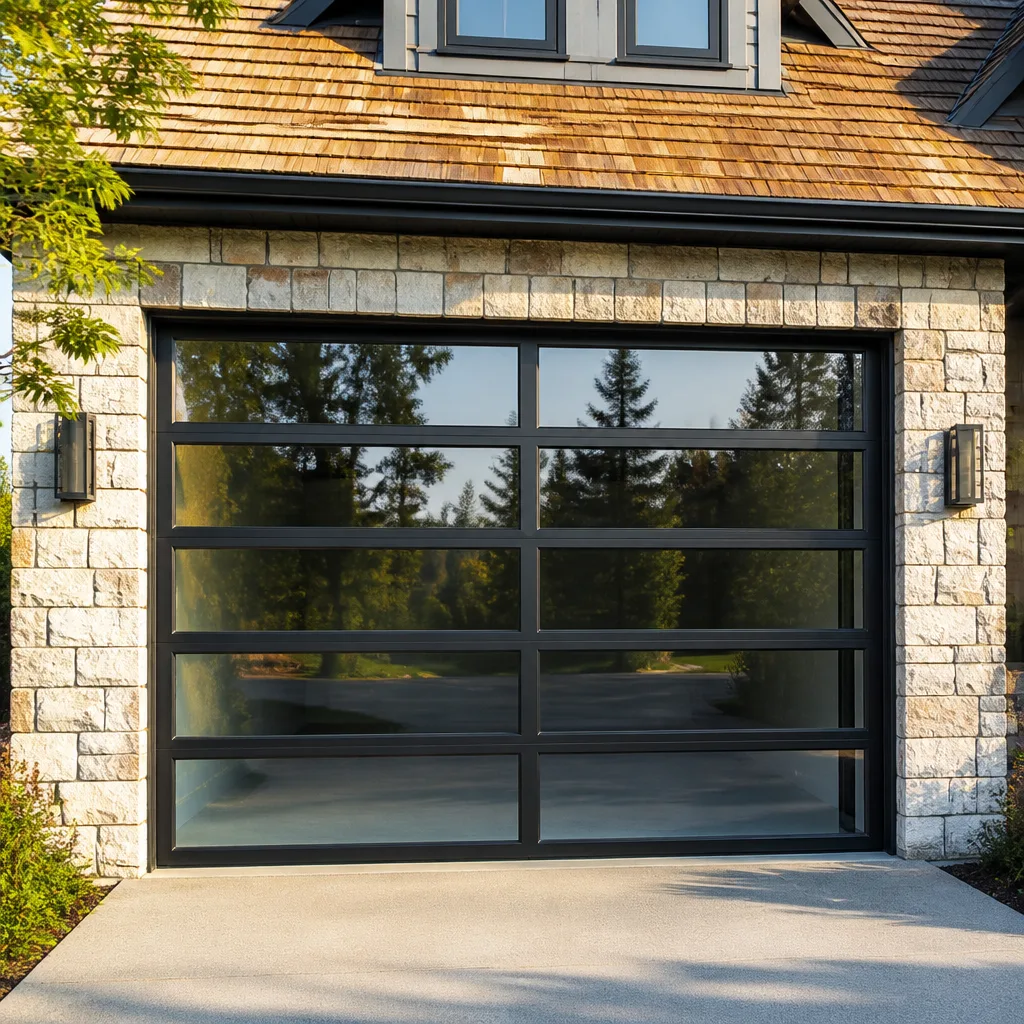 Full-view glass
 LiftMaster openers
 Chamberlain openers
Full 25-point door and opener safety check with every visit - springs, cables, rollers, tracks, and your LiftMaster or Chamberlain opener included
You get a price before we start. It does not change when the pro arrives.
Get your free estimateGarage Door Repair Troubleshooting in Portsmouth: Common Problems and How to Fix Them
If your garage door won’t move and you’ve already replaced the batteries in the remote, you’ve spent time on the wrong end of the problem. The opener is the last thing a technician checks, not the first. Nine times out of ten, the door that groans, jams, or refuses to budge has a mechanical failure – a spring that’s lost tension, a cable that’s frayed, or a track that’s been knocked out of line – and no amount of button-pressing will change that. In this guide, we walk through garage door problems in Portsmouth the way a technician actually diagnoses them: symptom first, component second, opener last. You’ll learn which failures are safe to handle yourself, which ones mean stop immediately, and how to read what your door is telling you before a small problem becomes an emergency.
Quick Answer
Most garage door problems in Portsmouth trace back to mechanical components – springs, cables, and tracks – not the opener. A door that won’t open, opens slowly, or sits crooked usually has a spring or cable failure, while a door that reverses before closing often has a track or sensor issue. Only after ruling out the mechanics should you suspect the opener itself. Springs and cables under tension are dangerous and should always be handled by a trained technician.
Styles & brands we work with
- Raised-panel steel
- Carriage house
- Modern flush
- Full-view glass
- LiftMaster openers
- Chamberlain openers
Table of Contents
- Start With the Symptom, Not the Opener
- The Loud Bang: Broken Torsion Spring
- One Side Lower Than the Other: Cable and Track Failure
- The Door Moves Slowly or Struggles
- The Door Reverses Before Closing
- Reading Opener Blink Codes in Plain Language
- Safe to DIY vs. Stop Immediately
- How Portsmouth Humidity Affects Cables and Tracks
Start With the Symptom, Not the Opener
When a garage door fails, the instinct is to blame the opener. It’s the part with the buttons, the lights, and the manual, so it feels like the obvious suspect. In our experience, that instinct sends homeowners down the wrong path almost every time. A technician diagnosing a door in Portsmouth starts with what the door is physically doing, then works backward toward the cause. The opener is a motor that pulls; if the door won’t move freely by hand, the motor was never the problem.
Here’s the order a technician actually investigates:
- Disconnect the opener. Pull the manual release so the door is free of the motor. If the door still won’t move smoothly by hand, the problem is mechanical.
- Check the springs. Look at the torsion spring above the door or the extension springs along the sides. A clear gap in a torsion spring means it’s broken.
- Inspect the cables. Look for fraying, slack, or a cable that’s come off its drum. Any cable under tension is a stop-immediately situation.
- Examine the tracks. Check for bends, gaps at the joints, or debris that’s blocking the rollers.
- Test the balance. Lift the door halfway by hand and let go. A properly balanced door stays put; one that slams down or drifts up has a spring or tension problem.
- Only then check the opener. If the door moves freely by hand but the motor won’t run it, the opener or its safety sensors are the culprit.
That sequence saves time and money. It also keeps you safe, because it flags the dangerous components first. When we handle garage door repair in Portsmouth, this is the same order we follow on every call, whether the door is completely dead or just acting up.
The Loud Bang: Broken Torsion Spring
A sharp bang from the garage, followed by a door that won’t lift, almost always means a broken torsion spring. The torsion spring is the coiled steel above the door that counterbalances its weight. When it snaps, it releases stored energy in an instant, which is why it sounds like a gunshot. The door may still be attached to the opener, but the motor is now trying to lift a door that weighs well over a hundred pounds with no help. It won’t succeed.
Torsion springs don’t fail gently. They fatigue over thousands of open-and-close cycles, and the final break is sudden. Once a spring is broken, the door is unsafe to operate, and forcing the opener to try can damage the motor, the cables, or the door panels themselves. This is the single most common reason a Portsmouth door goes from working to completely stuck.
Springs are also the most dangerous part of any garage door. A torsion spring is under extreme tension even when the door is down, and the winding process requires specialized tools and real technique. There is no safe way to replace one without proper training. This is the repair we tell every homeowner to leave alone, no exceptions. Our garage door spring repair service exists precisely because this component demands it. If you hear that bang, stop using the door and call a professional.
How to confirm it’s the spring
- A visible gap in the torsion spring coil above the door.
- The door feels extremely heavy when you try to lift it by hand after releasing the opener.
- The opener runs but the door doesn’t move, or moves only a few inches.
- A loud bang preceded the failure.
One Side Lower Than the Other: Cable and Track Failure
When a garage door sits crooked, with one side higher than the other, the cause is almost always a cable or track problem. The two cables on a torsion system wind around drums at each end of the shaft, and they lift the door evenly. If one cable frays, slips off its drum, or snaps, that side of the door loses its lift. The result is a door that hangs at an angle, binds in the tracks, and can’t close properly.
A snapped cable is a stop-immediately situation. Like a torsion spring, a cable is under heavy tension, and a broken cable can whip with enough force to cause serious injury. Don’t try to reattach it, don’t try to straighten the door, and don’t run the opener. A door hanging crooked puts uneven stress on the tracks and panels, and operating it can turn a cable repair into a full door replacement.
Track problems look similar but have a different cause. A track can get bent when something backs into it, when a car clips the edge, or when the mounting hardware works loose over time. A gap at a track joint will catch a roller and stop the door or send it crooked. In Portsmouth, where garages often sit close to driveways and alleys, a bumped track is a routine diagnosis. A technician can often realign or replace a bent section without touching the rest of the door.
Signs of a cable or track failure
- The door hangs visibly crooked when closed or partway up.
- A cable is frayed, slack, or hanging loose.
- The door binds, scrapes, or stops partway through its travel.
- You can see a bend or gap in one of the vertical or horizontal tracks.
The Door Moves Slowly or Struggles
A door that opens and closes but moves sluggishly is telling you something is dragging. The most common causes are worn rollers, dry or dirty tracks, and a spring that’s lost some of its tension. Slow movement rarely means the opener is failing; it usually means the door is working harder than it should, and the motor is laboring to compensate.
Start by checking the tracks for debris. Sawdust, leaves, and grit collect in the track channels, and rollers grind against them instead of rolling. A dry track does the same thing. Rollers themselves wear out over time; nylon rollers can flat-spot, and steel rollers can seize. A door with worn rollers is loud, slow, and hard on the opener. Replacing them is a straightforward repair that restores smooth travel.
The spring is the other suspect. As a torsion spring ages, it loses tension gradually rather than breaking outright. The door gets heavier to lift, the opener strains, and the door may stop partway up before the motor gives up. A technician can check the spring’s tension and the door’s balance in a few minutes. If the door won’t stay put when you lift it halfway by hand, the springs need attention. On a Clopay or Amarr door, the balance check is the same. The door should feel light and stay wherever you leave it.
One more thing worth knowing: a slow door is often an early warning, not a final failure. Getting it looked at before the spring gives out or the opener burns up saves you a bigger repair down the line. If the door is moving but clearly struggling, that’s the moment to call.
The Door Reverses Before Closing
A door that goes down a foot or two and then reverses is a classic complaint, and the instinct is to blame the safety sensors. Sometimes that’s right. But often the real cause is a track problem, a misaligned photo-eye, or an obstruction the sensors are correctly detecting. This is a textbook case of a symptom that looks like one thing and is caused by another.
Safety sensors sit a few inches off the floor on each side of the door, and they shoot an invisible beam across the opening. If anything breaks that beam – a trash can, a bicycle, a sagging track that drops a roller into the beam’s path – the door reverses. Dirty lenses do the same thing. Before you assume the sensors are broken, clean the lenses and check that the two units are pointed squarely at each other and their indicator lights are steady rather than flickering.
If the sensors are clean and aligned but the door still reverses, look at the tracks. A bent track near the bottom can catch a roller, and the door’s safety system reads the resistance as an obstruction and reverses. A loose track joint does the same. This is why the “it’s the sensors” diagnosis fails so often: the sensors are doing their job, and the real problem is the door binding in the track. In Portsmouth, where temperature swings and humidity work on the mounting hardware, tracks loosen over the years and need realignment.
Step-by-step check for a reversing door
- Clear the door’s path of obvious obstructions.
- Wipe the sensor lenses clean on both sides.
- Check that both sensor indicator lights are steady, not flickering.
- Confirm the sensors point directly at each other and haven’t been bumped out of line.
- Run the door by hand with the opener released. If it binds, the issue is mechanical, not the sensors.
- Inspect the tracks for bends or gaps near the bottom of the door’s travel.
If the door still reverses after those steps, the opener’s travel limits or force settings may need adjustment, and that’s a job for a technician who knows your brand. We work on garage door opener repair for exactly this kind of stubborn, hard-to-pin-down symptom.
Reading Opener Blink Codes in Plain Language
Modern openers don’t fail silently. Most of them flash a light or click a specific number of times to tell you what’s wrong, but the codes in the manual read like stereo instructions. Here’s the plain-language version for the brands we see most often in Portsmouth garages.
Chamberlain and LiftMaster
These two share the same diagnostic language. A door that won’t close and flashes several times usually points to the safety sensors. If the opener light blinks and the door reverses immediately, the sensors are blocked, misaligned, or wired wrong. A different blink count can indicate a problem with the travel limits or the door’s force setting. The exact count matters, so note how many times the light blinks and tell the technician. Both brands use a wall control that also displays diagnostic codes, which makes diagnosis quicker.
Genie
Genie openers typically use a combination of light flashes and a diagnostic LED on the motor head. A steady flash pattern often means a sensor issue, while a repeated short pattern can point to a limit or force problem. Some Genie models also beep when the sensors lose their connection. If you hear a beep and the door won’t close, start with the sensors.
Craftsman
Craftsman openers, which are common on older Portsmouth homes, use the same sensor and limit logic. A door that reverses and a light that blinks usually means a sensor problem. Craftsman units don’t always display a clean code, so technicians often test the sensors directly.
What all these codes have in common: they point you toward the opener’s safety and limit systems, not usually the opener’s motor. That reinforces the main point of this guide. If the door is mechanically sound and balanced, the opener’s codes are meaningful. If the door is binding or the spring is broken, a blink code is a distraction. In our experience, the fastest path to a fix is confirming the mechanical side first, then reading the code.
Safe to DIY vs. Stop Immediately
Some garage door problems are genuinely safe to handle yourself, and some will hurt you. The line between the two is clear once you know where it is. Knowing which is which is the difference between a five-minute fix and a trip to the emergency room.
Safe to handle yourself
- Sensor alignment. Nudging a sensor back into line so its light goes steady is a safe, simple fix.
- Cleaning sensor lenses. A soft cloth and a little care solve a lot of reversing doors.
- Manual release. Pulling the release cord to disconnect the opener is safe and useful for testing the door by hand.
- Clearing debris from the tracks. Sweeping out leaves, grit, and sawdust from the track channels is safe as long as the door is fully open or closed.
- Lubricating tracks and rollers. A proper garage door lubricant on the moving parts is safe and extends their life.
- Replacing remote batteries. The obvious one, but worth saying.
Stop immediately and call a professional
- A broken torsion spring. Under extreme tension and dangerous to touch. Never attempt to wind or replace one yourself.
- A snapped or slack cable. Under heavy tension and can whip. Don’t touch, don’t run the opener.
- A door hanging crooked or off its tracks. Operating it can cause the door to fall or the tracks to fail.
- A door that falls when you release it. This means the spring system has failed, and the door is being held up by the opener alone.
- An opener that runs but the door doesn’t move. The motor is straining against a mechanical failure. Stop and call.
If you’re ever unsure, err on the side of calling. A quick conversation can tell you whether it’s a DIY fix or a job for a technician, and it beats guessing with a door that weighs a few hundred pounds.
How Portsmouth Humidity Affects Cables and Tracks
Portsmouth’s humid summers speed up wear on the metal parts of a garage door in ways that drier climates don’t. The seasonal humidity works on cables, track hardware, and springs, and it does so quietly. The result is that a door in Portsmouth can go from healthy-looking to failing faster than the same door would in a drier part of the state. Knowing what to watch for lets you catch a problem before it becomes an emergency.
Cables are the first thing humidity touches. A steel cable is made of many small strands wound together, and moisture finds its way between them. Over time, the strands corrode from the inside out, and the cable loses strength before it ever shows a visible break. What you’ll notice first is fraying near the drum or the bottom bracket, or a cable that starts to feel stiff. If you see even a few broken strands, that cable is on its way out. Don’t wait for it to snap.
Tracks and their mounting hardware are the second casualty. The bolts and brackets that hold the tracks to the door frame are steel, and repeated humidity cycles rust them. A rusty bolt can loosen, and a loose track throws the whole door out of alignment. Check the tracks along their length for bent sections and gaps at the joints, and look at the mounting brackets for rust. A gentle tug on the track tells you if it’s still solid. Our technicians have up to 12 years of experience watching for these early signs, and small fixes at this stage are far cheaper than a full failure.
Springs themselves are affected too. Humidity doesn’t snap a spring, but it can corrode the coils and the anchor points, which weakens the assembly over time. The best defense is a twice-a-year look at the springs, cables, and tracks, plus keeping the tracks clean and the moving parts lubricated. If you notice rust, fraying, or anything that feels off, get it checked. Catching a cable that’s starting to fail is how you avoid the emergency repair you didn’t plan for.
Common Mistakes to Avoid
- Blaming the opener first. It’s the last thing a technician checks. Test the door by hand with the opener released before you assume the motor is bad.
- Forcing a door that’s hanging crooked. Running the opener on a crooked door puts stress on tracks and panels and can turn a cable repair into a full replacement.
- Touching a torsion spring or cable. These parts are under extreme tension. There is no safe DIY repair, and the injury risk is real.
- Ignoring a slow door. Sluggish movement usually means the door is working harder than it should. That’s an early warning, not a quirk to live with.
- Assuming a reversing door needs new sensors. Clean and align the sensors first, then check the tracks. A binding track causes the same symptom.
- Letting rust go unchecked. In Portsmouth’s humidity, rusted cables and loose track bolts progress quietly. A twice-a-year look catches them early.
- Skipping the balance test. A door that won’t stay put when lifted halfway by hand has a spring problem, and the opener will pay the price if you keep running it.
See the difference
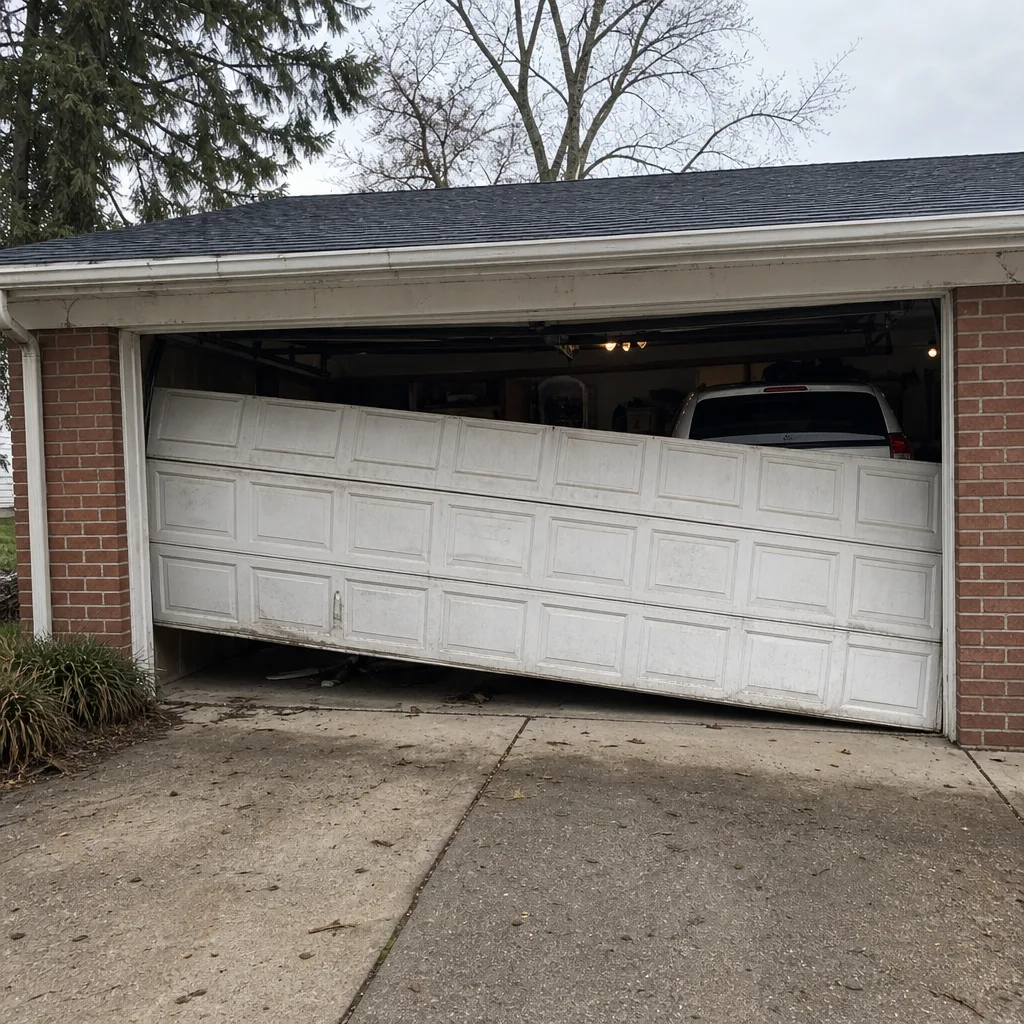 Before
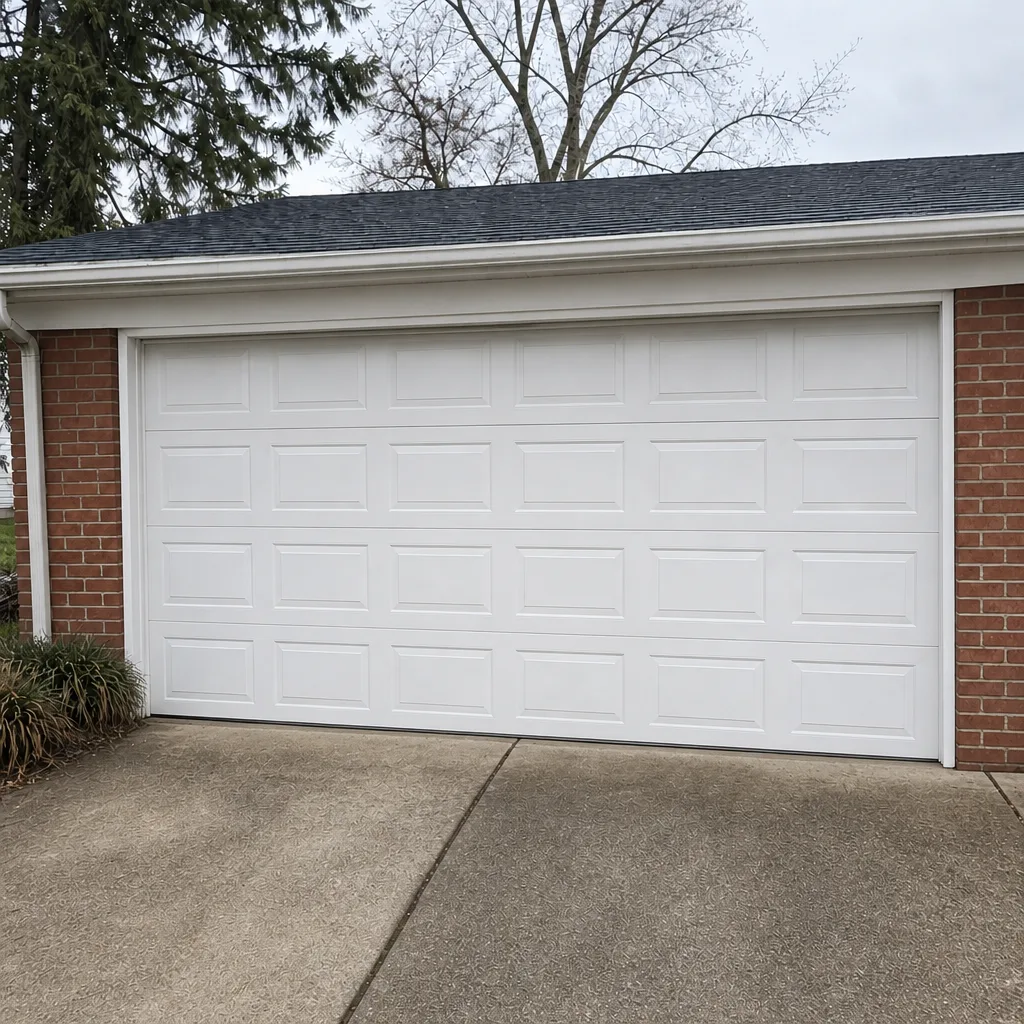 After
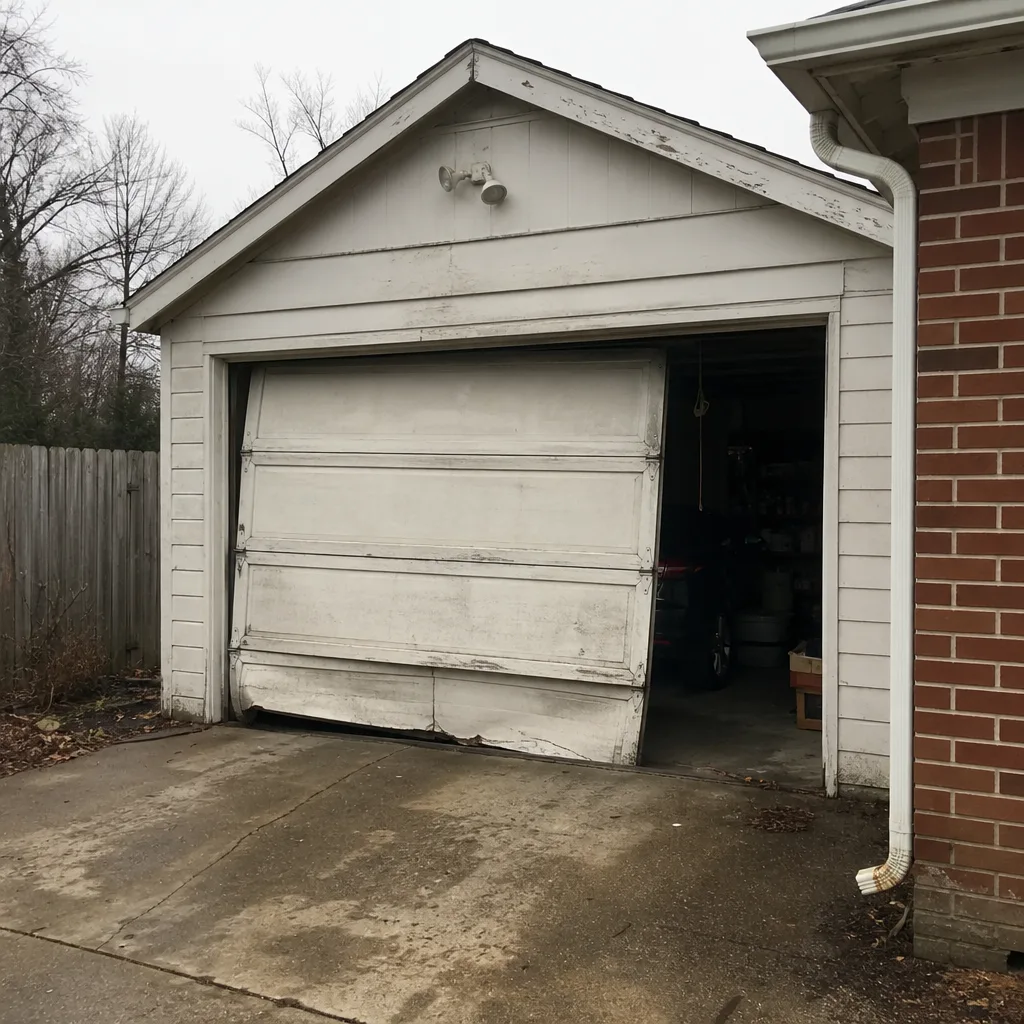 Before
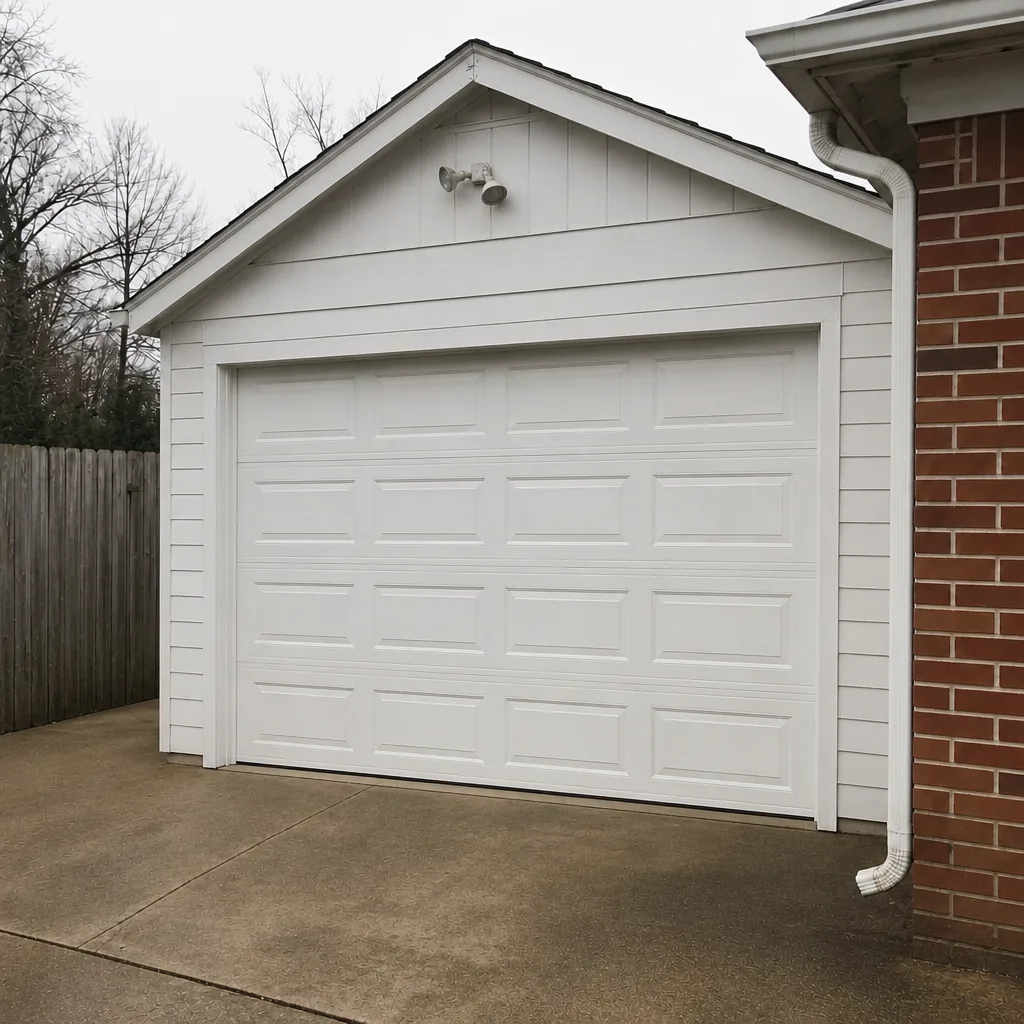 After
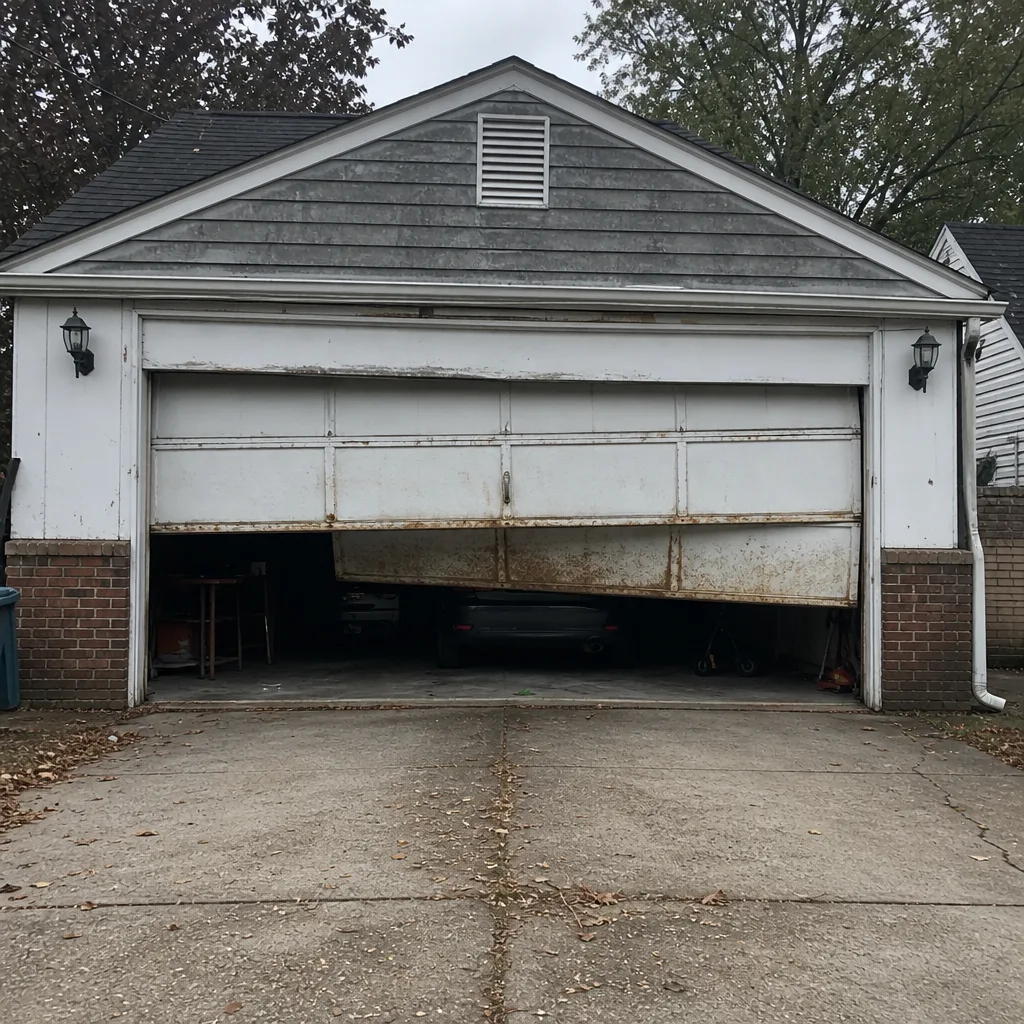 Before
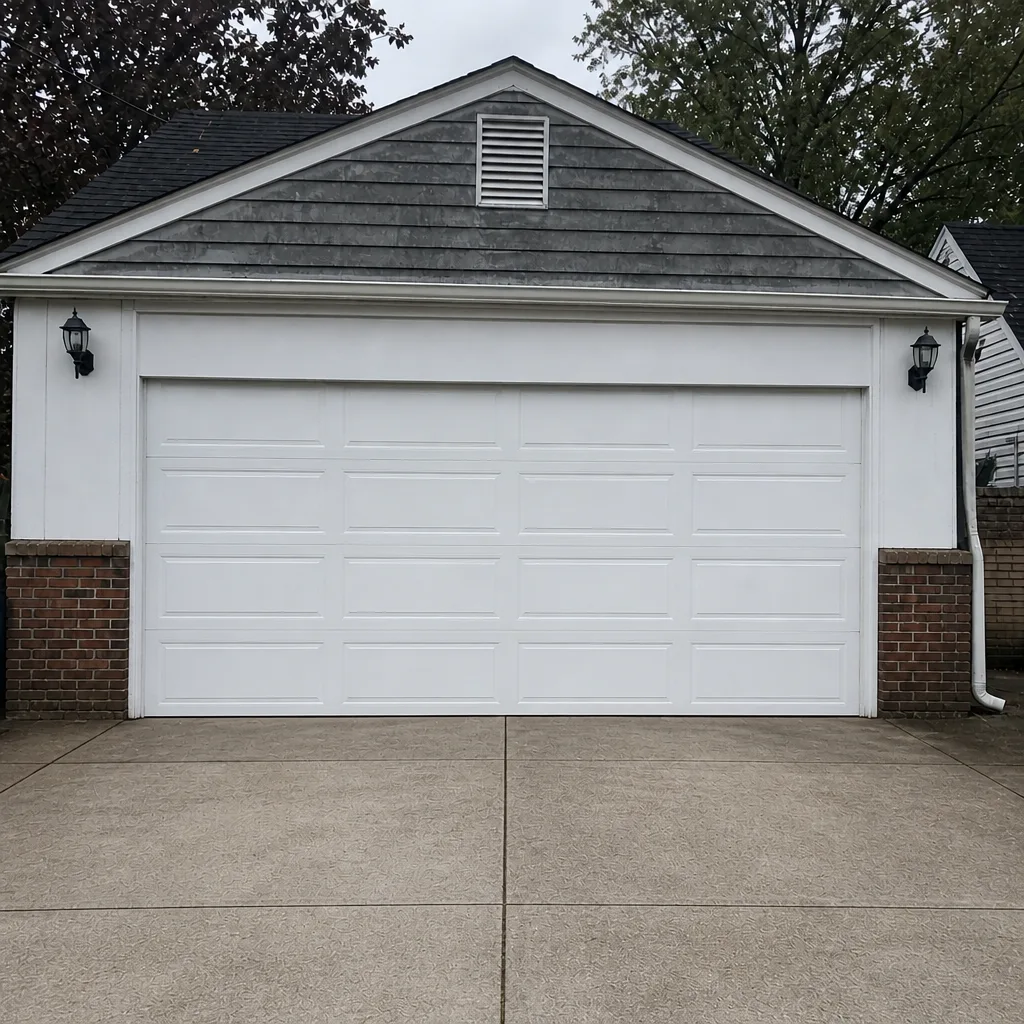 After
When to Call a Professional
Call a professional the moment you hear that bang, see a crooked door, spot a frayed or slack cable, or find the door too heavy to lift by hand. Those are the fail-dangerous situations, and they’re not worth a DIY attempt. Call sooner, too, if the door is slow, loud, or binding – those symptoms only get worse. For anything involving the opener’s logic, error codes, or force settings, a technician with brand-specific knowledge saves you the guesswork. Our Portsmouth Garage Door Repair Co team works on Chamberlain, Genie, Clopay, Amarr, LiftMaster, Wayne Dalton, Craftsman, and Raynor equipment, so we can diagnose what’s actually installed in your garage rather than guess. We offer free estimates in Portsmouth, and we quote the price and agree it with you before any work starts. Call (888) 839-5070. We answer 24/7. Fast dispatch from 7am to 7pm, Sunday through Friday.
Frequently Asked Questions
Most garage door repairs in Portsmouth run from around $150 to $600 depending on the cause, with spring and cable repairs typically at the higher end and sensor or roller fixes at the lower end. A broken torsion spring is one of the most common repairs and usually costs $180 to $340 for a single spring. A matched pair replaced together costs about twice that. The written estimate sets the final price, and we quote it before any work starts. Call (888) 839-5070 for an exact quote – estimates are free.
Yes, for repair calls we offer same-day service and fast dispatch from 7am to 7pm, Sunday through Friday. If the door won’t move or won’t stay safe, call and we’ll get you on the schedule as quickly as we can. We answer 24/7, and a call outside dispatch hours is booked into the next opening, Sunday through Friday, 7am to 7pm. Call (888) 839-5070.
No. A torsion spring is under extreme tension, and the winding process requires specialized tools and training. Attempting it yourself risks serious injury. This is the one repair we tell every homeowner to leave to a trained technician. Call (888) 839-5070 and we’ll handle it safely.
A door that reverses before closing is usually reacting to a sensor obstruction or a track that’s binding. Clean and align the sensors first, then check the tracks for bends or gaps. If the sensors are clean and the track looks straight but the door still reverses, the opener’s travel limits may need adjustment. Call (888) 839-5070 if it persists – estimates are free.
No. We diagnose the door, give you a written estimate, and agree the price with you before any work starts. If we find something different once we’re in, we tell you before we proceed, and you decide. The written quote is what you pay. Call (888) 839-5070 to get started.
The local professionals we connect you with are licensed and insured as their state requires. We work on the brands you already own – Chamberlain, Genie, Clopay, Amarr, LiftMaster, Wayne Dalton, Craftsman, and Raynor – so you get a technician who knows your specific equipment. Call (888) 839-5070 to book a free estimate.
The Bottom Line
Most Portsmouth garage door problems are mechanical, not electronic. Start with the door itself: check the springs, cables, and tracks before you suspect the opener. That order keeps you safe and saves you money. The loud bang means a broken spring, a crooked door means a cable or track failure, and a reversing door usually means a sensor or track issue, not a bad opener. The dangerous parts – springs and cables – are never a DIY job. The safe ones – sensor alignment, cleaning, lubrication, the manual release – are. When in doubt, or when the door is heavy, crooked, or making that bang, call. We handle the full range of garage door repair and opener repair across every brand in a Portsmouth garage, and we quote the price before we start. Call (888) 839-5070. We answer 24/7. Fast dispatch from 7am to 7pm, Sunday through Friday.
If your door has stopped working and you need a fix, our team handles spring repair and full diagnostics for homeowners and small businesses across Portsmouth. We offer free estimates, and the price is quoted and agreed before any work begins. Call (888) 839-5070 to get started. We answer 24/7. Fast dispatch from 7am to 7pm, Sunday through Friday.
Written by the team at Portsmouth Garage Door Repair Co.