
Last updated November 22, 2026
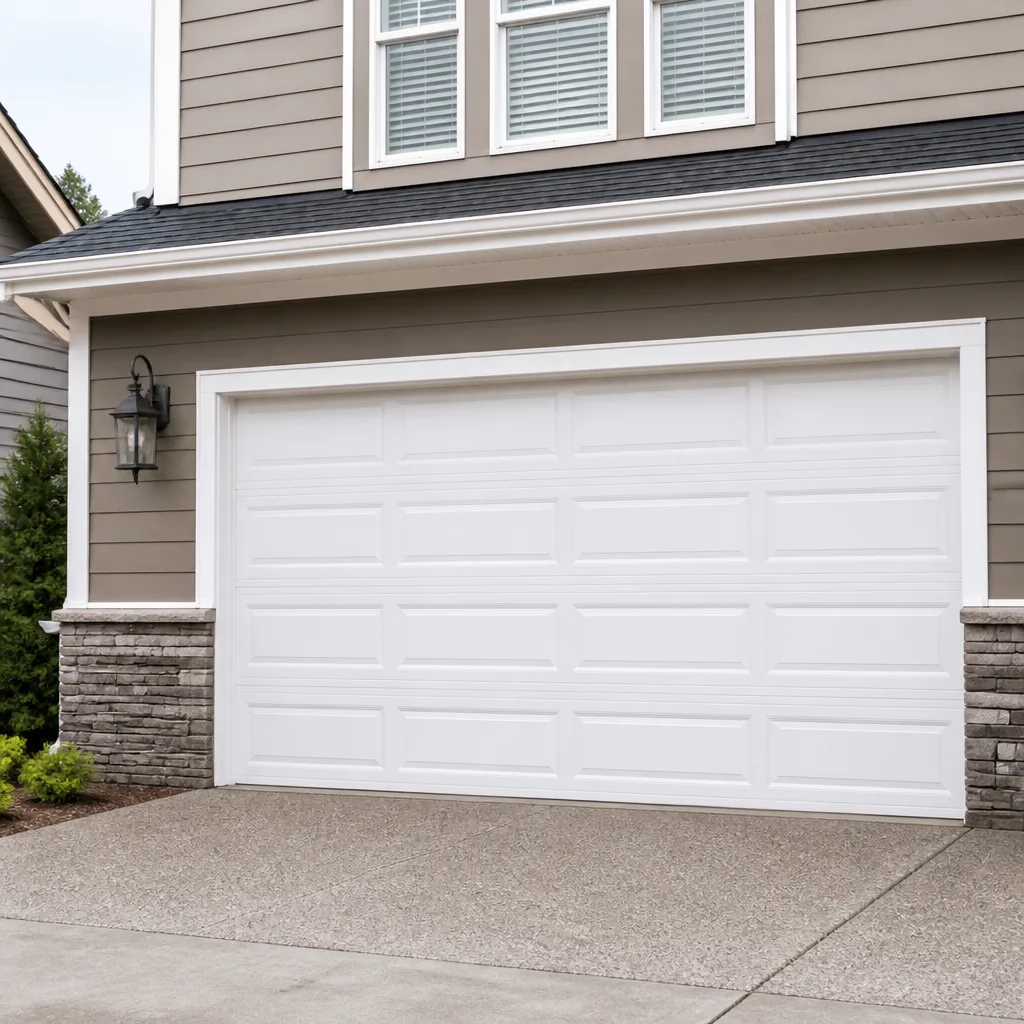 Raised-panel steel
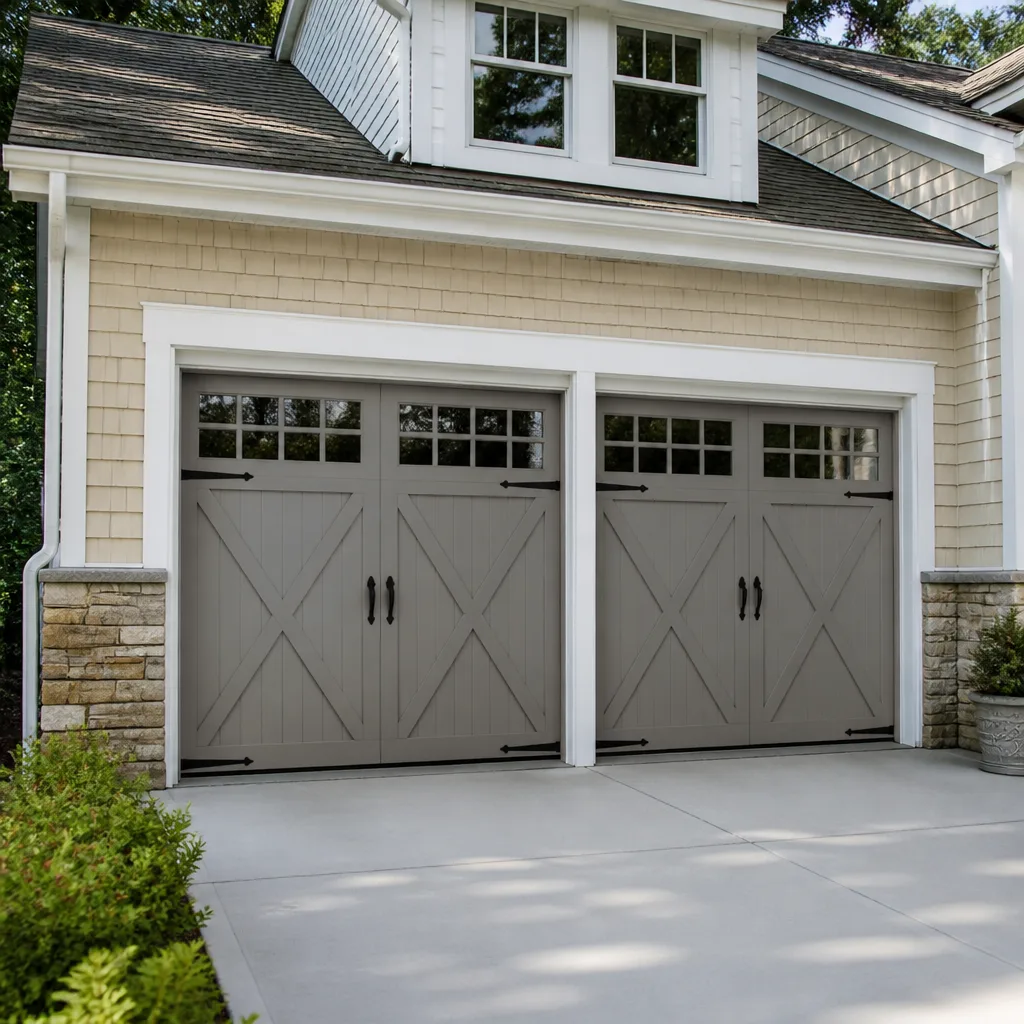 Carriage house
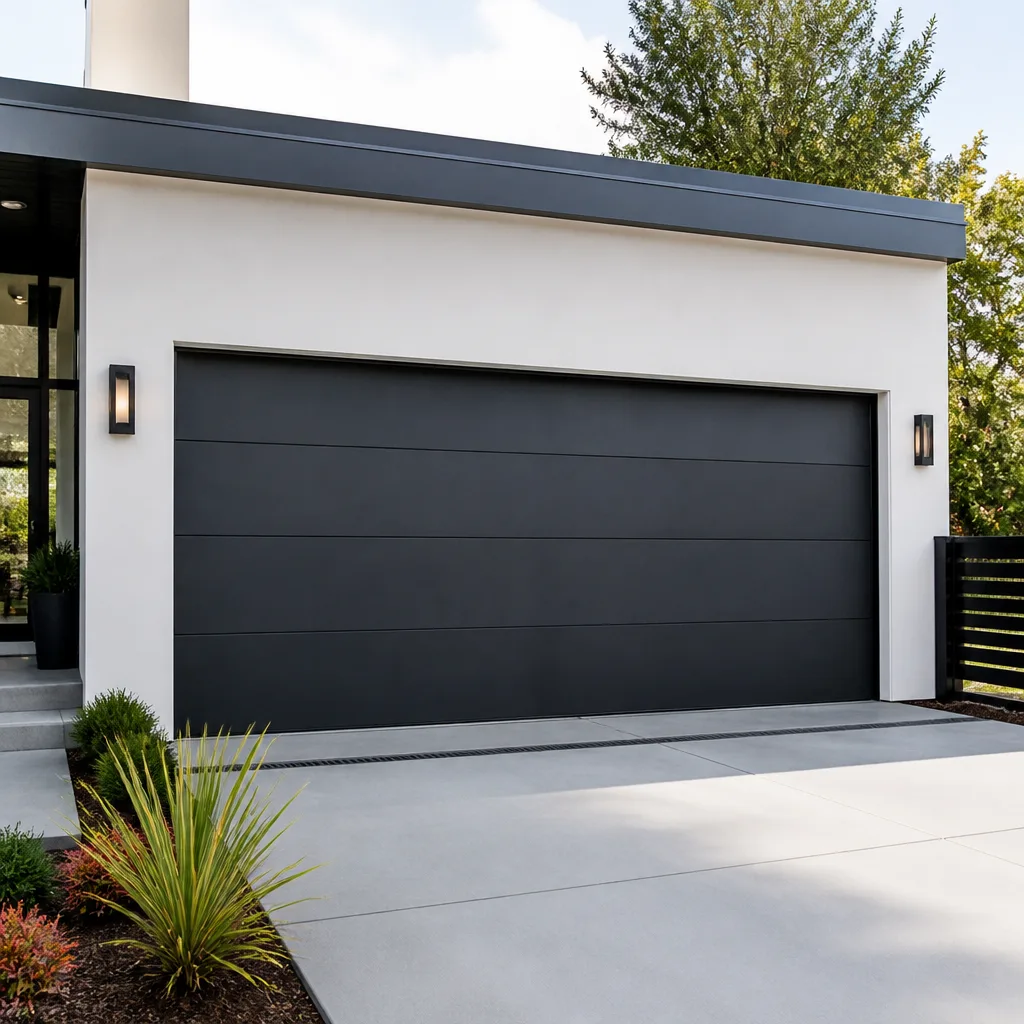 Modern flush
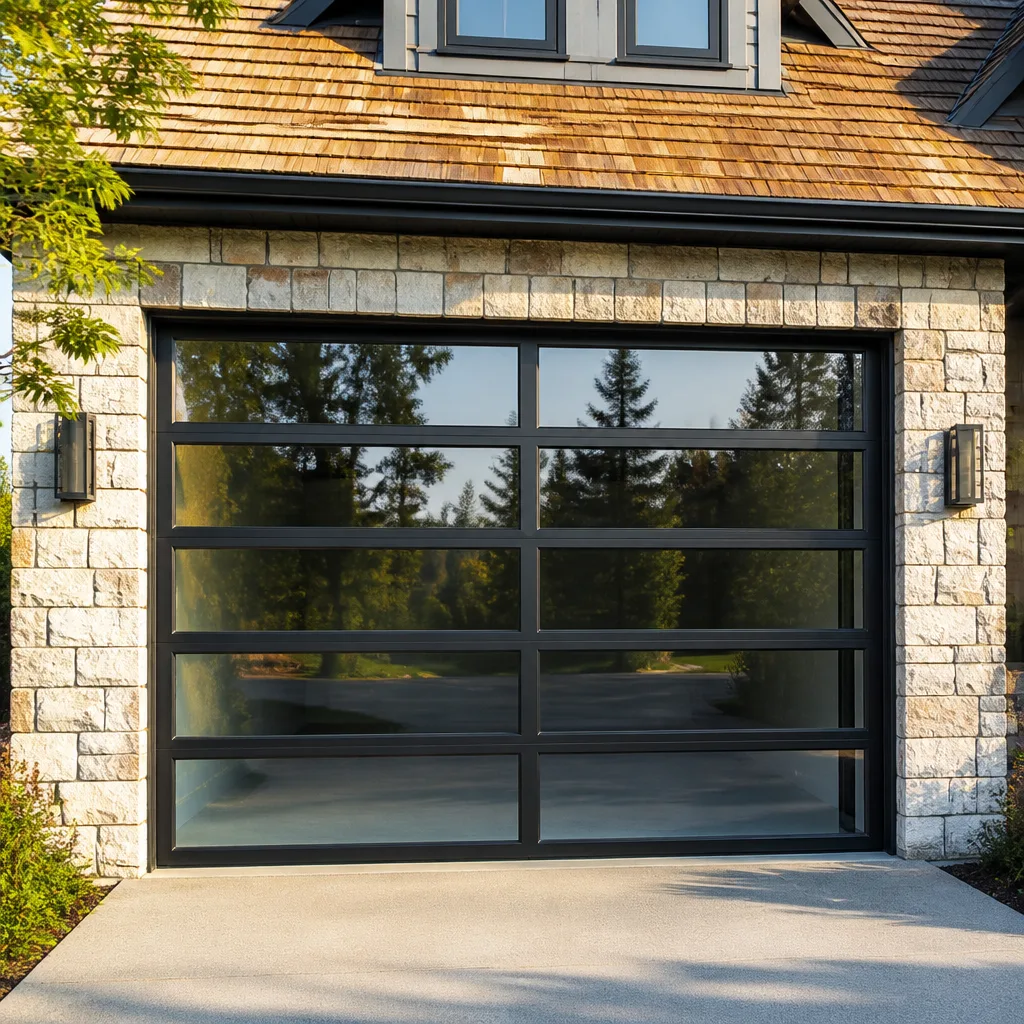 Full-view glass
 LiftMaster openers
 Chamberlain openers
Full 25-point door and opener safety check with every visit - springs, cables, rollers, tracks, and your LiftMaster or Chamberlain opener included
You get a price before we start. It does not change when the pro arrives.
Get your free estimateSeasonal Garage Door Care for Portsmouth: Year-Round Homeowner’s Guide
Most garage door maintenance advice you’ll find online was written for a place with four tidy, symmetrical seasons. Portsmouth doesn’t work that way. What we have here is a long, heavy summer where the dewpoint sits near 72°F for weeks and metal sweats, a short sharp winter that can snap a torsion spring on the coldest morning of the year, and two narrow shoulder seasons that are the only realistic windows for most of the work worth doing. That changes the whole calendar. This guide rebuilds seasonal care around Portsmouth’s actual weather year: what to check in May before hurricane season, how to fight humidity through July and August, what to do when a spring fails at 6 a.m. in January, and why October and November are the best months to lubricate and adjust anything metal on your door.
Quick Answer
Garage door care in Portsmouth should follow the local climate calendar, not four equal seasons. Run a pre-hurricane hardware and wind-load audit in May, manage seals and corrosion through the humid summer, respond fast to cold-snap spring failures in winter, and schedule lubrication and hardware adjustment in the October – November window when temperature and humidity are both in your favor. Springs and cables are dangerous, so leave those to a trained professional; the annual checkups, cleaning, and seasonal inspections are things you can and should handle yourself.
Styles & brands we work with
- Raised-panel steel
- Carriage house
- Modern flush
- Full-view glass
- LiftMaster openers
- Chamberlain openers
Table of Contents
- Why Portsmouth’s Climate Calendar Isn’t Four Equal Seasons
- Pre-Hurricane Season Door Audit: What to Check in May
- Summer Humidity: Why Seals Fail Faster Here
- Fall Post-Storm Inspection Sequence
- The Optimal Maintenance Window: October and November
- Winter Cold-Snap Response: When a Spring Snaps
- Spring: The Second Shoulder Season
- The Portsmouth Month-by-Month Care Calendar
Why Portsmouth’s Climate Calendar Isn’t Four Equal Seasons
Portsmouth’s summer humidity does real damage to garage door hardware, and it does it slowly enough that most homeowners don’t notice until something fails. The average July dewpoint here sits right around 72°F, which puts the city in what meteorologists call the “oppressive” humidity category. That matters for your door because humid air holds moisture against bare steel, and moisture against bare steel means oxidation. Spring steel in a Portsmouth garage oxidizes faster than the same steel would in a dry-climate city sitting at the exact same temperature.
So the year breaks down differently here than the calendar suggests:
- May through early June: the pre-hurricane window, when you want to inspect hardware and wind-load readiness before Atlantic storm season kicks off.
- Late June through September: peak heat and humidity. This is when seals swell, dry out, crack, and let water in, and when torsion springs quietly rust.
- October through November: the golden window. Moderate temperatures and lower humidity make this the ideal stretch for lubrication and hardware adjustment, because lubricants set properly and metal isn’t fighting moisture.
- December through February: the cold-snap season. This is when springs are most likely to snap, especially on the coldest mornings.
- March through April: the second shoulder season, a good time to catch winter damage before summer heat sets in.
The practical upshot: if you treat October as your “big maintenance month” and May as your “storm-prep month,” you’ll get ahead of the two failures that account for most emergency calls we see in Portsmouth. Everything else is smaller upkeep squeezed into the shoulder seasons.
Pre-Hurricane Season Door Audit: What to Check in May
A May door audit in Portsmouth is about making sure your garage door is hardware-sound and closed-down tight before Atlantic storm season. You’re not weatherproofing against a direct hit; you’re making sure nothing is loose, misaligned, or worn enough that a strong storm finds a weak point.
Work through this sequence once, in May, and note anything that looks off:
- Hinges and rollers. Check every hinge for looseness and every roller for flat spots or wobble. A rattling roller that’s fine in calm weather can jump the track under wind load.
- Track alignment. Run a straightedge or level along each vertical and horizontal track. Any bend, gap at the brackets, or loose bolt is worth addressing before the season turns.
- Weatherstripping and bottom seal. Look for gaps where the door meets the floor and where the panels meet the frame. Any daylight showing through is a place wind-driven rain can enter.
- Panel and strut integrity. Press gently on each panel. A panel that flexes or a strut that’s bent means the door’s structural strength is compromised.
- Anchor bolts and brackets. These hold the whole door to the wall. Loose anchors are the single most important thing to catch before a storm.
- Balance test. Disconnect the opener and lift the door halfway by hand. It should stay put. If it drops or rises on its own, springs are out of balance.
If your door is a Raynor or Clopay model with reinforced wind-load hardware, that’s a real advantage in Portsmouth, but the reinforcement only helps if the bolts holding it are snug. We routinely find that the hardware was installed correctly and then never touched again.
Summer Humidity: Why Seals Fail Faster Here
Your garage door’s seals fail faster in Portsmouth than in most of the country, and the reason is the dewpoint, not the heat. Rubber and vinyl weatherstripping expand in humid air and contract as it dries, and over a summer of that cycling, the material cracks and hardens. By August, a seal that looked fine in May is letting water past the bottom edge every time it rains.
Extending seal life through the peak corrosion months comes down to a few habits:
- Wipe down the bottom seal monthly. A damp cloth removes the grit that grinds into the rubber and accelerates cracking.
- Keep the door closed when it’s not in use. An open door in high summer lets humid air circulate across the springs and tracks all day.
- Lubricate moving parts in June, not July. Get a light coat on hinges and rollers before the worst of the humidity arrives so it’s already protecting the metal.
- Watch for rust bloom on the springs. A torsion spring that’s starting to show surface rust is one that’s oxidizing in the humid air. It’s worth a professional look before it becomes a snap.
The torsion springs are the weak link in the humid months. They’re the most dangerous component on the entire door, under enormous tension, and rust thinspots on a spring are a warning you don’t want to ignore. We handle springs so you don’t have to; that’s a dedicated service for exactly this reason. If your spring is a Chamberlain or Genie operator setup with a matched spring pair, both springs should be evaluated together, not one at a time. For a closer look at how we approach this, see garage door spring repair.
Fall Post-Storm Inspection Sequence
After a named storm or a nor’easter rolls through Portsmouth, inspect your garage door in a set order so you catch the important things before you’re distracted by cosmetic damage. Do this after the storm has fully cleared, not during.
- Visual panel check. Walk the outside of the door first. Look for dents, creases, or panels that no longer sit flush.
- Check both tracks. A storm can bend a track or pull it out of its brackets. Any track that’s visibly out of line means the door should stay down until a technician sees it.
- Test the balance. Disconnect the opener and lift the door by hand. If it’s suddenly hard to lift or won’t stay put, a spring or cable took damage.
- Look at the springs and cables. From a safe distance, with the door closed, look for stretched cables, a gap in a spring coil, or displacement on the drum. Do not touch them.
- Check the bottom seal and weatherstripping. Wind-driven rain finds every gap. A torn or displaced seal should be replaced before the next system comes through.
- Test the opener. Run the door one full cycle and watch for stuttering or reversed travel.
If anything in steps two through four looks wrong, stop and call. A storm-damaged door with a bent track or a compromised cable can come down hard, and that’s a job for a trained professional, not a weekend project. For the full range of fixes, our garage door repair team can look at it and tell you exactly what’s wrong.
The Optimal Maintenance Window: October and November
October and November are the best months of the year in Portsmouth for the maintenance work most doors need, because temperature and humidity are finally working with you instead of against you. Lubricants spread and stay where you put them at moderate temperatures, and the metal isn’t sweating in 72°F dewpoint air, so the work you do actually lasts through to spring.
Here’s the sequence worth running in that window:
- Lubricate hinges, rollers, and tracks. A garage-door-specific lubricant, not household oil or WD-40, on every hinge pivot and roller bearing.
- Adjust the opener force and travel limits. These drift over the summer. If you’re not confident doing it, this is the time to have it done.
- Test the safety reverse. Put an object flat in the door’s path and run it closed. It should reverse on contact.
- Re-torque the hardware. Every bolt you can reach safely with the door closed, especially the brackets and the opener rail.
- Inspect the springs one more time. The end of the humid season is the right moment to note any rust bloom before winter cold puts stress on them.
- Clean and lubricate the opener screw or chain. If you own a LiftMaster or Chamberlain chain-drive unit, a light application keeps it quiet through winter.
Get these done in October or November and you’ll sail through December and January. This is also the natural time to think about opener issues before they strand you, and our garage door opener repair team handles both legacy systems and modern smart-home units, so a Genie or LiftMaster unit is no mystery to us.
Winter Cold-Snap Response: When a Spring Snaps
When the temperature drops below 32°F and a torsion spring snaps at 6 a.m., the correct response is to stop using the door and call a professional, not to try to fix it yourself. Springs are under hundreds of pounds of tension, and a cold-snapped spring is no less dangerous than any other. There is no safe DIY step here.
What actually causes the cold-snap failure is a combination of factors that hit in January:
- Cold embrittles spring steel. A spring that has been quietly oxidizsing all summer is weaker across its body, and the cold makes the metal more prone to sudden failure.
- Temperature swings stress the door. Portsmouth cold spells often come with a fast temperature drop overnight, and that contraction is when torsion springs give way.
- A door that’s been out of balance all fall fails first. If the door was already working hard to lift, cold is the last straw.
Here’s what to do at 6 a.m.: leave the door closed, don’t force it, and don’t run the opener, since a working opener can pull a door up on a broken spring and bring it down again. Call us at (888) 839-5070. We answer 24/7, and a call outside dispatch hours is booked into the next opening, Sunday through Friday, 7am to 7pm. That’s the entire plan. Emergencies happen, and the right response is a trained professional, not a wrench.
Spring: The Second Shoulder Season
March and April in Portsmouth are the months to catch whatever winter left behind. Cold snaps do quiet damage: door seals crack from repeated contraction, tracks get knocked slightly out of alignment by the season’s wind, and any spring that took stress in January should get a look before summer humidity adds to the problem.
The spring checklist is shorter than the fall one:
- Re-seat the bottom seal. Cold weather hardens it and it can pull away from the door frame. Push it back in place or replace it.
- Check the tracks for wind damage. A quick visual along both tracks catches the dings that may have happened in March storms.
- Test balance and opener travel. After a winter of use, this is the time to reset the opener limits if the door is running unevenly.
- Clean the safety sensors. Dust and grit build up on the photo-eye lenses through the winter, and a clean lens prevents random reverse trips.
A spring door maintenance pass now means the May hurricane audit is mostly confirmation rather than discovery.
The Portsmouth Month-by-Month Care Calendar
Here’s the whole year condensed into something you can pin up in the garage:
- January – February: Cold-snap watch. Do nothing to the springs; just listen and watch for rust and note any rough travel. If the door won’t move, call.
- March – April: The second shoulder season. Re-seat seals, check tracks, test balance, clean safety sensors.
- May: The pre-hurricane audit. Hinges, rollers, tracks, weatherstripping, struts, anchors, and balance.
- June: Early lubrication pass before peak humidity.
- July – August: Humidity management. Wipe the bottom seal monthly, keep the door closed, watch springs for rust bloom.
- September: Post-season check before fall storms arrive.
- October – November: The big maintenance window. Lubricate everything, adjust the opener, re-torque hardware, inspect springs.
- December: Final winter-prep check of the seals and the opener’s safety reverse.
If you only remember two dates, remember May and October. Those are the two that pay off the most in Portsmouth.
Common Mistakes to Avoid
- Treating spring maintenance like four equal seasons. Portsmouth’s long humid summer and short cold winter need a climate-calendar approach, not the generic spring/fall advice you’ll find online.
- Lubricating with household oil or WD-40. Those are solvents and light oils that attract grit in the humidity. Use a garage-door-specific lubricant, especially ahead of the wet summer months.
- Ignoring the bottom seal through the humid season. The seal is the first thing to fail here, and a cracked seal lets water and humid air into the garage all summer.
- Running the opener on a broken spring. A common mistake when a spring snaps in January. The opener can pull a door up with a dead spring and drop it. Stop and call.
- Skipping the October maintenance window. Moderate temperature and low humidity make this the ideal stretch for lubricant and adjustment; if you skip it, you’re doing that work in worse conditions later.
- Trying to fix bent tracks or springs yourself. Both are genuinely dangerous. A bend in a track is a technician call, and a spring is never a homeowner job.
- Assuming a storm-damaged door will just work. After a named storm or nor’easter, always run the post-storm sequence before resuming normal use.
See the difference
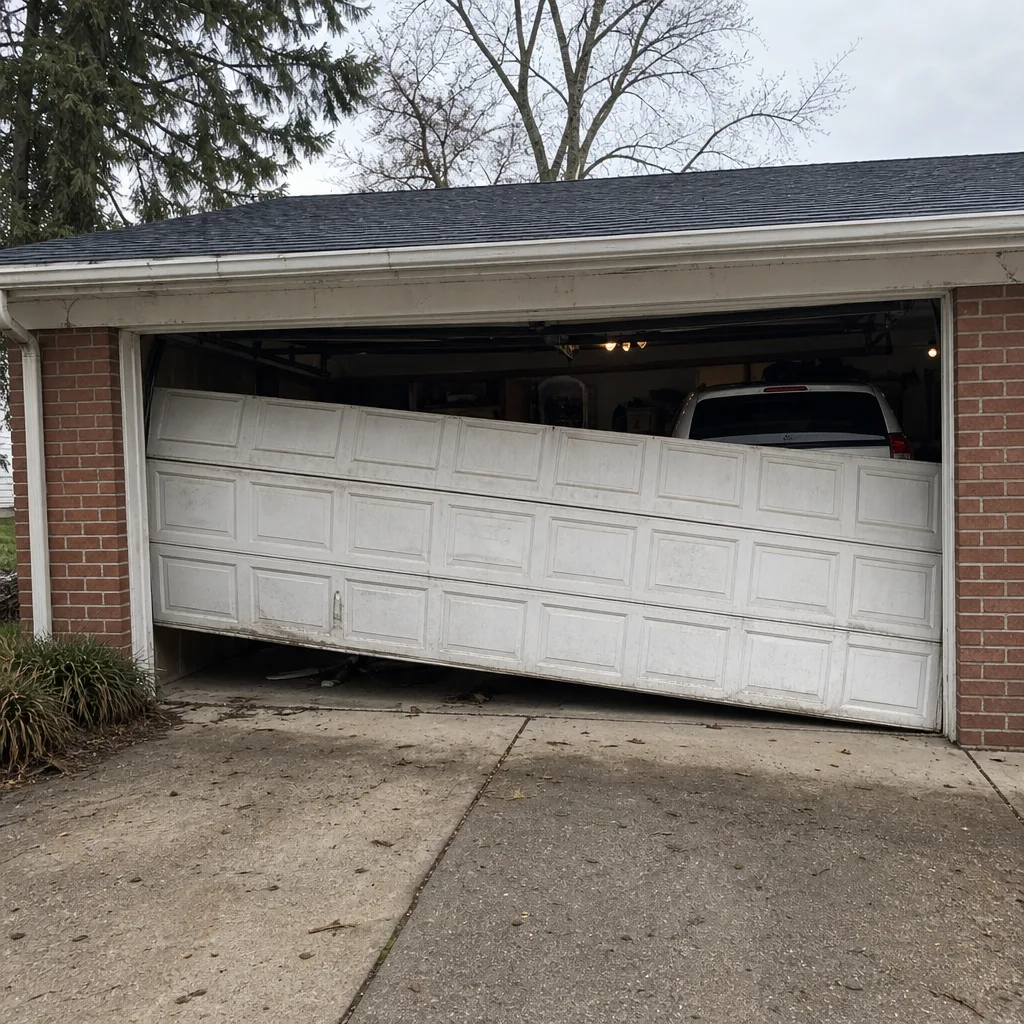 Before
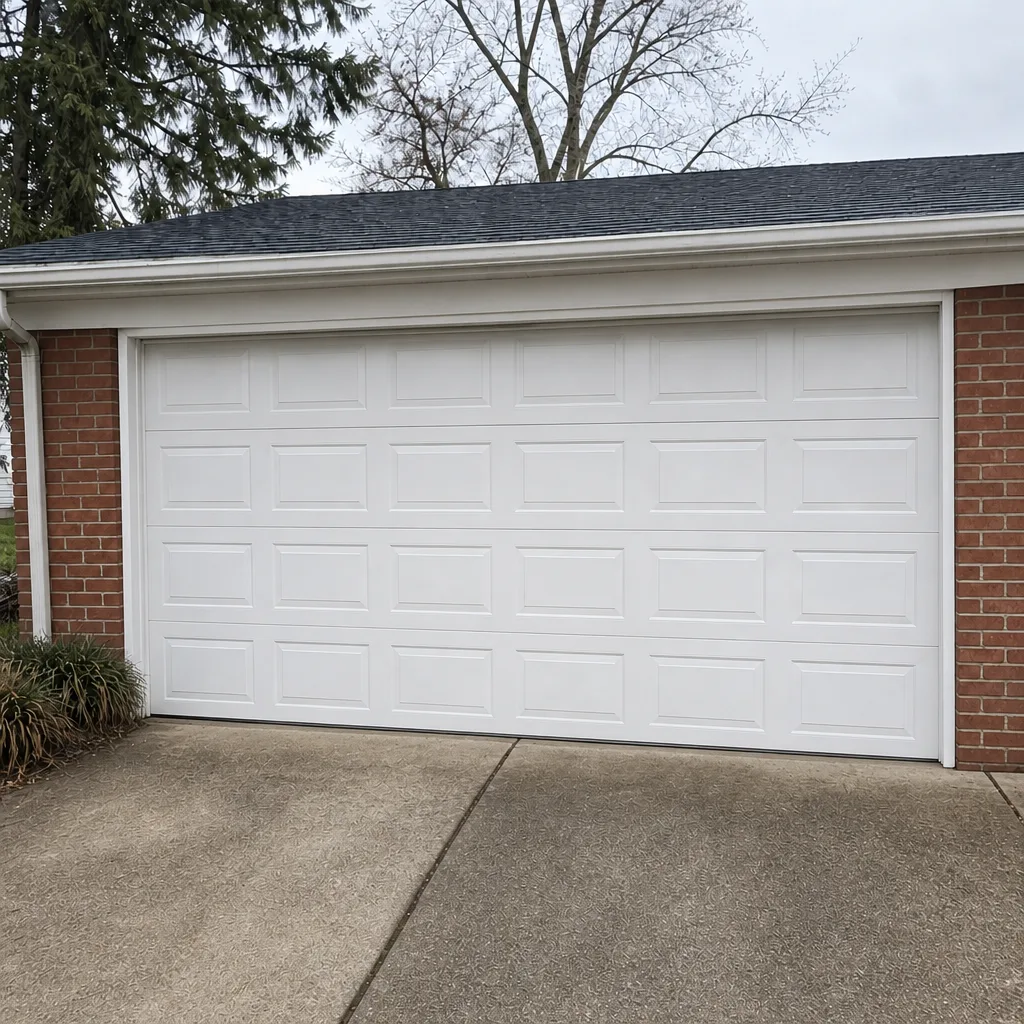 After
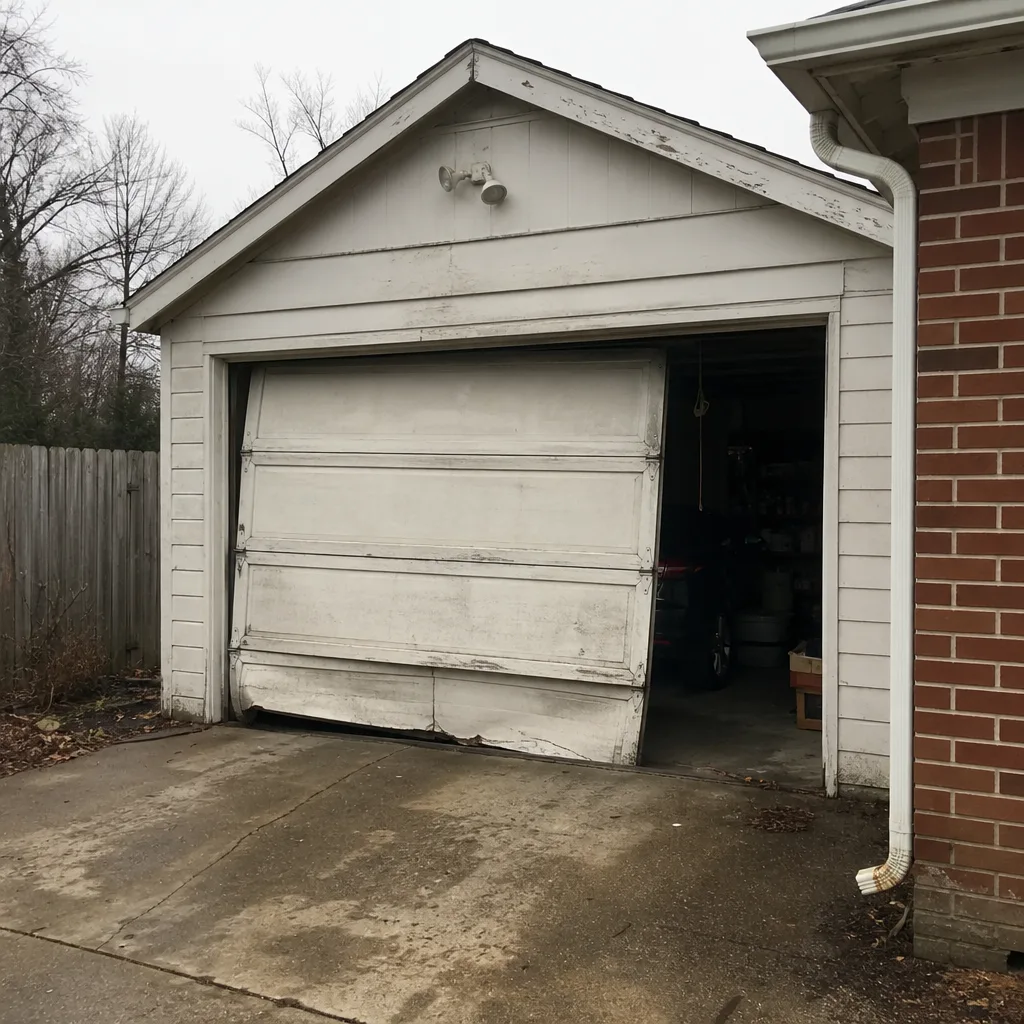 Before
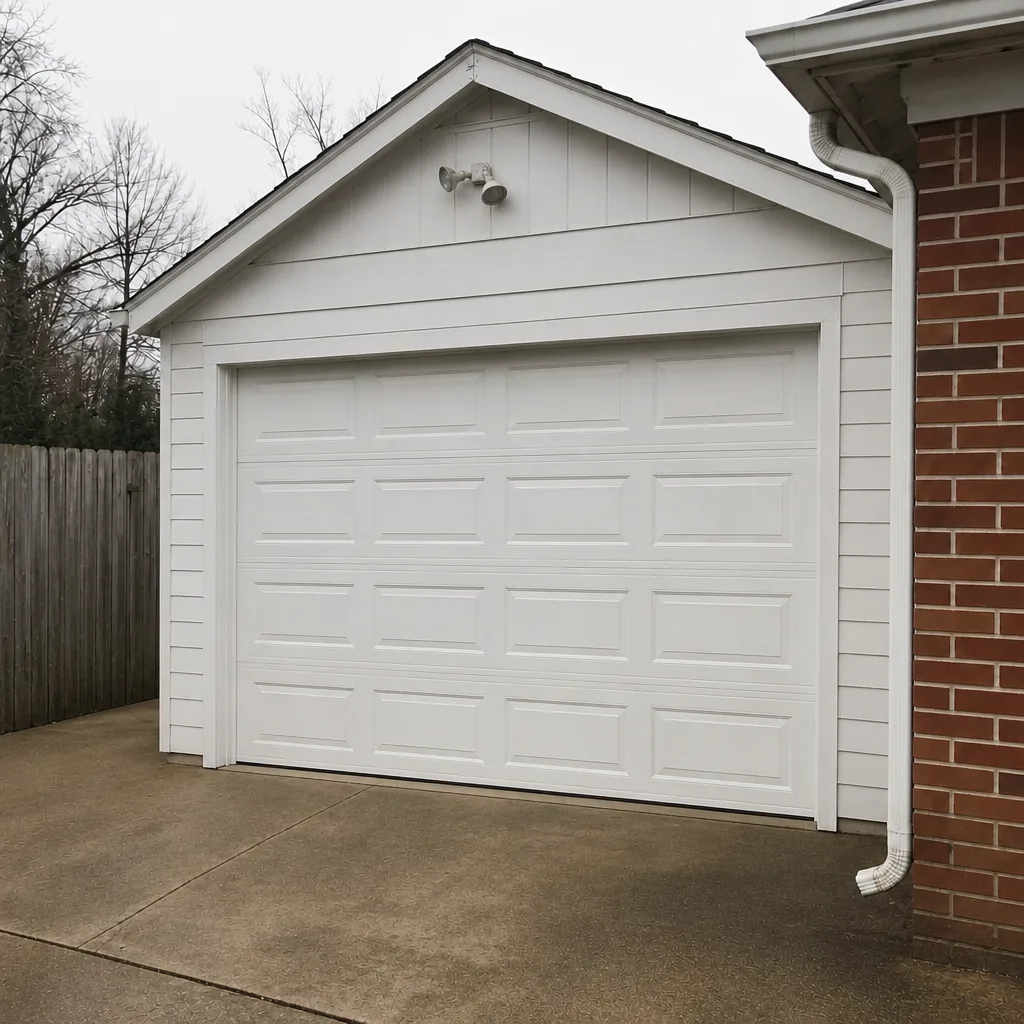 After
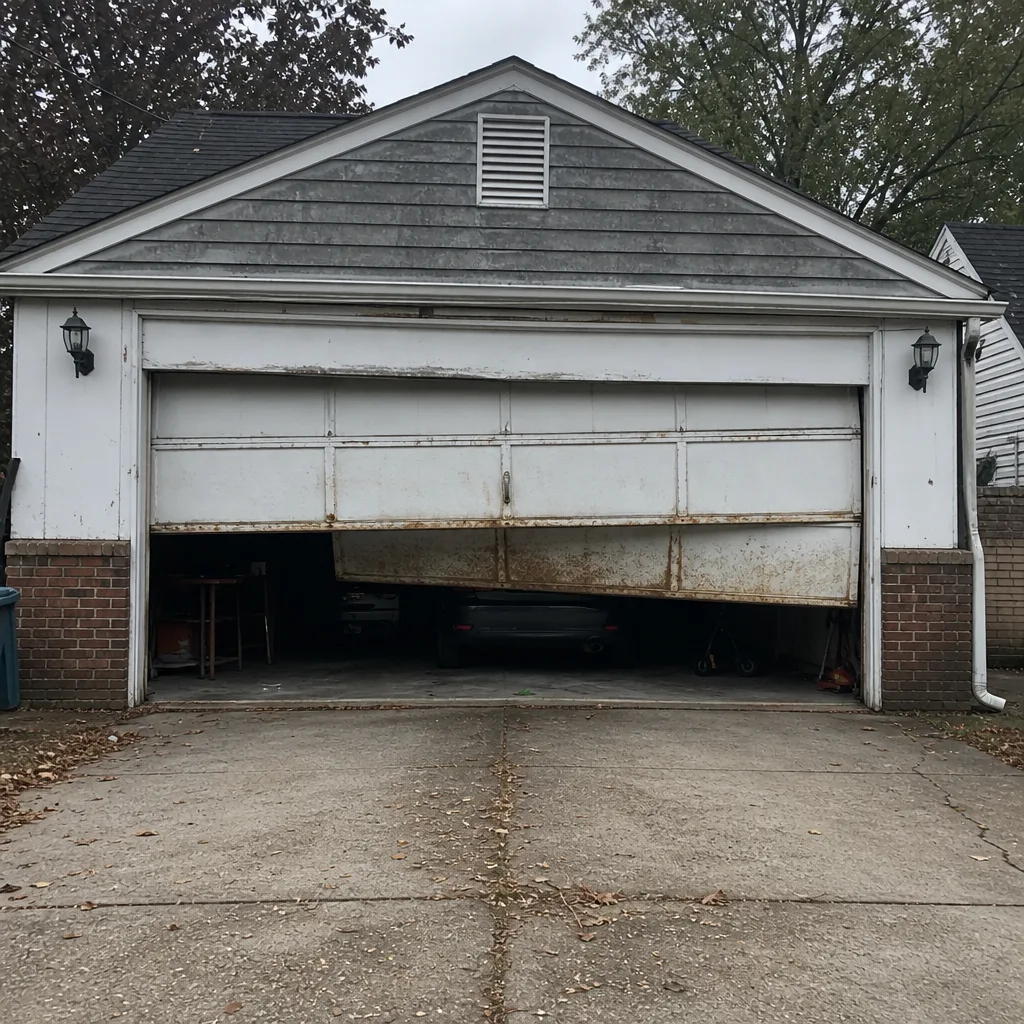 Before
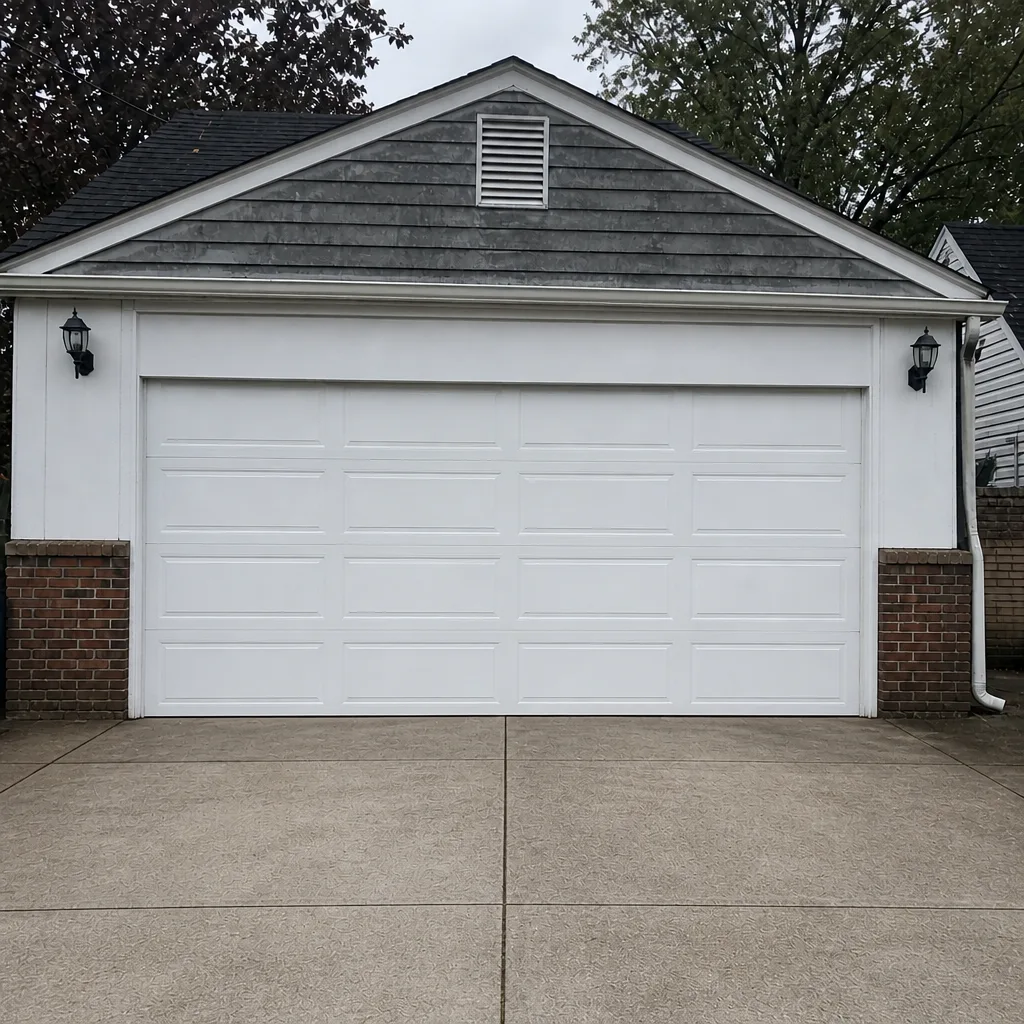 After
When to Call a Professional
Call a professional the moment a spring snaps, a cable stretches or pops, a door comes off its tracks, or a door won’t open or close when you need it to. Those are not inspection items; they’re stop-and-call situations every time, because the forces involved can injure you before you realize the danger. Also call if the door won’t balance, if the opener reverses at random, if a panel is bent after a storm, or if a winter cold snap leaves the door stuck partway open. And if your door is past the point where repair makes sense, a full replacement is a decision worth talking through with a specialist, not a generalist.
Portsmouth Garage Door Repair Co offers free estimates in Portsmouth. Call (888) 839-5070. We answer 24/7. Fast dispatch from 7am to 7pm, Sunday through Friday. Our technicians have up to 12 years of experience, and the price is quoted and agreed before any work starts, so what the estimate says is what you pay.
Frequently Asked Questions
October and November are the best months, because moderate temperatures and lower humidity make that the ideal window for lubrication and hardware adjustment. Do the pre-hurricane hardware audit in May as well, so the door is storm-ready before Atlantic season.
Portsmouth’s high summer humidity, with July dewpoints around 72°F, makes rubber and vinyl seals expand and contract repeatedly, which cracks them faster than in drier climates. Wiping the bottom seal monthly and keeping the door closed during humid months helps extend their life.
Leave the door closed, don’t force it or run the opener, and call a trained professional. Cold snaps below 32°F are when torsion springs fail, and a broken spring is under dangerous tension. Call (888) 839-5070; we answer 24/7, and a call outside dispatch hours is booked into the next opening, Sunday through Friday, 7am to 7pm.
You can safely lubricate the hinges, rollers, and the opener’s chain or screw, but never the springs or cables. A garage-door-specific lubricant in October and again in early June is the right habit; leave anything under tension to us.
Yes, if the door was exposed to strong wind or rain, a quick post-storm check of the panels, tracks, springs, and seals catches damage before it becomes a failure. Stop the door and call if you find a bent track, a stretched cable, or a displaced spring.
Repair makes sense for a single failed component, an opener fault, or a damaged panel on an otherwise sound door. Full replacement makes sense when the door’s structure or hardware has widespread damage, and we’ll give you honest guidance on which way to go with no pressure. Call for a free estimate at (888) 839-5070.
The Bottom Line
Portsmouth’s climate doesn’t hand you four even seasons of garage door care. The year really has two windows worth planning around: the May pre-hurricane audit and the October – November maintenance stretch. Everything else is habit, like managing seals through the humid summer and responding safely when cold weather snaps a spring. Springs and cables stay in the hands of trained professionals, and the rest you can handle in a couple of hours each season. If something looks wrong or the door is past repair, don’t wait for the next window. Portsmouth Garage Door Repair Co works on all the major brands, from Raynor and Clopay doors to LiftMaster, Chamberlain, and Genie openers, and we can walk you through what’s happening. Call (888) 839-5070 for a free estimate; we answer 24/7, with fast dispatch from 7am to 7pm, Sunday through Friday.
Written by the team at Portsmouth Garage Door Repair Co.