
Last updated November 22, 2026
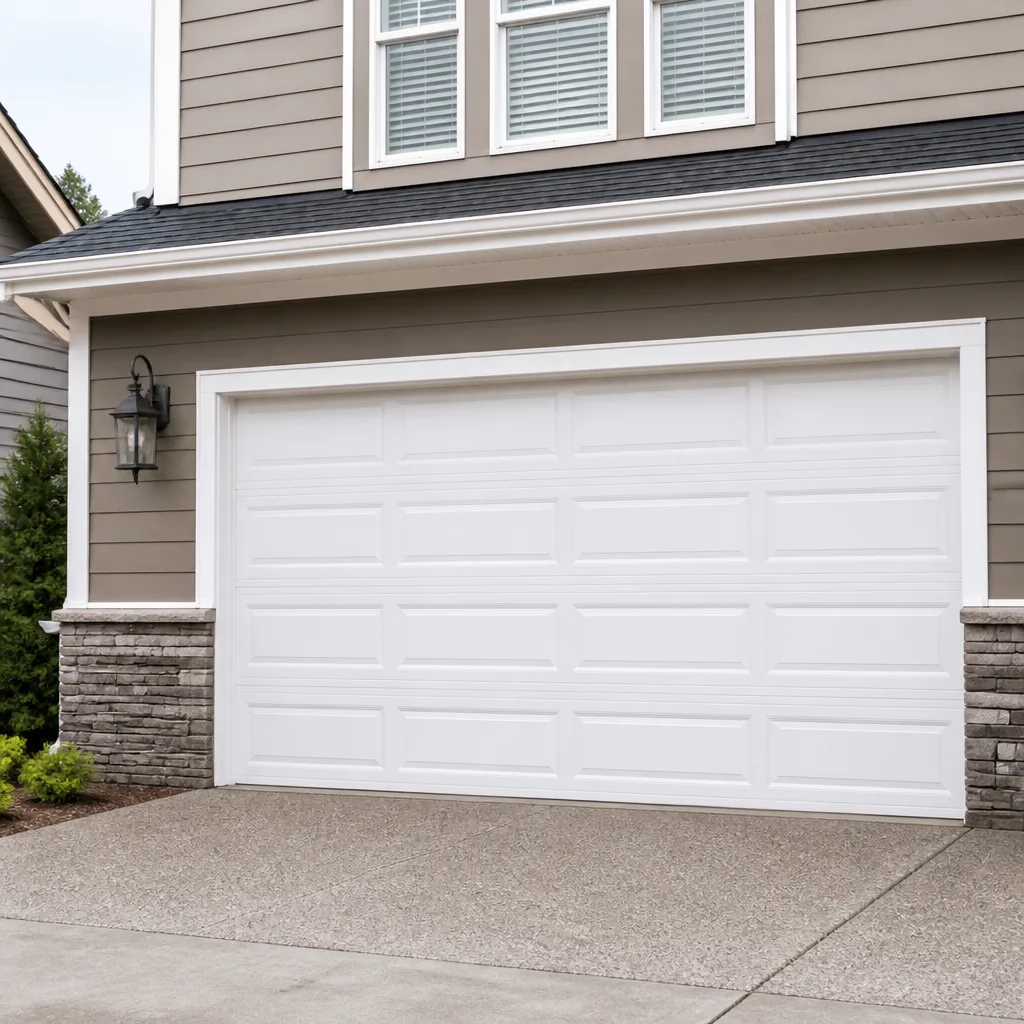 Raised-panel steel
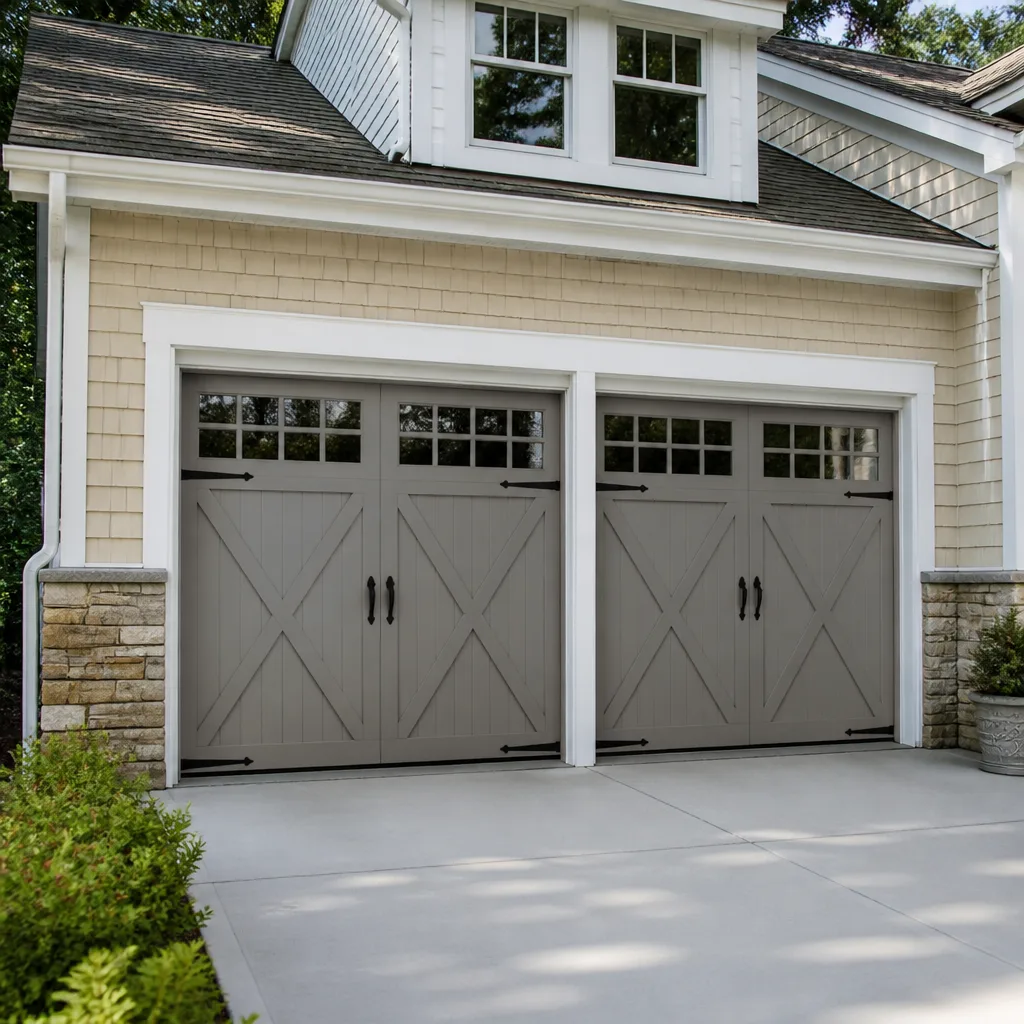 Carriage house
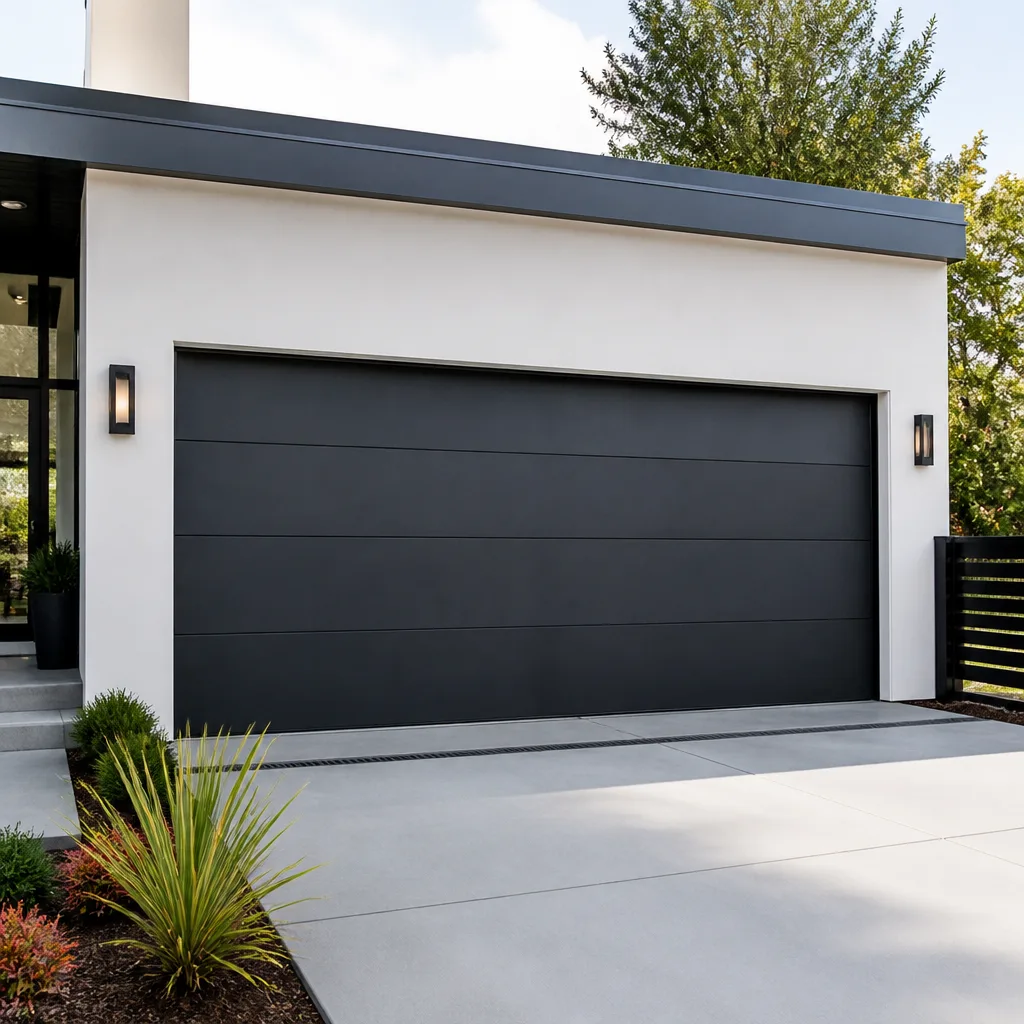 Modern flush
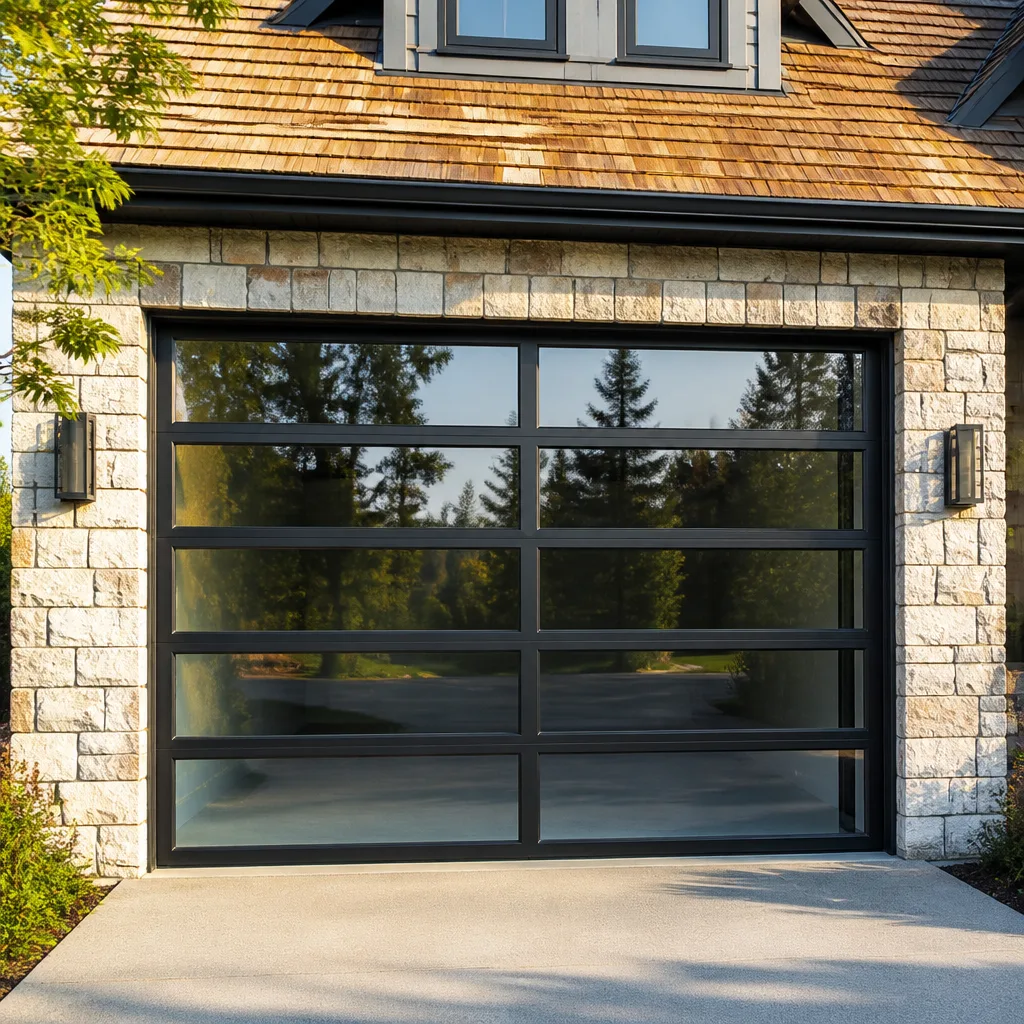 Full-view glass
 LiftMaster openers
 Chamberlain openers
Full 25-point door and opener safety check with every visit - springs, cables, rollers, tracks, and your LiftMaster or Chamberlain opener included
You get a price before we start. It does not change when the pro arrives.
Get your free estimateGarage Door Warning Signs: A Portsmouth Homeowner’s Reference Guide
Most warning-sign lists focus on the end stage: the snapped spring, the door hanging crooked, the opener that grinds and dies. By the time those happen, you’re in emergency territory. The signals worth learning sit a step earlier – the sound that changes, the second or two of extra travel time, the rust line that wasn’t there last fall. A garage door that takes noticeably longer to open than it did six months ago isn’t just “getting old.” It’s a measurable sign of spring tension loss, and it usually fails on a predictable schedule from there. This guide walks through the early cues we look for when we’re diagnosing doors across Portsmouth, and what each one points to.
Quick Answer
The earliest garage door warning signs are changes in sound, speed, and alignment rather than visible damage: a door that travels slower than it used to, an intermittent snap instead of a steady hum, rust streaks on the spring coils, or a door that reverses before closing without an obstruction in the path. Catching these weeks before failure usually means a smaller, scheduled repair instead of an emergency call.
Styles & brands we work with
- Raised-panel steel
- Carriage house
- Modern flush
- Full-view glass
- LiftMaster openers
- Chamberlain openers
Table of Contents
- The Stopwatch Test: Timing Your Door’s Travel Speed
- What the Sounds Are Telling You
- Reading Rust on Your Springs
- When Your Door Reverses – and It’s Not the Sensor
- The Gap-at-the-Bottom Test
- Opener Warning Signs Most Homeowners Miss
- How Portsmouth Weather Ages Your Door
- Which Signs Mean “Schedule It” vs. “Stop Using It”
The Stopwatch Test: Timing Your Door’s Travel Speed
Speed is the most underused diagnostic tool a homeowner has, and it costs nothing. Time your door from fully closed to fully open with your phone’s stopwatch. Do it three times and write the numbers down. That baseline is your reference point, and you can repeat it every few months.
A healthy residential door travels at a fairly consistent pace set by the opener’s limits. What matters isn’t the exact number of seconds – it’s the drift. If a door that consistently opened in a set time now takes two seconds longer, something has changed. On a torsion-spring door, that usually means the spring has lost tension. On an extension-spring door, it can mean the springs have stretched or the cables have slackened. In both cases, the opener is now doing work the springs used to do, and it will burn out faster under the added load.
The same test works in reverse. Time the closing cycle. A door that drops closed faster than it used to, or slams at the bottom, points to a spring that’s lost its counterbalance. That’s not just wear – a door closing faster than its spring tension supports is heavier and harder to stop, and that’s a safety problem.
How to read your times
- Time three full open cycles and write down each number.
- Repeat the same test in three months, same time of day if you can.
- Treat a consistent two-second increase as an early flag, not an emergency.
- Treat a door that’s visibly slower, uneven in its travel, or stalls partway as a stop-use situation.
If your times are drifting, the underlying repair is usually spring-related. Our garage door spring repair service covers both torsion and extension systems. What we won’t do is talk you into a full replacement when a spring and cable job will restore the door you have.
What the Sounds Are Telling You
Sound is where the diagnostic detail lives, and most homeowners lump every garage door noise together as “it’s loud.” We’ve trained our ears on these long enough to separate three specific sounds that point to three different failing parts.
The intermittent snap
A sharp metallic snap that happens a few times during travel and then goes quiet is the sound of a cable fraying. Individual strands are breaking and catching as the cable runs through its pulley. This is not a “wait and see” sound. A cable that fails under tension lets the door drop, and the danger isn’t limited to the door itself. If you hear a snap during travel, stop using the door and call for a same-day appointment.
The consistent grinding
A steady, low grind that happens at the same point in every cycle is almost always a roller or hinge. The roller bearing has dried out or the wheel has worn flat on one side, so it scrapes through the same spot in the track each time. This is a repairable wear issue, and it’s the most forgiving of the three sounds. Catch it early and you replace rollers; let it go and you’re replacing a loud, damaged hinge too.
The deep metallic groan
A low twang or groan at the start or end of travel is the sound of a spring under improper tension. The coils are binding against each other or the coil is skewed on the shaft. This one deserves attention now rather than later – an overtensioned spring can be as dangerous as a broken one, and in both cases the safe fix requires controlled release of stored energy with the right tools.
Springs are the most dangerous part of a garage door, and we handle them so you don’t have to. If your door is groaning, that’s a professional call.
Reading Rust on Your Springs
Not all rust is the same, and the difference matters. Surface oxidation – a light orange bloom on the outside of the coils – is cosmetic. You can usually wipe it, use a light lubricant, and forget about it. Structural corrosion is different: it eats into the coil face, pits the metal, and can eventually cause a spring to fail before its normal lifespan. Here’s how to tell them apart.
- Surface oxidation: orange tint on the outside of the coils, no pitting, wipes off with a rag. Cosmetic.
- Deeper pitting: dark brown or black flecks embedded in the metal, rough to the touch, won’t wipe clean. Flag it.
- Flaking or rough edges: the coil face has started to shed material. This warrants a professional inspection.
- Rust concentrates at one end: often a sign of a water source – a leak above, or a low spot in the track collecting water.
Portsmouth’s humidity does more spring damage than ice ever will. The damp stretches of spring and fall keep the metal cycling between wet and dry, and the coiled surface holds moisture longer than a flat one does. Where homeowners get fooled is that a spring can look untouched on the outside and hold rust in the inner coils. A visual check from the floor only tells you half the story – a technician can see the whole spring.
Steel doors and aluminum doors age differently under the same conditions. Clopay and Amarr panels we see around Portsmouth tend to show paint-edge rust first, while the springs themselves are the wear item regardless of the door brand. If you’re seeing rust on both the panels and the springs, you’re looking at two separate issues. Our guide to garage door repair covers what each kind of panel damage usually means.
When Your Door Reverses – and It’s Not the Sensor
A door that starts down and then reverses is the most overdiagnosed symptom in the trade. Homeowners assume the safety sensors are dirty, wipe them off, and find the door still reverses. Roughly half the time, the reversal isn’t the sensor at all. Two hardware causes are the usual culprits.
Cause one: obstructed travel from the track
If the door’s path is being slowed by a bent track, a worn roller, or a hinge catching, the opener reads that resistance as an obstruction and reverses. The safety sensors fired correctly – the door was in fact meeting resistance – but the resistance wasn’t a person or an object. It was the door hardware itself.
Cause two: off-level limit settings
Openers have travel-limit settings that tell the motor how far to close the door. If those settings drift, or if the opener’s force limit is set too sensitive, the door reverses near the bottom because the motor reads the last few inches of travel as an obstacle. LiftMaster and Chamberlain openers, both common in Portsmouth homes, have adjustable limits and force settings; Genie units from different eras use slightly different procedures. Getting them right requires the right method for your model.
How to tell the two apart
- Look at the safety sensors first – both should have steady indicator lights with nothing in the door’s path.
- If the indicator lights are steady and the door still reverses, the cause is hardware or limits, not the sensors.
- Watch the door as it reverses. If it slows before reversing, that’s resistance – likely track or rollers.
- If the door reverses near the floor without slowing, that’s usually a limit or force setting.
If your opener is reversing but the sensors check out, that’s an open and shut case for a professional diagnosis. Call (888) 839-5070 for a free estimate.
The Gap-at-the-Bottom Test
Close your door fully and look at the seal where it meets the floor. Most Portsmouth homes have at least one spot where a sliver of daylight gets through, and it isn’t always a worn weather seal. The gap tells you a story about track alignment.
The test itself is simple. Close the door, wait for it to settle, and look for light coming through the bottom seal. Walk the full width, not just the middle. A gap at one end of the door, or a gap that tapers, points to a track that’s out of plumb or a door panel that’s out of level.
What the gap pattern means
- Even gap across the full width: the weather seal is worn or flattened. Easy fix.
- Gap concentrated at one end: the track has gone out of plumb. Likely a track alignment issue.
- Gap in the middle but not at the ends: a panel is warped or the door is sagging on the opener.
- Gap that appears and disappears day to day: often the track moving in its anchors, which is common on doors installed with older wood-frame mounts.
Left alone, a track misalignment creates uneven pressure across the door, which loads one side of the opener harder than the other. Over months, that pressure moves from the opener into the panels. A door that’s only slightly out of alignment today can be a warped panel or dead opener in a year. Checking the bottom make sense – if a track adjustment would fix it. Track misalignment that follows a bump – a car nudge, a bike into the door, a backed-in hit – should be handled by a professional, because the door can come off the track under motion.
Opener Warning Signs Most Homeowners Miss
The opener is the part of the system homeowners notice last, because it either runs or it doesn’t. But openers give a fair bit of warning before they quit, and the signs are surprisingly consistent across brands.
- Stalling on the first cycle of the day: the opener is struggling to break inertia. Often the springs are weakening and the motor is compensating.
- Repeated remote-clicks needed: a two-click close instead of one usually means the remote battery is dying, but a remote that keeps needing multiple clicks points to the opener’s receiver board aging.
- Choppy travel: a door that moves in a start-stop rhythm instead of one smooth motion often means the opener’s force limits are fighting worn springs.
- Belt-drive sound change: new squeal from a belt-drive opener usually means the belt or idler pulley wearing. Belt-drive LiftMaster and Chamberlain units are typically quiet, so any new noise is worth investigating.
- Door doesn’t fully open or close: limits have drifted or the motor is being overpowered by the door.
In our experience, most openers we replace fail to fix long-standing spring issues. If your opener is showing the warning signs above and the door is also running slowly, it’s the spring that needs attention, not the motor. Catching the correction order right saves you a motor you didn’t need to buy.
If your opener itself is the problem, our garage door opener repair service works on both legacy and current smart-home units across LiftMaster, Chamberlain, Genie, and Craftsman models. What we won’t do is swap an opener when a limit reset would have fixed it.
How Portsmouth Weather Ages Your Door
Portsmouth sits in a spot that does more wear to a garage door than you might guess. Hot, humid summers pull at the wood frame anchors around the track. Cold snaps in winter force spring metal to contract and then expand. Rain off the Outer Banks storms pours sideways against the door. Add the saltwater intrusion that comes with the tidewater environment, and you’ve got a good picture of why doors here need watching.
What that means in practice:
- Springs last shorter here than in dry climates. Humidity accelerates coil corrosion, so a spring that would give eight years inland might give fewer here.
- Track anchors loosen. The wood frame around the track loses grip with the freeze-thaw cycle and the wet season.
- Weather seals wear faster. Rain-driven moisture against the door weakens the seal at the bottom and sides.
- Motors work harder. A door that ran easily in dry air runs heavier with humid, wet bearings.
- Saltwater intrusion from tidewater flooding adds hidden wear to the metal hinge and track components nearest the floor.
This isn’t a case for panic. It’s a case for checking the door on a schedule. A spring-and-cable inspection every twelve months here goes a long way toward catching the failure before it happens. If your neighborhood is near the Elizabeth River drawbridges or the older sections of Hodges Ferry, the door’s been through cycles a door further inland hasn’t. Portsmouth doors age honestly, which is exactly why the early signals here matter.
Which Signs Mean “Schedule It” vs. “Stop Using It”
Not every warning sign is urgent. Sorting them into three buckets keeps you from panicking over a worn roller and lets you act fast on the one that matters. Here’s how we triage in the field.
Schedule a repair (not urgent)
- New consistent grinding (likely a roller or hinge)
- Light surface rust on the spring
- Weather seal showing a gap at one end
- Door opening two seconds slower than baseline
- Remote needing an extra click
Address this week
- Door reversing before closing with sensors clean
- Deeper pitting or flaking on the spring coils
- Opener stalling on first cycle of the day
- Door visibly uneven in its travel
- Track gap pattern that changes day to day
Stop using the door
- Loud snap heard during travel
- Spring visibly broken or hanging
- Door stuck in an open position, or halfway
- Visible gap between two panels
- Cable visibly frayed or slack
The stop-using list is short on purpose. A broken spring or a loose cable holds enough energy to seriously injure someone, and a door that’s dropped is heavier than it looks. That’s the moment to stop and call. A trained professional handles these safely, and we’ll get to your door fast. Free estimates, and the price is set per job by the written estimate before any work starts.
Common Mistakes to Avoid
- Spraying springs to hide the noise. A light lubricant on a roller is fine. Spraying an overtensioned or cracking spring just masks the symptom. Get it looked at instead.
- Assuming every reversal is a sensor problem. Half the reversals we see are track or limit issues, not dirty sensors. Check the indicator lights first.
- Ignoring slow travel because the door still works. A door that opens slower than it used to is a countdown to failure, not a quirk.
- Trying to fix a broken spring yourself. Torsion springs are under enough tension to be genuinely dangerous, and DIY spring work is how serious injuries happen. This isn’t a repair to attempt.
- Forgetting that bottom gap after closing. A gap at one end of the door usually means a track is drifting. Left alone, that track can take the opener with it.
- Calling the first contractor who answers. A general handyman without garage door training can miss the difference between a spring problem and an opener problem.
- Replacing the opener when the springs are the problem. New motors fail on tired springs too. Fix the cause, not the symptom.
When to Call a Professional
Call when the door reverses on its own with the sensors clear, when the spring shows deep rust or a visible break, when you hear a snap during travel, or when the door stalls partway through a cycle. Those are the situations where a DIY check can turn into a serious injury. Springs and cables are the two parts of a garage door that hold enough stored energy to hurt someone, and a twisted or off-track door is dangerous to handle. It’s also worth calling when a slower door is starting to look expensive to ignore – our technicians have up to 12 years of experience reading the early signals and telling you which is a small repair and which is worth scheduling before it grows. Portsmouth Garage Door Repair Co offers free estimates in Portsmouth. Call (888) 839-5070. We answer 24/7. Fast dispatch from 7am to 7pm, Sunday through Friday.
See the difference
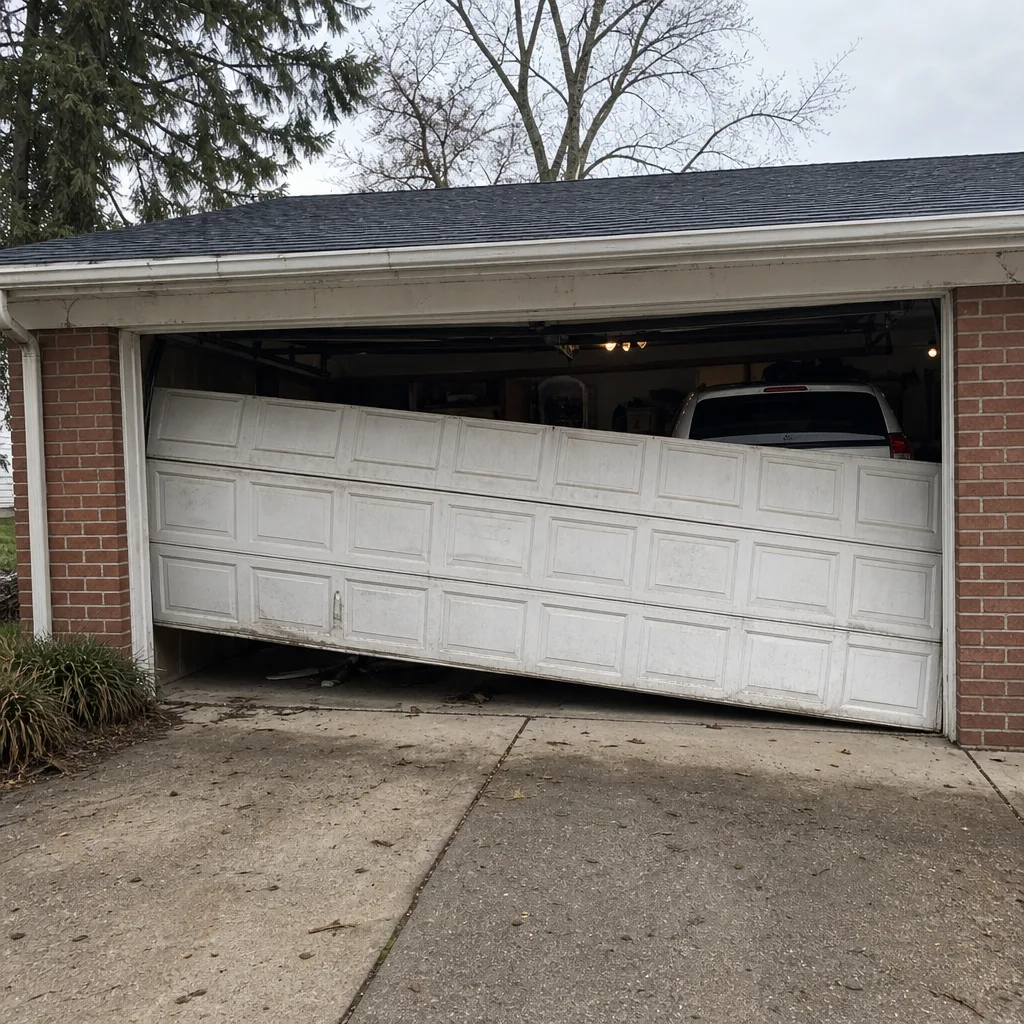 Before
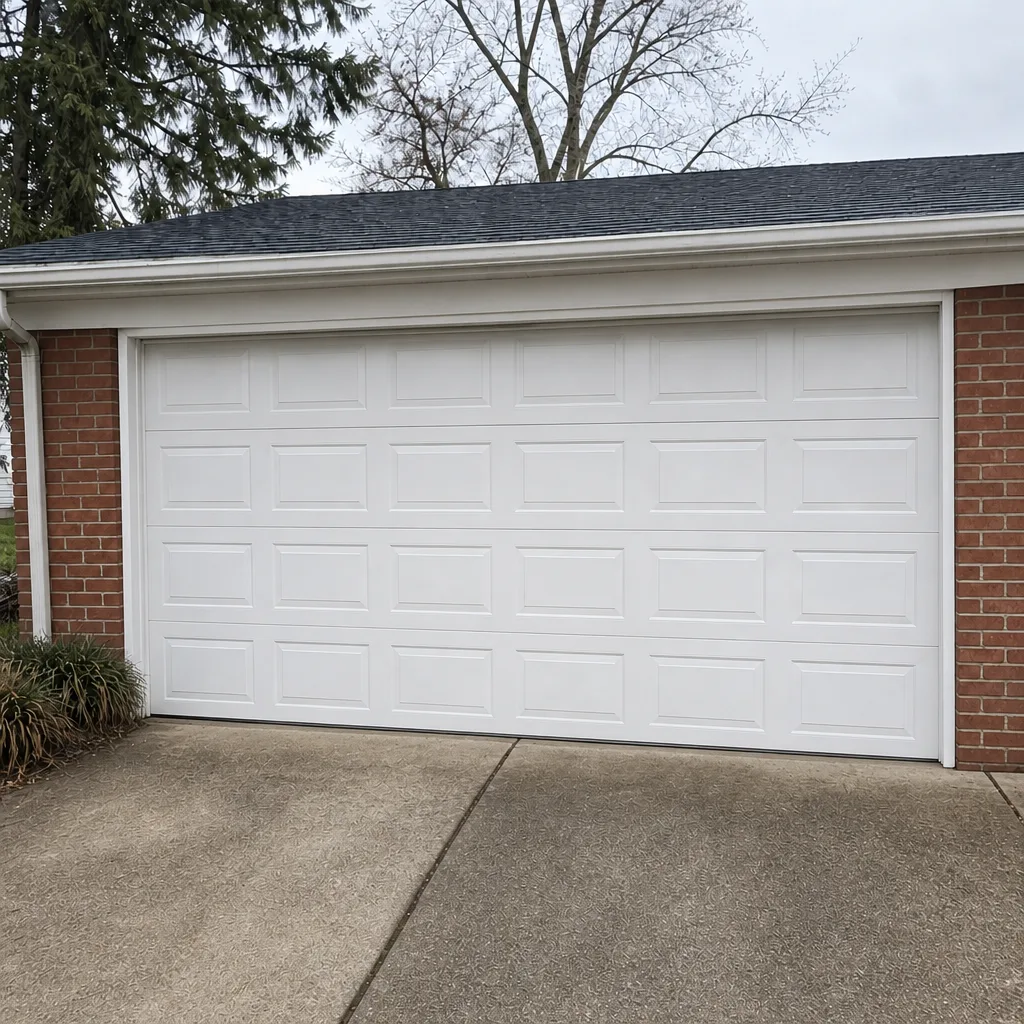 After
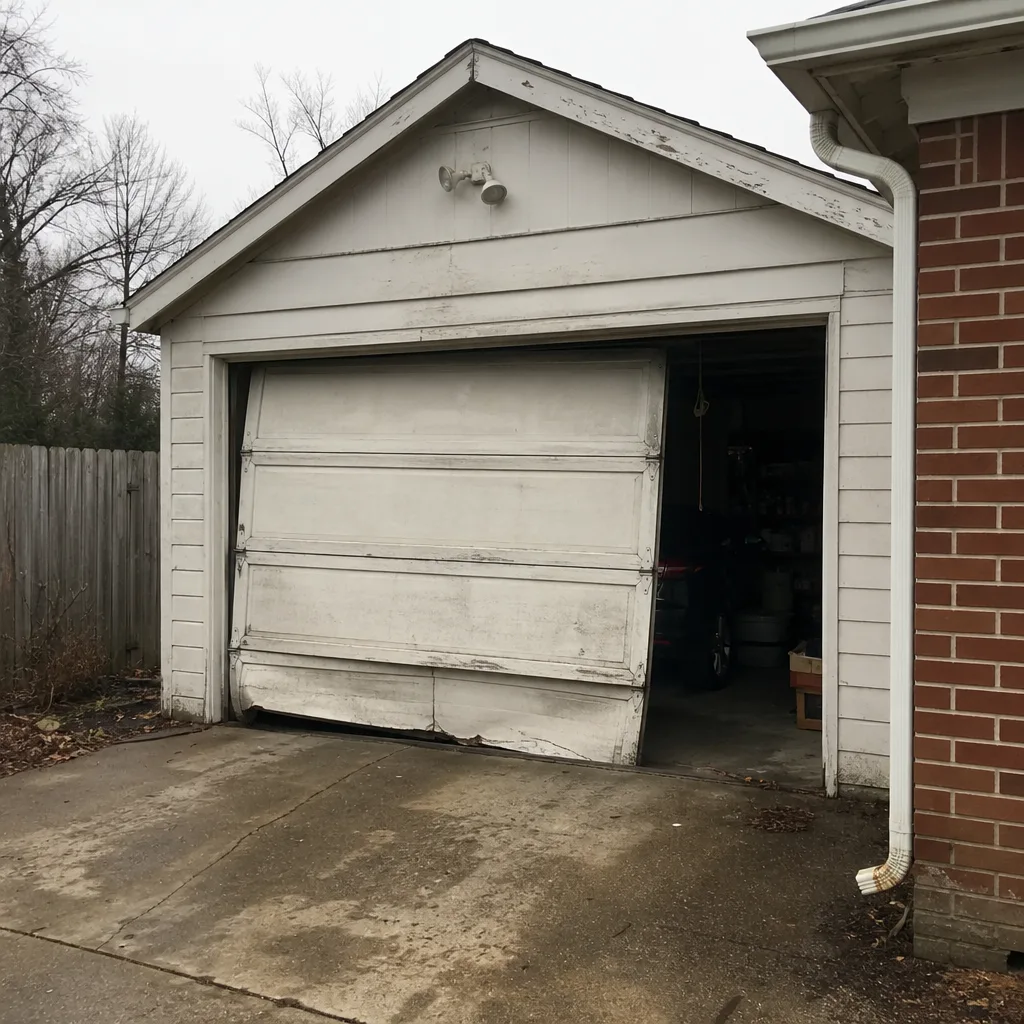 Before
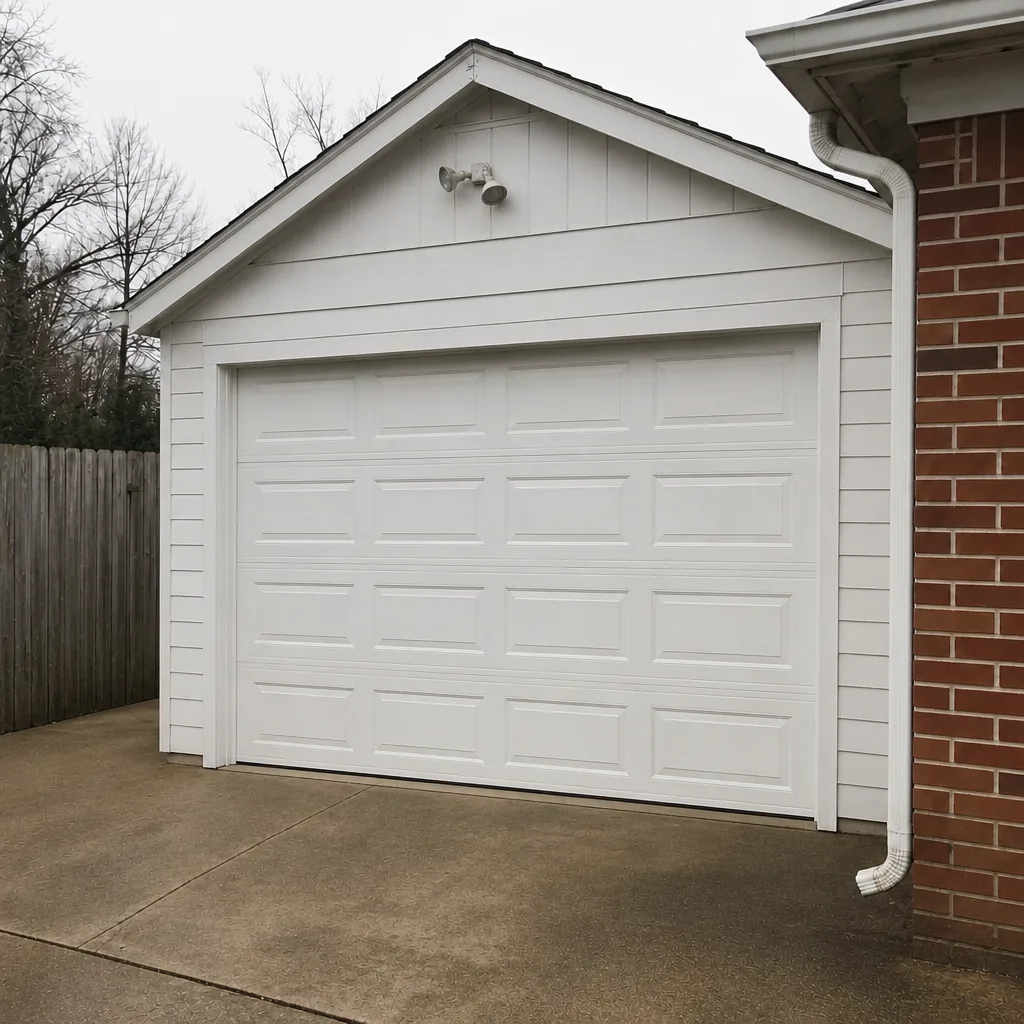 After
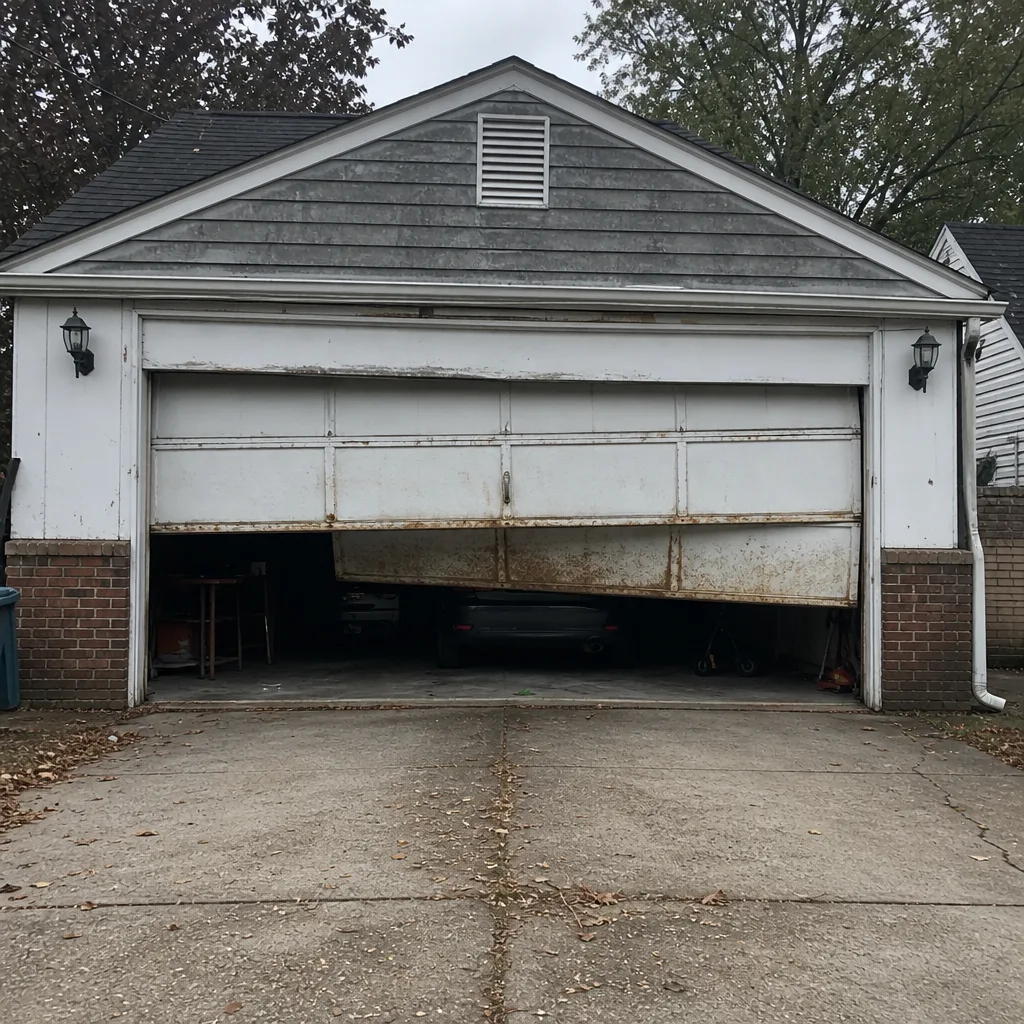 Before
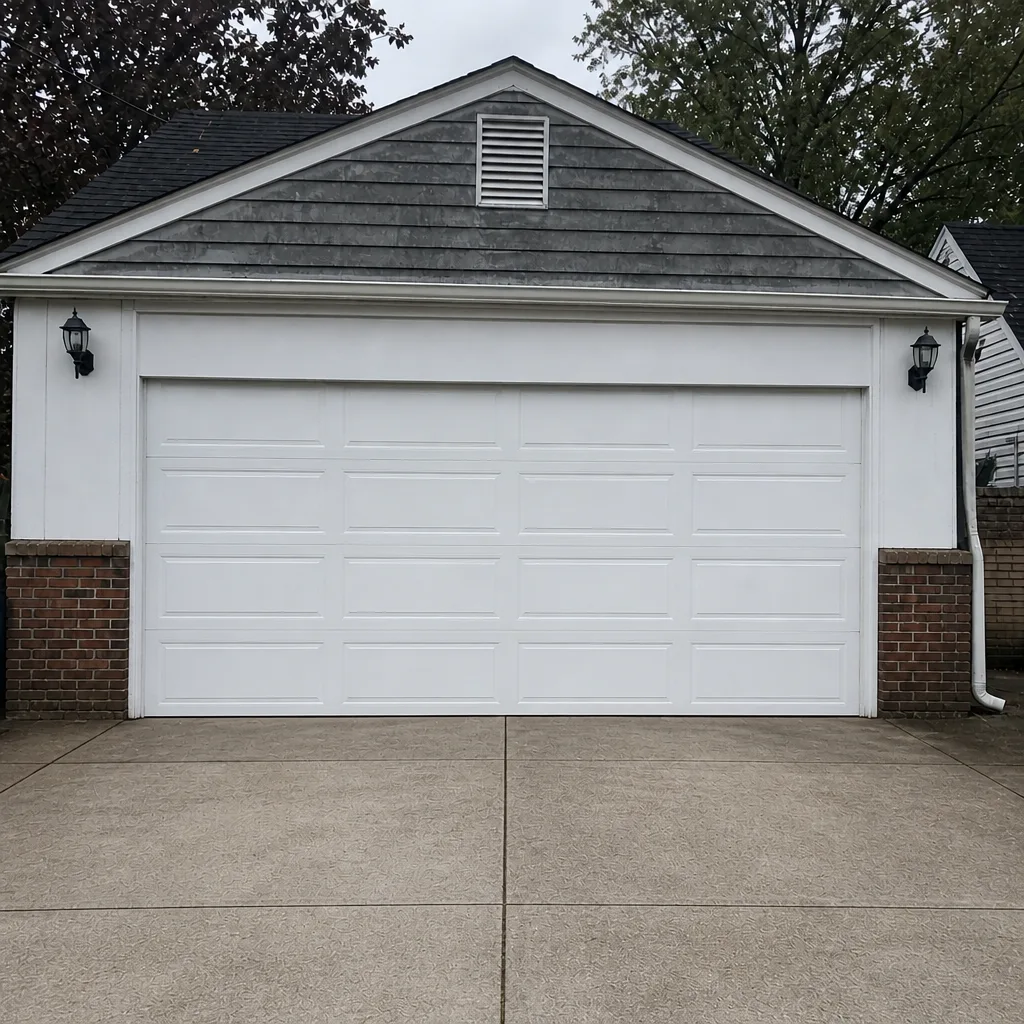 After
Frequently Asked Questions
The most reliable early signs are a door that’s visibly slower than it used to be, a metallic groan at the start or end of travel, and deep pitting or flaking on the spring coils. You can also look for a visible kink in the spring or a gap in the coils. If you see any of these, schedule a professional inspection rather than waiting for the snap.
A broken torsion spring makes a loud snap or crack, often loud enough to hear from inside the house. It’s followed by the door being much heavier to lift. If you hear the snap, stop using the door and call. Call (888) 839-5070 – the price for the repair is quoted and agreed before any work starts.
Clean sensors don’t rule out other causes. Two common ones are track or roller friction making the door’s path unusually heavy, and off-level opener limit or force settings. If the sensor indicator lights are steady with nothing in the path, the problem is usually hardware or settings rather than the sensors themselves. Call (888) 839-5070 for a diagnosis.
Yes. Humid air accelerates coil corrosion on both torsion and extension springs, and a corroded coil can fail before its normal lifespan. The wet season and freeze-thaw cycles we see in Portsmouth make an annual spring-and-cable inspection worthwhile. Surface rust is cosmetic; dark pitting is the sign to schedule a replacement.
Spring repair pricing depends on the type of spring, whether the cables are also damaged, and whether the door has one spring or two. We give a written estimate before we start any work, and that written estimate sets the final price. Free estimates by phone: call (888) 839-5070. We answer 24/7. Fast dispatch from 7am to 7pm, Sunday through Friday.
Yes. We service LiftMaster, Chamberlain, Genie, Clopay, Amarr, Wayne Dalton, Craftsman, and Raynor equipment. That covers most of the doors and openers in Portsmouth, so you don’t need to find a different contractor depending on your brand. Call (888) 839-5070 for the exact-fit diagnosis.
No. A door that stalls partway through opening or closing is holding in an unsafe position, and continuing to cycle it can cause a spring or cable to fail without warning. Stop using the door and call. Emergency service is available for situations that can’t wait, so a call outside dispatch hours is booked into the next opening, Sunday through Friday, 7am to 7pm.
That depends on the opener, not just its age. Many “failing” openers are fine once the door’s springs or rollers are corrected, because the motor was doing work the springs used to do. Limit resets and gear repairs also save working openers. If a replacement is genuinely the right call, we say so. Call (888) 839-5070 and we’ll tell you which is which before you spend.
Your Warning-Sign Checklist
You don’t need special tools to check your own door. You do need to know what you’re looking for. Here’s the walk-around we suggest you do every few months, in order.
- Listen first. Run the door from fully closed to open. Note any new sound. Classify it: snap, grind, or groan.
- Time the travel. Three full cycles with your phone stopwatch. Write the numbers down and compare them to your last check.
- Look at the springs. Surface rust or deep pitting? Wipe test with a rag. Pitting warrants a call.
- Test the reverse. Put a light object in the door’s path and confirm the door reverses when it meets the object. Clean sensors or not – the door should still reverse.
- Walk the bottom gap. Closed door, full width. Light coming through the ends means a track alignment issue.
- Check the hardware by sight. Springs, cables, hinges, rollers, and track anchors. Look for visible slack, frayed wire, missing bolts, or a track that’s visibly off.
- Run the opener limits. With the door disconnected (in manual mode only), check that the door moves smoothly and doesn’t reverse when a person isn’t in the path.
This checklist takes ten minutes and is genuinely worth building into your calendar. Portsmouth doors reward this sort of attention – the wear from weather and humidity here gets caught early or it doesn’t get caught at all. The trouble cases are the ones where the door ran fine for years, the owner stopped thinking about it, and the spring snapped at the worst possible time. If your checklist turns up anything on the stop-using list, don’t test it. Call.
Matching the Sign to the Repair
Once you’ve identified a warning sign, the useful next question is what the fix usually involves. Here’s how the signals generally map to the repair, and the price depends on the door type and spring configuration – the written estimate gives the final number.
- Slower travel + groan + early spring wear: spring replacement, often a matched pair, plus safety check on cables and rollers.
- Consistent grinding: roller and hinge replacement, usually a lower-cost job than it sounds.
- Intermittent snap: cable and pulley replacement – a stop-using call.
- Reverse without obstruction: track adjustment, roller inspection, or opener limit and force reset.
- Bottom gap at one end: track alignment and later weather seal replacement once the door is running true.
- Opener stalling, choppy travel: spring inspection first, then opener limits, then a possible opener repair.
- Door visibly off-track or a panel gap: stop, don’t cycle, professional re-rail and panel assessment.
The reason we draw this map is that the reader who walks into a repair knowing what to expect is a lot harder to oversell. We quote a price before any work starts, and the written estimate sets the final price. If a proposed repair doesn’t match a sign on your checklist, ask about it. The answer should be specific.
Our team at Portsmouth Garage Door Repair Co covers the full service, from that spring repair through opener work and full door replacement when repair stops making sense. If your door has drifted past what a fix will restore, installation is the honest next step, and we say so plainly rather than padding out repairs.
The Bottom Line
The most useful thing a Portsmouth homeowner can do for a garage door is catch the wear before it fails. Sound, speed, and visual cues all tell you the same story ahead of the emergency: a component is weeks from failing, not hours. Run the stopwatch test, listen to your door, walk the bottom gap, and check the springs for deep rust. Schedule the small repairs before they turn into stop-using situations. Call (888) 839-5070 for a free estimate. We answer 24/7. Fast dispatch from 7am to 7pm, Sunday through Friday. The written estimate sets the final price, and it’s agreed before any work starts.
Written by the team at Portsmouth Garage Door Repair Co.