
Last updated November 22, 2026
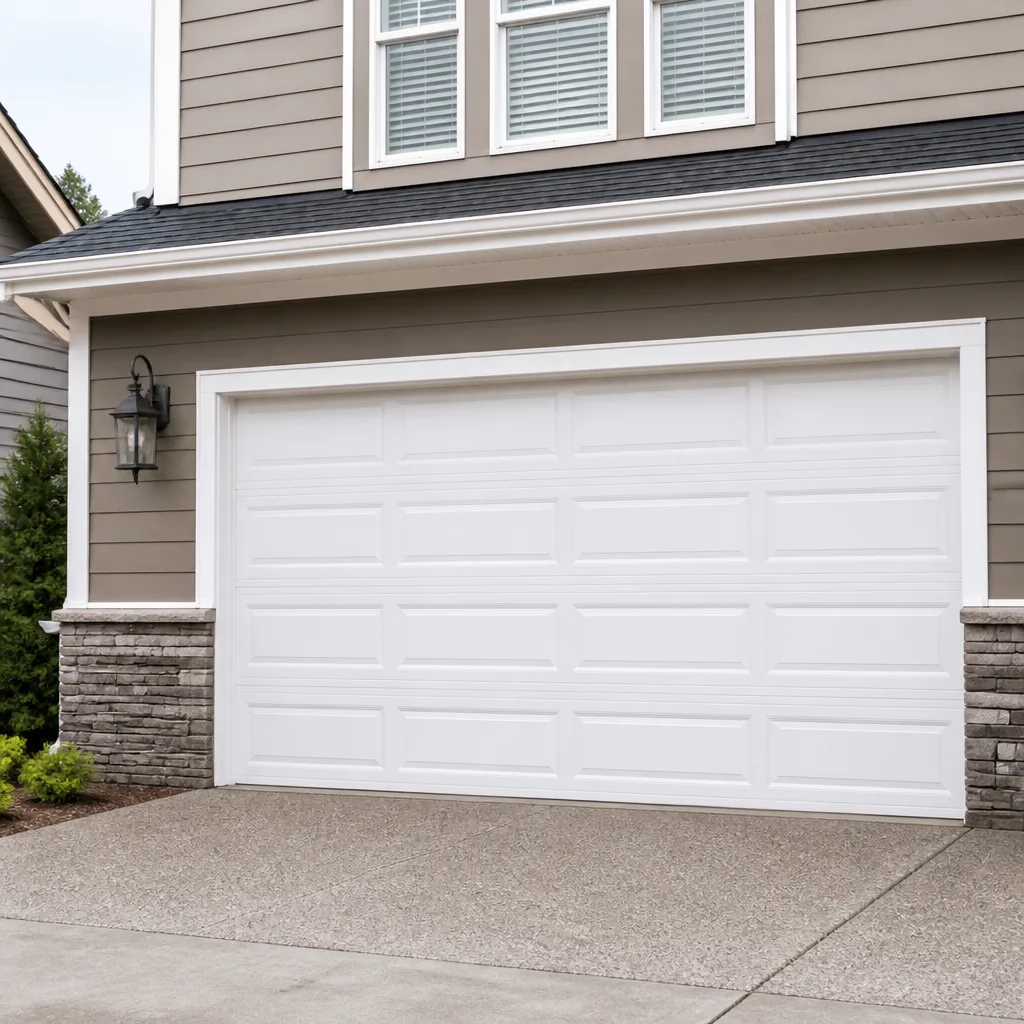 Raised-panel steel
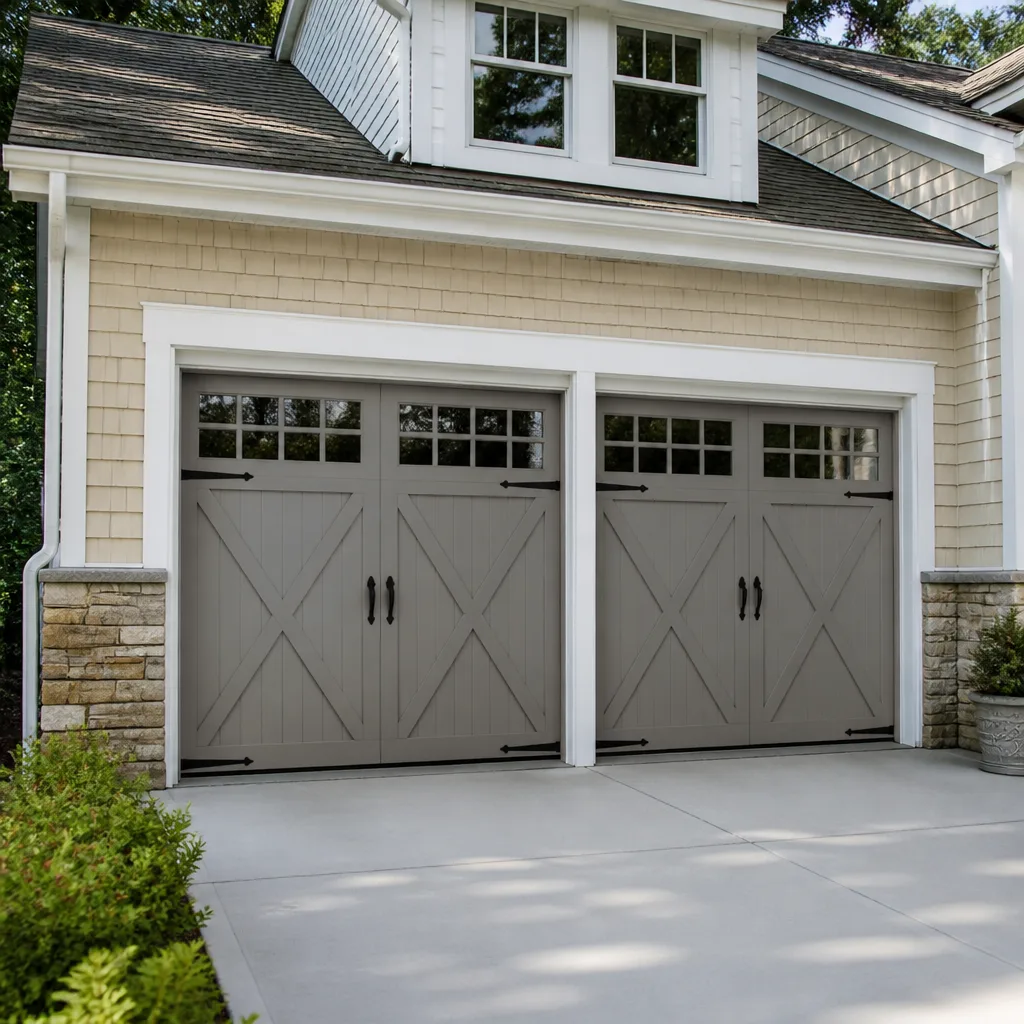 Carriage house
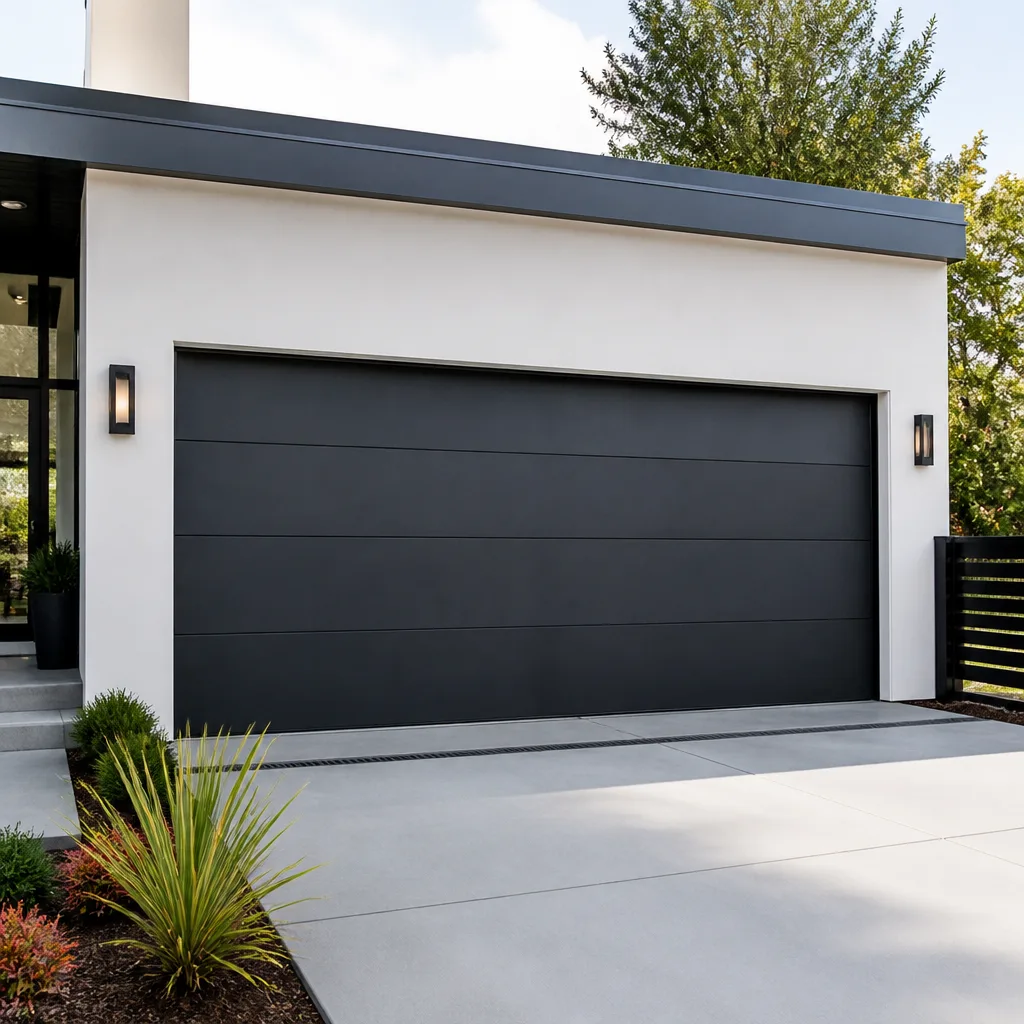 Modern flush
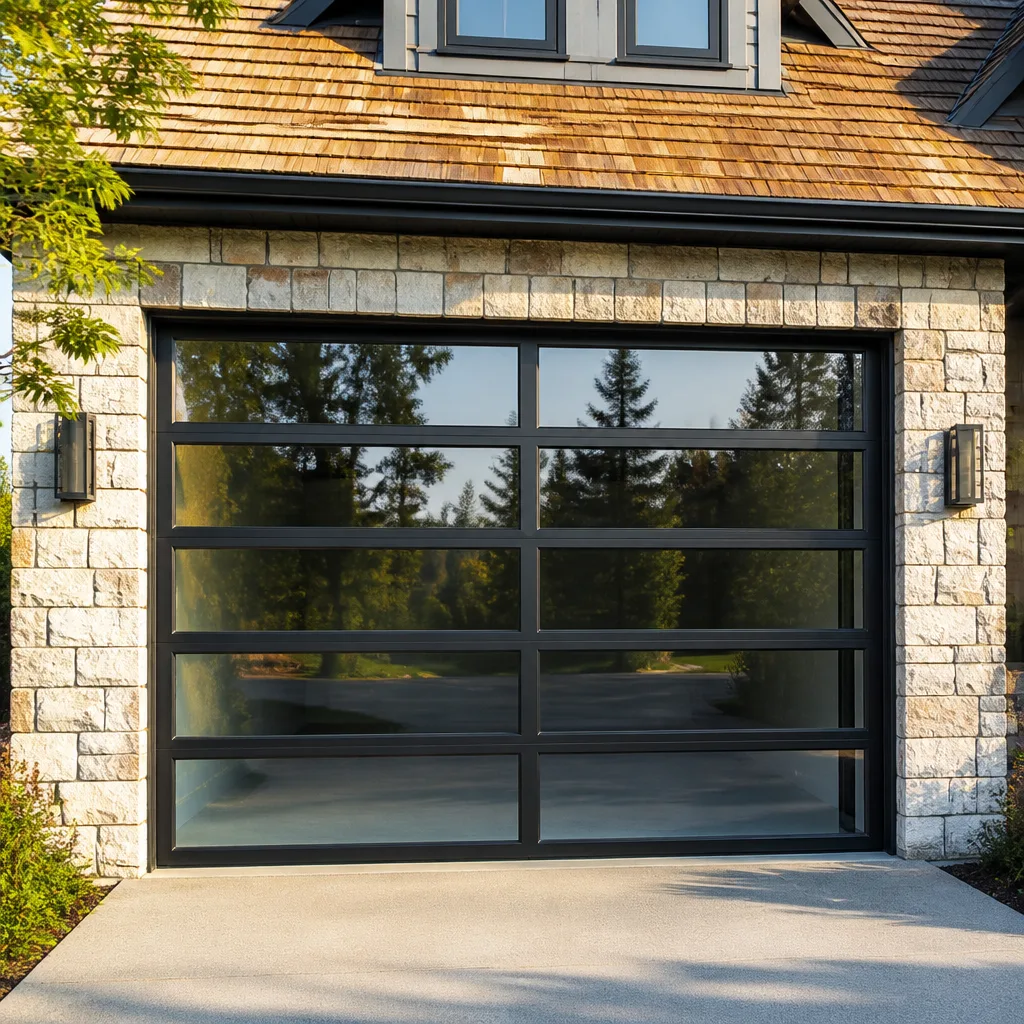 Full-view glass
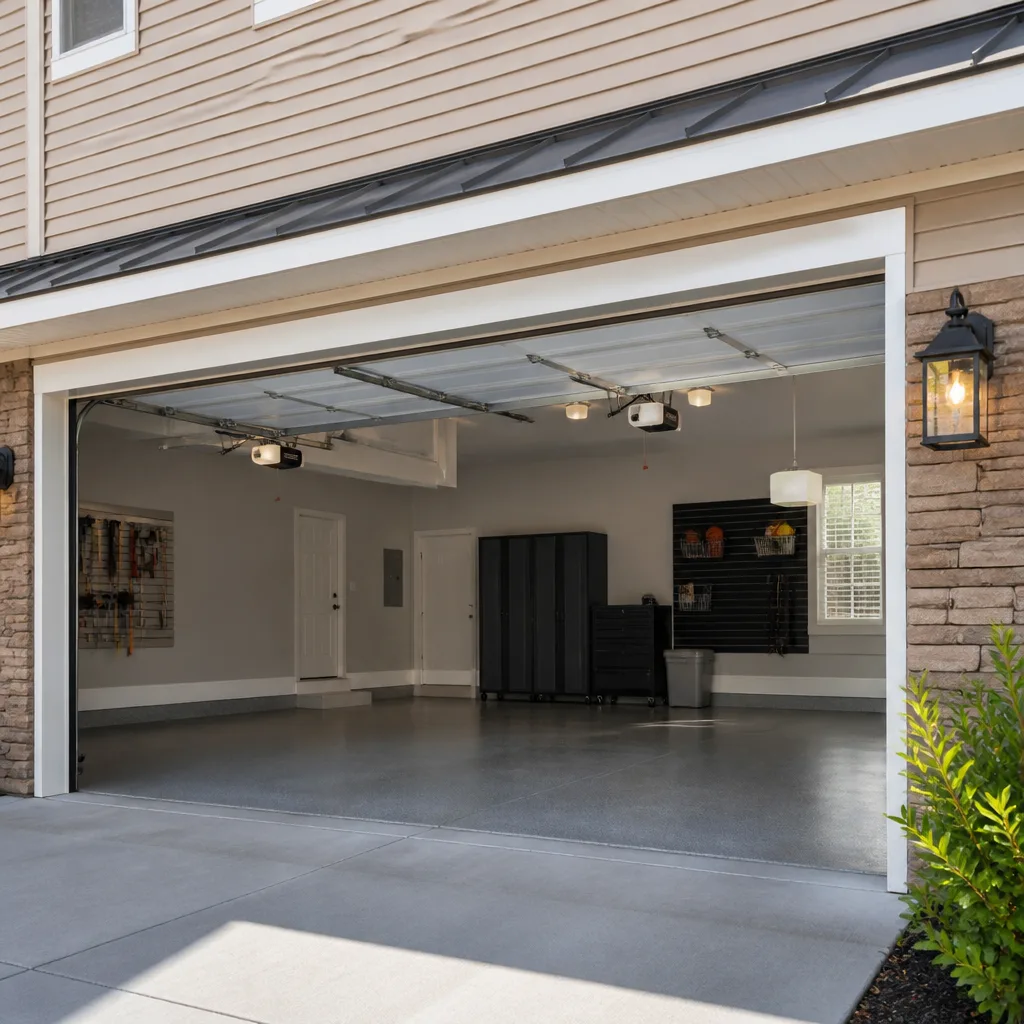 LiftMaster openers
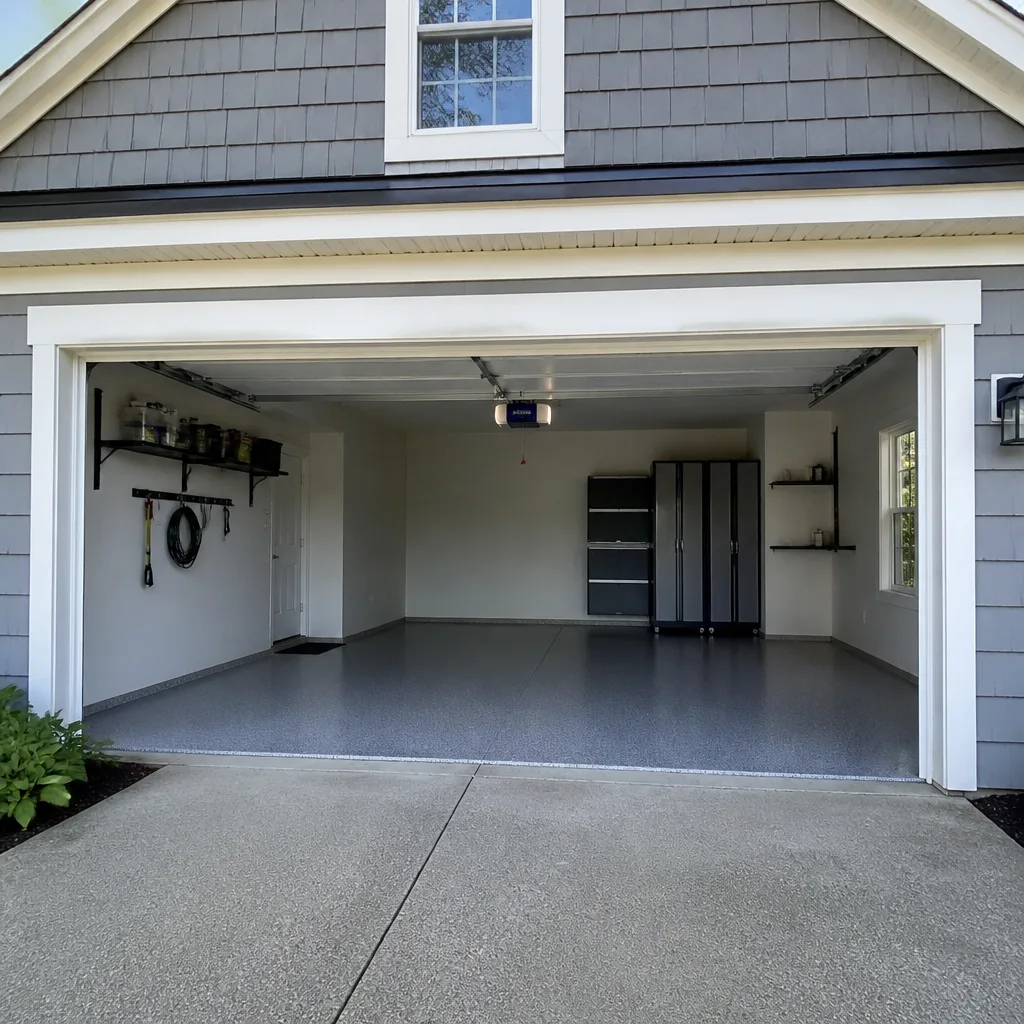 Chamberlain openers
Full 25-point door and opener safety check with every visit - springs, cables, rollers, tracks, and your LiftMaster or Chamberlain opener included
You get a price before we start. It does not change when the pro arrives.
Get your free estimateGarage Door Cost Breakdown: The Portsmouth Homeowner’s Reference for 2026
The garage door quote that looks competitive online almost never includes the hardware Portsmouth homes actually need. A big-box number for a basic steel door, ordered and hung, tends to leave out the wind-load-rated components and the corrosion-resistant tracks and hinges that a house near the water has to have. That gap is where budgets quietly break. We’ve watched homeowners compare three quotes that mean three different things, then pick the low one and pay to redo the job. This reference fixes that. You’ll get real 2026 cost ranges for springs, openers, panels and full replacement, plus a line-by-line way to compare bids apples to apples. It’s built for Portsmouth, where the shoreline changes the math.
Quick Answer
In 2026, a full garage door replacement in Portsmouth typically runs about $1,400 to $3,800 installed for a single door, spring replacement is usually $180 to $340 per spring, opener replacement lands around $350 to $750 installed, and single panel replacement starts near $200 and climbs with the door’s style. The spread between the low and high end is mostly hardware grade, wind-load compliance and labor, not the door itself. Every figure below is an estimate. The written quote you get after a measure is the price that stands.
Styles & brands we work with
- Raised-panel steel
- Carriage house
- Modern flush
- Full-view glass
- LiftMaster openers
- Chamberlain openers
Table of Contents
- What each job type costs in Portsmouth
- Why coastal hardware costs more: the premium explained
- Wind-load compliance and what it adds to an install
- Insulated doors, R-value and the break-even question
- Tune-ups, labor rates and the seasonal visit
- How to compare contractor quotes line by line
- Brands and what they change in the price
- Common mistakes to avoid
What each job type costs in Portsmouth
Garage door work sorts into a handful of jobs, and each has its own price band. The table below splits parts from labor so you can see where your money goes. Labor rates in the Hampton Roads market run higher than most of the state because contractor demand here is steady, so a job that costs less inland costs more in Portsmouth. Treat these as typical ranges, not quotes.
- Spring replacement (per spring): $180 to $340, parts and labor together. A matched pair is usually replaced as a pair, so budget roughly double.
- Opener replacement: $350 to $750 installed, with the belt-drive units from LiftMaster, Chamberlain and Genie at the middle of that range and quieter smart-home models toward the top.
- Single panel replacement: $200 to $600, depending on whether the panel is a common steel style or a decorative one that has to match an older door.
- Track and hinge repair: $150 to $450 for a set, more if the tracks need straightening after a hit.
- Full install, single door: $1,400 to $3,800, spanning basic steel up through insulated carriage-house styles from Clopay, Amarr or Raynor.
- Full install, double door: $2,600 to $6,500, roughly double the single-door labor plus a wider, heavier door and heavier springs.
The low end of each band is a standard part with standard hardware. The high end is premium hardware grade, a difficult removal, or a door with windows and trim. Neither end is padded. It’s the difference between a job that lasts and one that comes back. If your door is stuck or won’t close, that’s a repair call rather than a scheduled job, and our garage door repair service covers it. Call (888) 839-5070 for a free estimate. We answer 24/7. Fast dispatch from 7am to 7pm, Sunday through Friday.
Why coastal hardware costs more: the premium explained
Portsmouth sits on the edge of the Elizabeth River and close to the Chesapeake Bay, and the moisture in the air here does a slow number on standard garage door hardware. That’s why a builder-grade steel door installed here often looks fine at year three and pitted at year eight. The premium for the right hardware is real, and it’s worth paying.
Here’s how the cost breaks down between the two hardware grades:
- Standard galvanized hinges and rollers: included in most base quotes. They work, but the plating wears at the roller pivot and needs re-lubricating more often.
- Corrosion-resistant or marine-grade alternatives: typically add 10% to 20% to the hardware line of a full install. That’s usually $80 to $250 on a single door.
- Stainless or nylon rollers: add $40 to $120 for a full set. These are the parts that fail first on a standard build.
- Coated springs: a slight uplift on the spring pair, and they hold up better in humid air.
The freight premium is part of this too. Marine-grade hardware usually ships from a distributor that handles coastal accounts, and getting it to a Portsmouth address costs more than pulling standard stock from a regional warehouse. That freight shows up in the quote, whether a contractor labels it or not.
This is where the $800 door quote falls apart. A quote at that price is a standard door with standard hardware, and it doesn’t include the upgrade. The real comparison price is often 20% to 35% higher once a contractor prices the hardware a Portsmouth house actually needs. Not every job needs marine-grade parts. A door facing the leeward side of a garage a block inland is fine with a good galvanized set and regular lubrication. Ask the contractor to justify the grade, and you’ll know quickly whether the premium is honest. Our garage door spring repair work is where this matters most, because springs and cables are the parts that fail dangerously.
Wind-load compliance and what it adds to an install
New garage door installations in Portsmouth’s coastal construction zone carry wind-load requirements that a standard residential install elsewhere doesn’t. Those requirements are set by your local building department, and they change what’s in the box. The door itself has to carry a rating, the tracks have to be reinforced, and the hardware has to hold the panels in place under load. A contractor who quotes a door without asking about the wind zone isn’t quoting your job.
What wind-load compliance typically adds to an install:
- Rated door panels or an upgraded door frame. Usually $150 to $500 more than a door of the same style without the rating.
- Reinforced tracks and struts. $100 to $350, depending on the door width and the load requirement.
- Heavier hardware set. A door sized for wind load needs heavier springs and hinges, which pushes the spring pair and hardware lines up.
- Certificate and inspection. The door has to be installed to the rating and inspected, and the paperwork has to go to the building department. This adds time, not usually a line-item cost.
Total uplift on a single-door install is often $250 to $700. On a double door it’s more, because the wider opening catches more load. The number depends on the door’s size, the opening’s location and what your city’s building department requires for that address, so the only reliable figure comes from a measure. Ask your contractor to put the wind-load rating and the certificate cost in writing.
The practical point is this: if two Portsmouth quotes differ by $400 and one includes a wind-rated door and the certificate and the other doesn’t, they aren’t competing quotes. They’re different jobs. We’ve seen that gap sink a homeowner’s budget when the inspector catches the missing rating after the door is hung.
Insulated doors, R-value and the break-even question
Insulated garage doors cost more up front and save some energy. In Portsmouth’s mild climate, the savings are real but modest, and the break-even point is measured in years rather than months. Here’s the honest math.
A single-car insulated door from a manufacturer like Clopay, Amarr or Raynor typically adds $300 to $800 over an uninsulated door of the same style. The R-value climbs from almost nothing on a single-layer steel door (roughly R-0 to R-2) to R-9 or R-12 on a double-layer or sandwich-panel door, and R-16 or better on a heavily insulated model. Higher R-value costs more, so the question is whether you need the top of that range.
Where the insulation pays you back:
- A garage under or beside living space. Insulation slows heat transfer through the shared wall. This is the strongest case for it.
- A garage used as a shop or workspace. Comfort matters more than the utility bill here.
- A door with windows. Insulated glass reduces condensation, which is a real issue in a humid Portsmouth summer.
- Noise. Insulated panels cut street and wind noise noticeably.
Where it’s harder to justify: a detached, unheated garage in milder weather. A high-R door there mostly buys quiet, not bills. Our advice is to choose insulation for the space you have, not the brochure number. An R-9 door on a garage shared with a bedroom is money well spent. An R-16 door on a detatched shed is not. The break-even calculation is simple once you know your garage’s layout and how much of the year you run heating or cooling in the rooms next to it.
Tune-ups, labor rates and the seasonal visit
A tune-up in Portsmouth usually runs $80 to $180, and it’s the cheapest way to avoid a repair bill. Labor in the Hampton Roads market is the main driver, and the work itself is a checklist rather than a repair:
- Balance and travel check. The tech opens and closes the door and watches for a hitch or a bind in the travel.
- Lubrication. Hinges, rollers, the torsion shaft and the opener rail get the right lubricant, not a general spray.
- Hardware torque check. Bolts and brackets loosen over time and need tightening before a track drifts.
- Safety reverse test. The door is tested to reverse under obstruction. This is the check that matters most on a door with kids or pets.
- Spring tension read. The tech eyeballs the spring’s stretch and listens for the warning signs of a spring that’s about to go.
The spring is where a tune-up becomes urgent. Springs are the most dangerous part of a garage door, and they’re under extreme tension even when the door is closed. A technician who flags a tired spring is saving you a two-in-the-morning call when it snaps. We handle spring work as a dedicated service because the risk is real and the tools and training for it are specific. We’d rather tell you a spring has a few months left than have you find out the hard way.
The labor rate also shows up in small things. A door that’s been hit and needs a track straightened runs $150 to $450, and most of that is the trip and the straightening time, not the track. A door that’s simply out of alignment runs less. Ask for the labor and parts on separate lines when you call, and you’ll see where the rate is going.
How to compare contractor quotes line by line
Most garage door quotes are two lines long: a door and a number. That format is built to hide the differences. A fair quote is itemized, and asking for the same line items from every contractor turns a confusing pile of bids into a clear comparison. Here’s what to request.
- The door model and manufacturer, written out. “A steel door” isn’t a model. You want the manufacturer and series so you can check what you’re getting.
- The hardware grade. Standard galvanized, or corrosion-resistant? This is the line that separates a Portsmouth-appropriate install from one that pitted in a few years.
- The wind-load rating and certificate. Ask for the rating for your address and whether the certificate and inspection are included.
- Parts and labor split. Two numbers, not one. This makes it easy to see when a quote is low on parts and high on labor, or the reverse.
- Removal and disposal. Hauling the old door away costs something. If it’s not on the quote, it’s coming later.
- Opener compatibility. If you’re keeping your opener, ask whether the new door’s weight and balance suit it. An opener sized for a light door will strain under a heavier insulated one.
- Warranty terms on parts and labor separately. The labor warranty matters more than most homeowners realize.
Do that with three contractors and the spread will make sense. The low quote will usually be missing two or three of those lines. The high quote may be including things you don’t need in your garage. The middle quote, with every line filled in, is often the honest one. None of this should cost you anything: estimates are free, and any contractor worth calling will measure and quote without a charge.
If the door is past the point where repair makes sense, an install is the answer, and that’s a scheduled job rather than a same-day call. That’s when a contractor measures, orders the door and sets an install date. For opener work, our garage door opener repair handles both legacy and modern units, so you don’t get quoted a new opener when a repair would do.
Brands and what they change in the price
Brand choice moves the price less than hardware grade does, but it isn’t irrelevant. The door brands you’ll see most on Portsmouth homes are Clopay, Amarr, Wayne Dalton and Raynor, and the opener brands are LiftMaster, Chamberlain, Genie and Craftsman. Each brand has its own parts ecosystem, and a contractor who doesn’t know the ecosystem charges more for the same job.
A LiftMaster or Chamberlain opener costs the same to install as a Genie unit of similar capability. The difference shows up in the repair. A technician who knows the brand’s lineup can diagnose a control board fault, a stripped gear or a dead travel module quickly instead of swapping parts. On the door side, a Clopay or Amarr panel in a common style can be matched and replaced with less trouble than a discontinued Wayne Dalton or Raynor panel, which sometimes has to come as a set.
The practical benefit to you is that a quote shouldn’t include a brand-surprise upcharge. If your door or opener is one of those brands, the quote is based on that brand, not on a generic figure that has to be adjusted later. We work on your brand, which means the number you get is for the equipment you have. That’s the whole point of a specialty contractor over a general handyman.
Common Mistakes to Avoid
- Comparing quotes with different hardware. Two Portsmouth quotes can differ by hundreds of dollars simply because one includes corrosion-resistant hardware and the other doesn’t. Ask for the hardware grade in writing before you compare the totals.
- Skipping the wind-load rating question. An installer who doesn’t ask about the wind zone for your address may be quoting a door that won’t pass inspection. Make it a direct question and get the answer in writing.
- Replacing one spring when the pair is due. Springs wear in pairs, and replacing one leaves you with a mismatched set that fails at different times. Expect a pair quote, and treat a single-spring quote as a reason to ask why.
- Buying the high-R door for the wrong garage. An R-16 sandwich door on a detached unheated garage in Portsmouth is money that doesn’t come back. Match the insulation to the space that’s actually attached to the house.
- Letting a tune-up slide because the door still opens. A spring or a cable that’s about to fail often gives no warning on the outside. A scheduled tune-up is the cheapest check you can buy.
- Assuming the online door price is the installed price. The listed price for a door is almost never what you pay installed. The hardware, wind-load rating, labor and disposal are all separate, and a fair quote lists them.
- Hiring a generalist to save on labor. Spring work is the most dangerous part of the job and needs specific training and tools. A handyman who’s never done it saves you a little and risks a lot.
See the difference
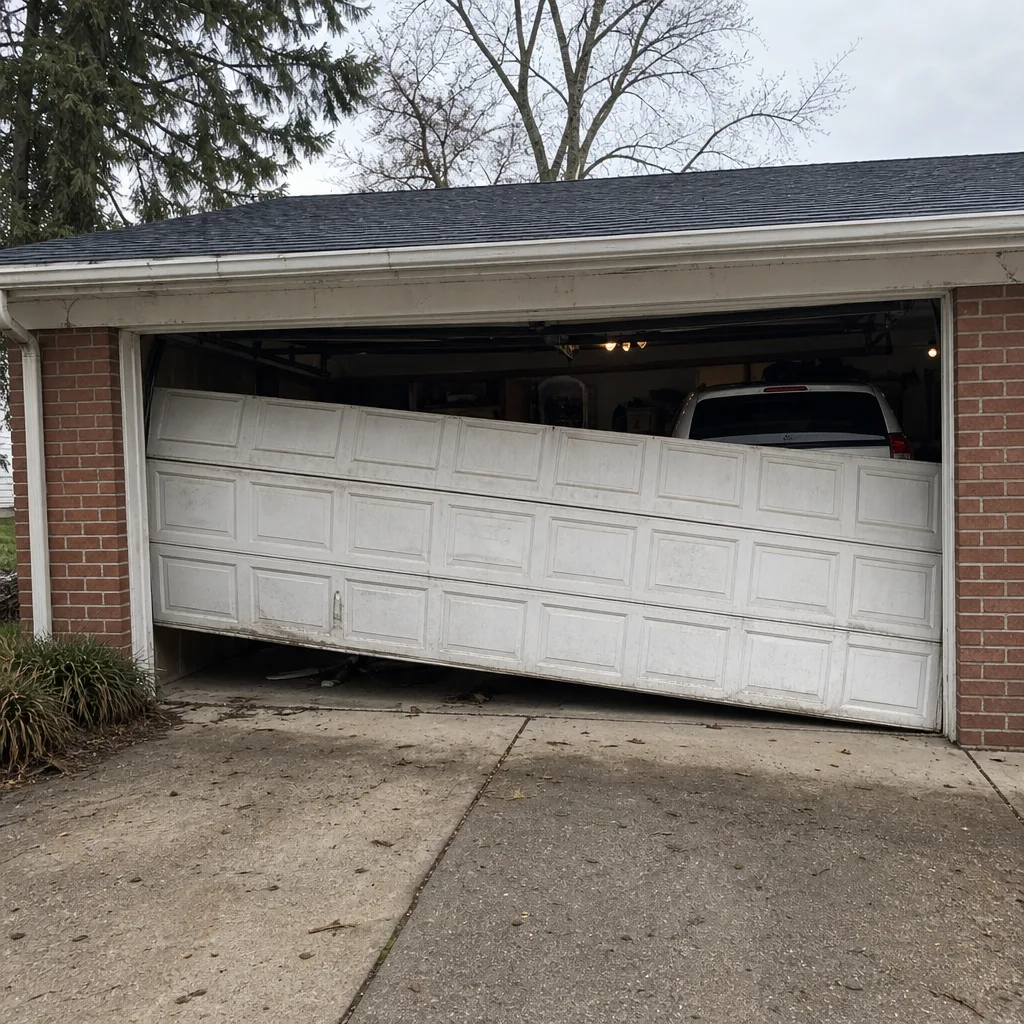 Before
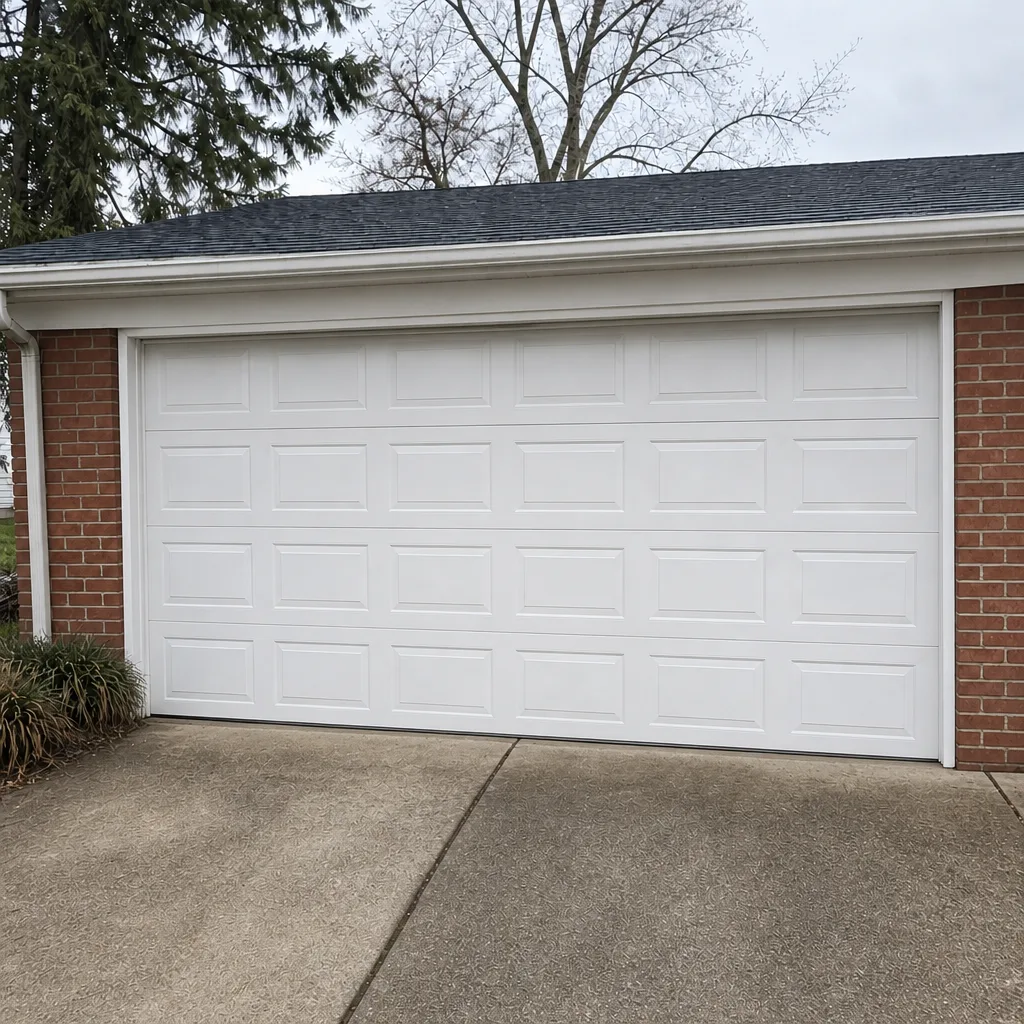 After
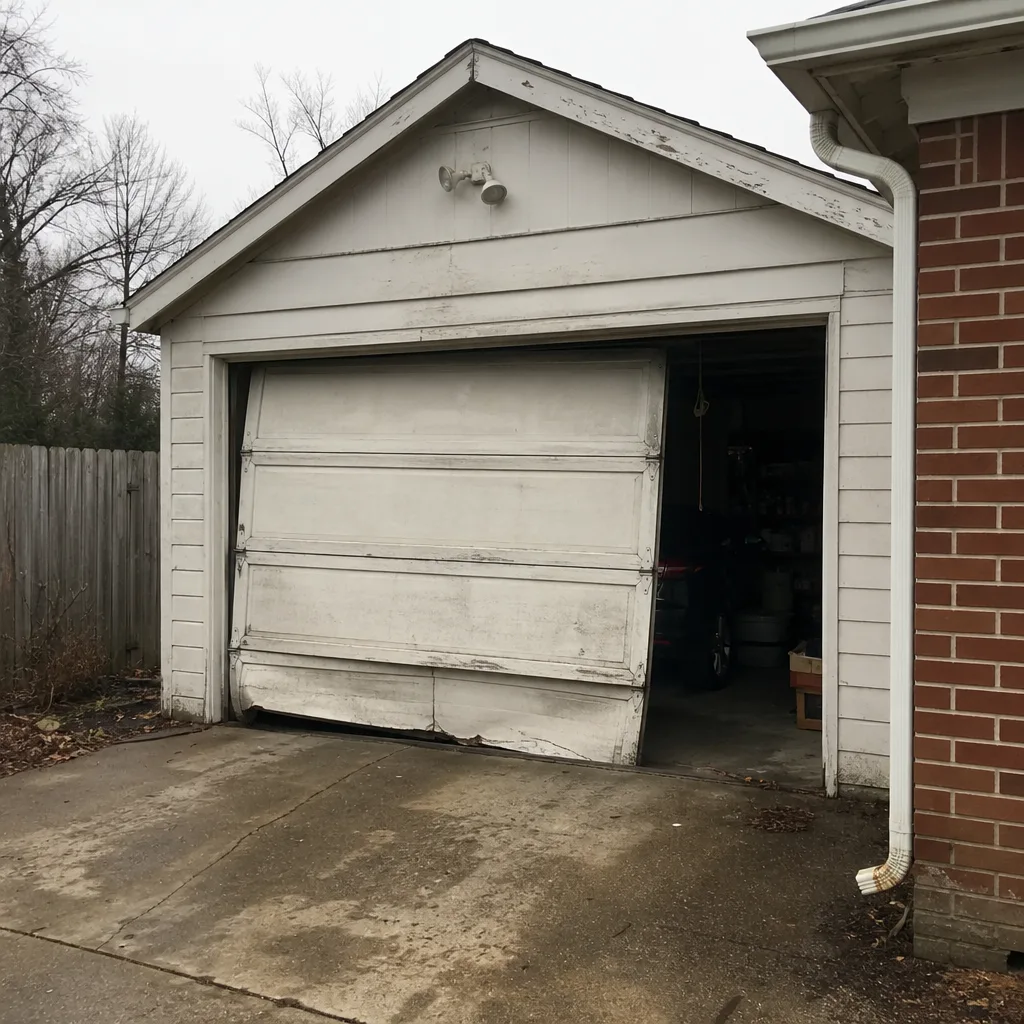 Before
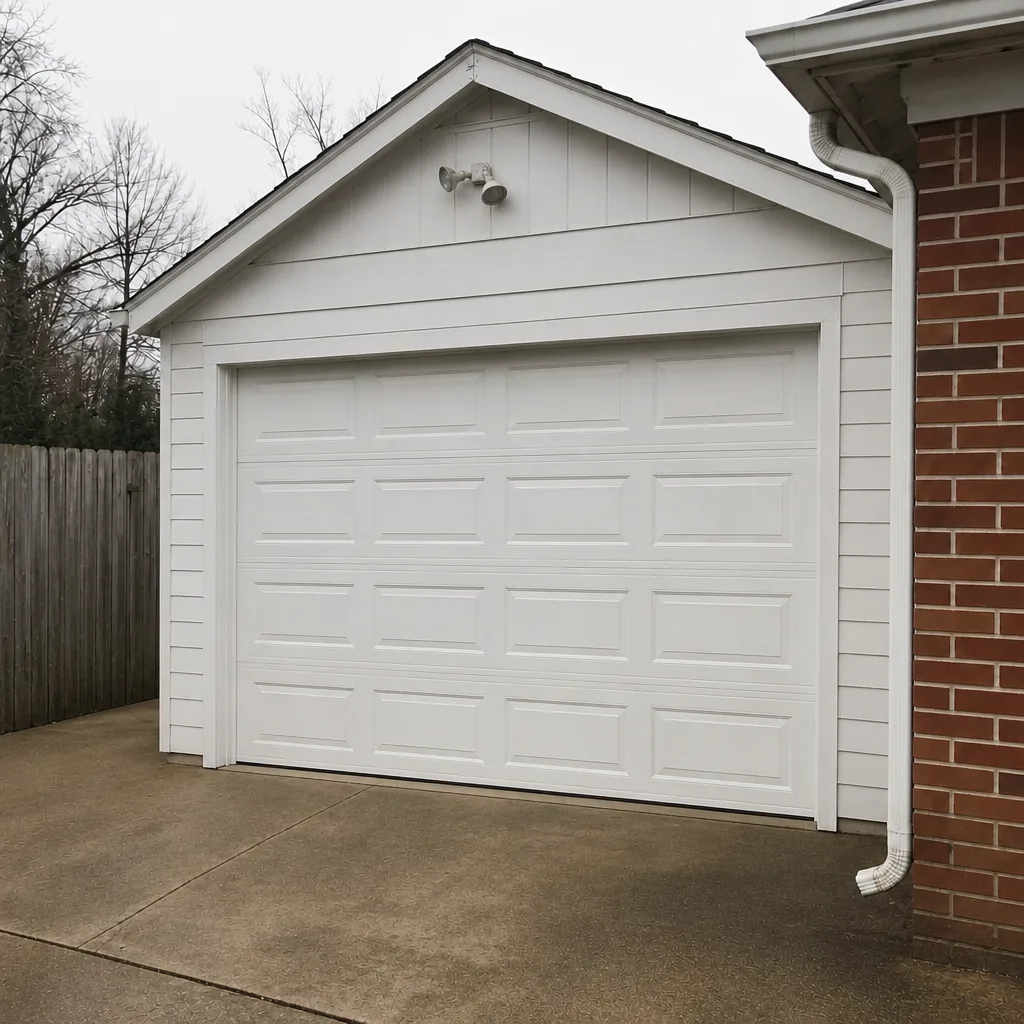 After
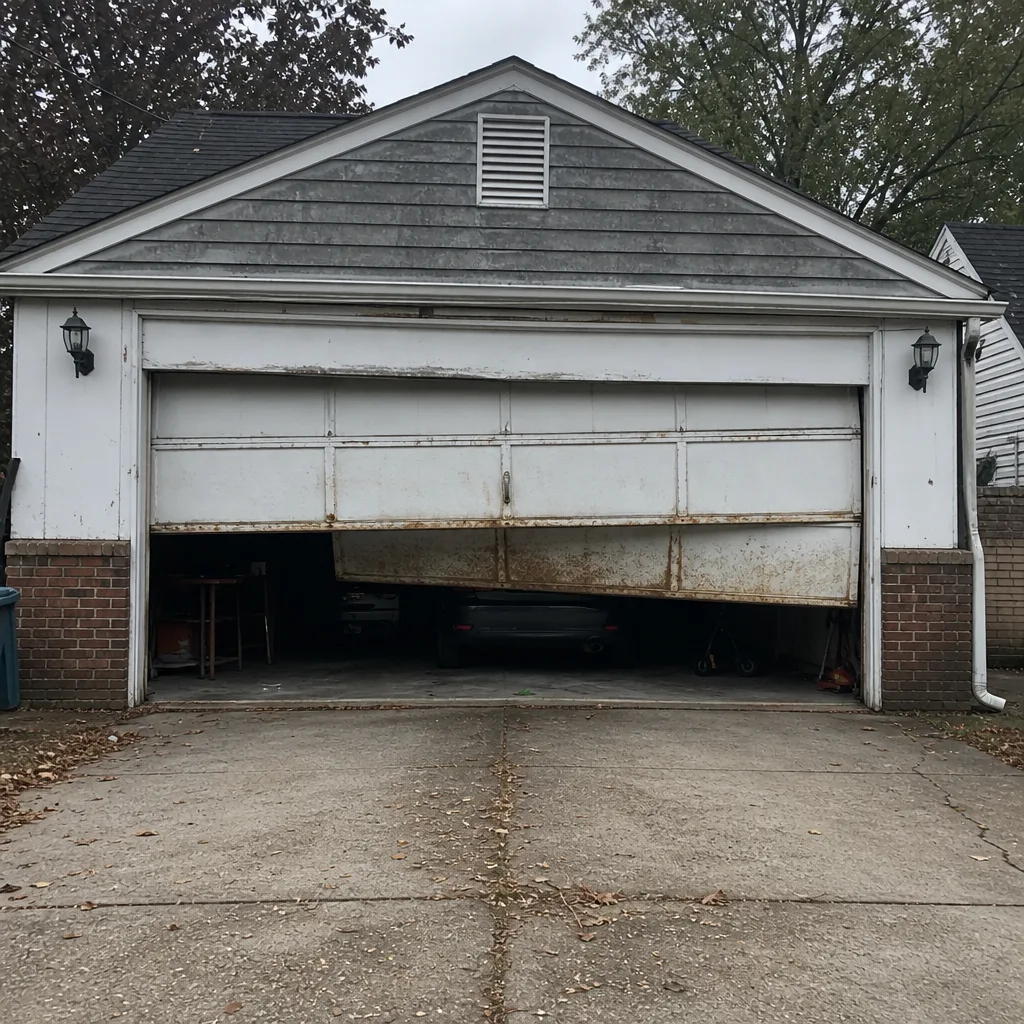 Before
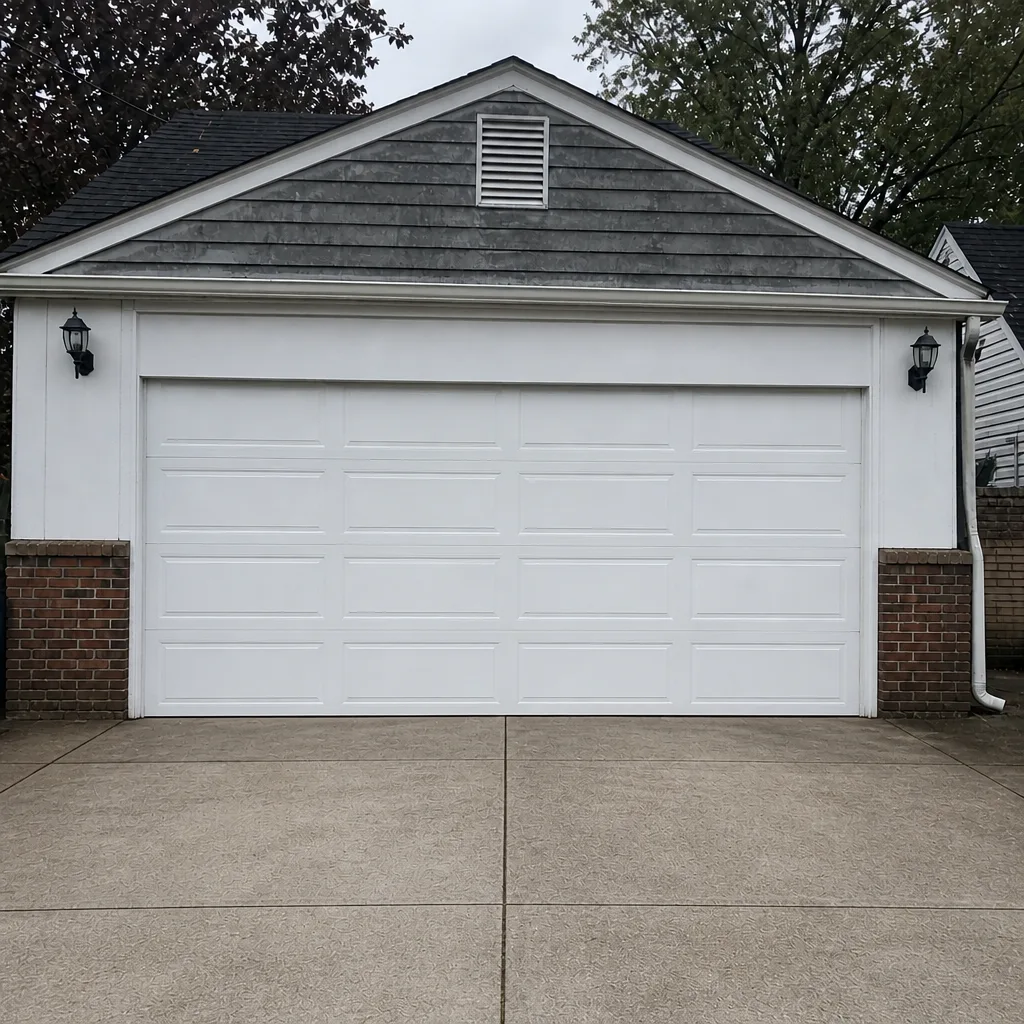 After
When to Call a Professional
Some jobs are a call, and some wait for a scheduled visit. Call us when a spring has snapped and the door won’t lift, when a cable has come loose or hangs slack, when the door won’t close and blocks the driveway, when the opener runs but the door doesn’t move, or when the door comes down hard with no safety reverse. Those are the situations that need a technician rather than a weekend. For a door that’s simply noisy, a panel that’s dented but functional, or a plan to replace a door that’s near the end of its life, a measure-and-quote visit is the right move, and it can be scheduled. Portsmouth Garage Door Repair Co offers free estimates in Portsmouth. Call (888) 839-5070. We answer 24/7. Fast dispatch from 7am to 7pm, Sunday through Friday.
Frequently Asked Questions
A single garage door replacement in Portsmouth typically runs $1,400 to $3,800 installed, with a double door at $2,600 to $6,500. Most of the variation is hardware grade, wind-load compliance and the door’s insulation, not the door’s size. The written quote after a measure sets the final price. Call (888) 839-5070 for an exact quote – estimates are free.
The online price is usually a standard door with standard hardware, and in Portsmouth that’s often not the right door for the house. Corrosion-resistant hardware and a wind-load rating add to the total, and the real number is typically 20% to 35% higher than the advertised figure. Ask any contractor to itemize the hardware grade and the rating so you can see what the extra covers.
Spring replacement in Portsmouth usually runs $180 to $340 per spring, and a matched pair is commonly replaced together, so budget roughly double that. Springs are under extreme tension and are the most dangerous part of the door, so this is not a job to attempt yourself. Call (888) 839-5070 for an exact quote – estimates are free.
Yes for most repair calls, including a snapped spring, a dead opener or a door that’s off its track. We answer 24/7, with fast dispatch from 7am to 7pm, Sunday through Friday. A call outside dispatch hours is booked into the next opening. Installation and replacement are measured, ordered and scheduled rather than same-day.
No. The written estimate sets the price before any work starts, and the figure you agree to is the figure you pay. If the diagnosis turns up something the estimate couldn’t cover, you’ll hear about it before anyone picks up a tool. Call (888) 839-5070 for an exact quote – estimates are free.
Yes. The local professionals we connect you with are licensed and insured as their state requires, and they work on the brands most Portsmouth homes have. You can ask to see credentials at the visit. Call (888) 839-5070 to schedule a free estimate.
The Bottom Line
Portsmouth garage door pricing comes down to four things: the job type, the hardware grade, the wind-load requirement for your address, and the labor rate in the Hampton Roads market. Those four explain almost every dollar of difference between quotes. Use the itemized checklist in this guide, ask for the wind rating and the hardware grade in writing, and compare contractors on the same lines. Replacement is a measured and scheduled job; repair is often same-day. Our technicians have up to 12 years of experience, and we work on the brands you already own. Call (888) 839-5070 for a free estimate. We answer 24/7. Fast dispatch from 7am to 7pm, Sunday through Friday.
Written by the team at Portsmouth Garage Door Repair Co.