
Last updated November 22, 2026
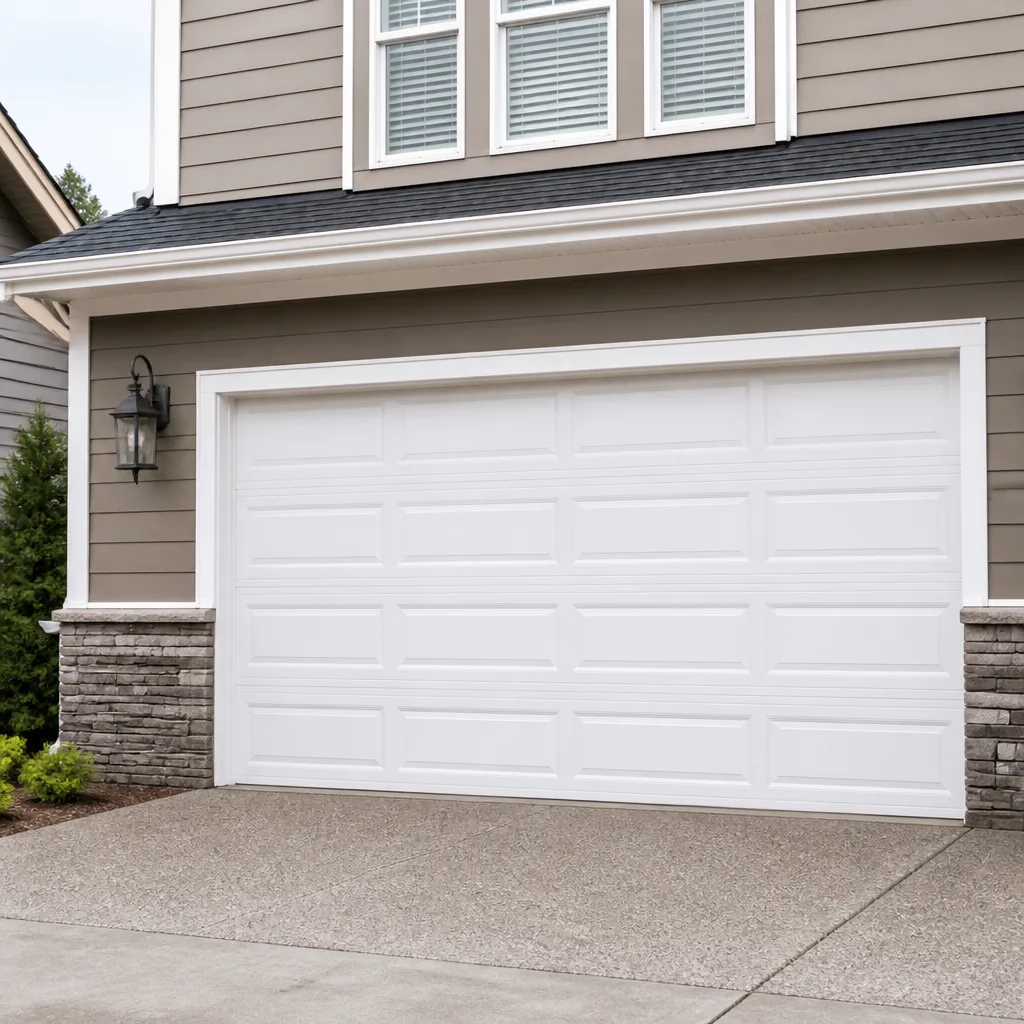 Raised-panel steel
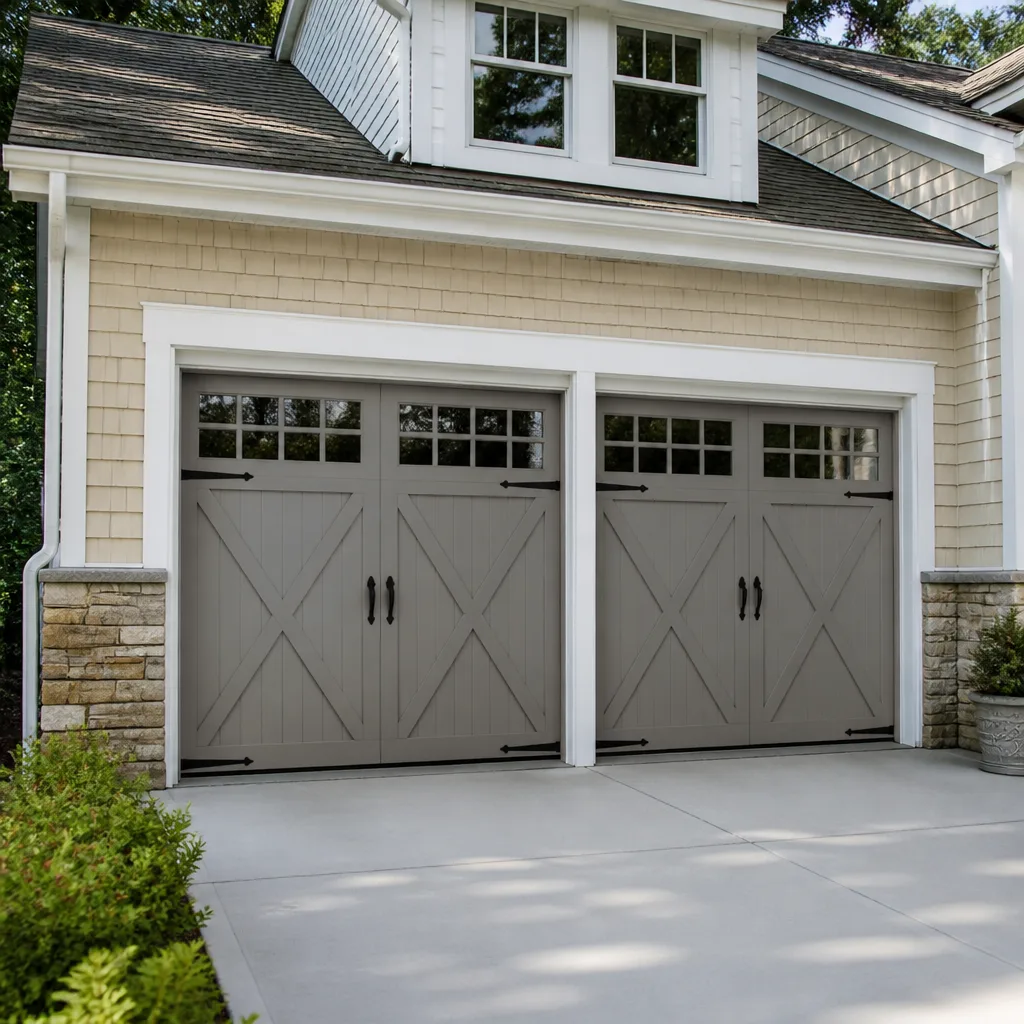 Carriage house
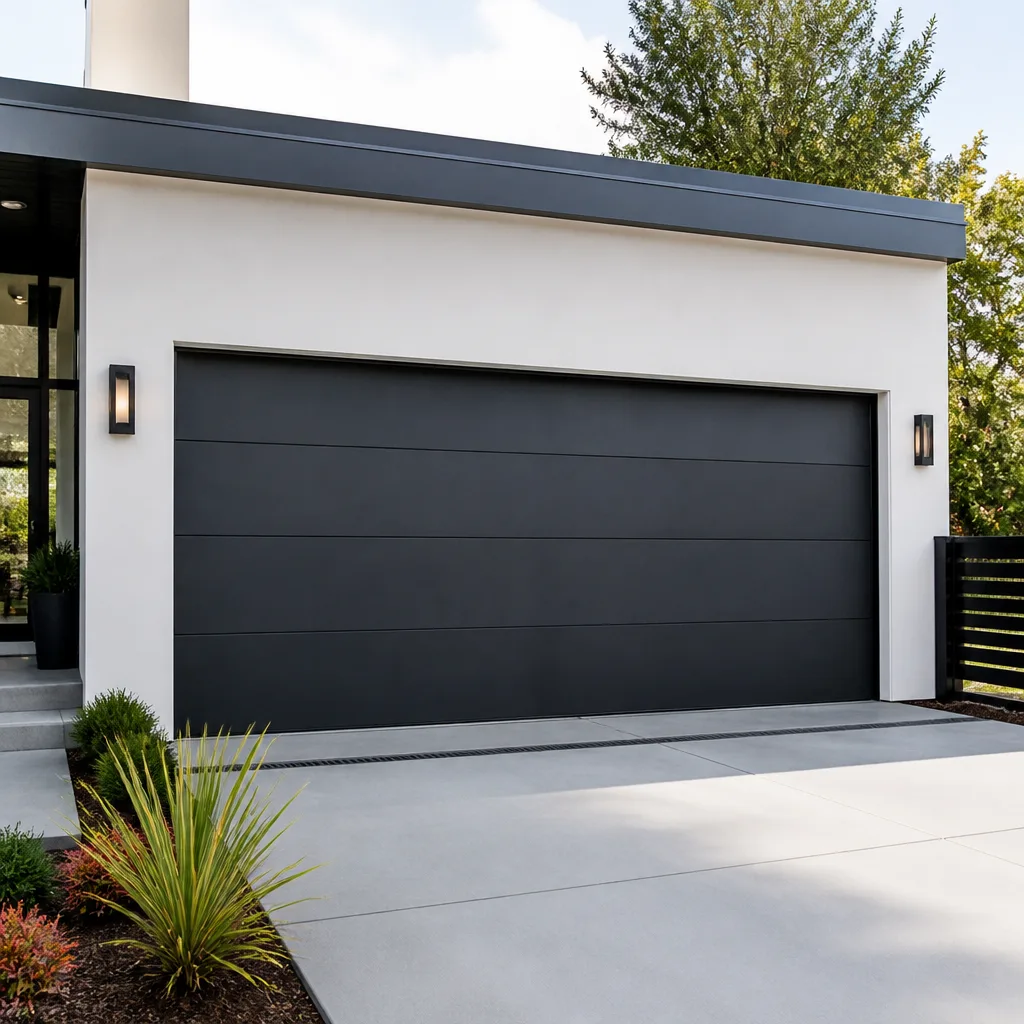 Modern flush
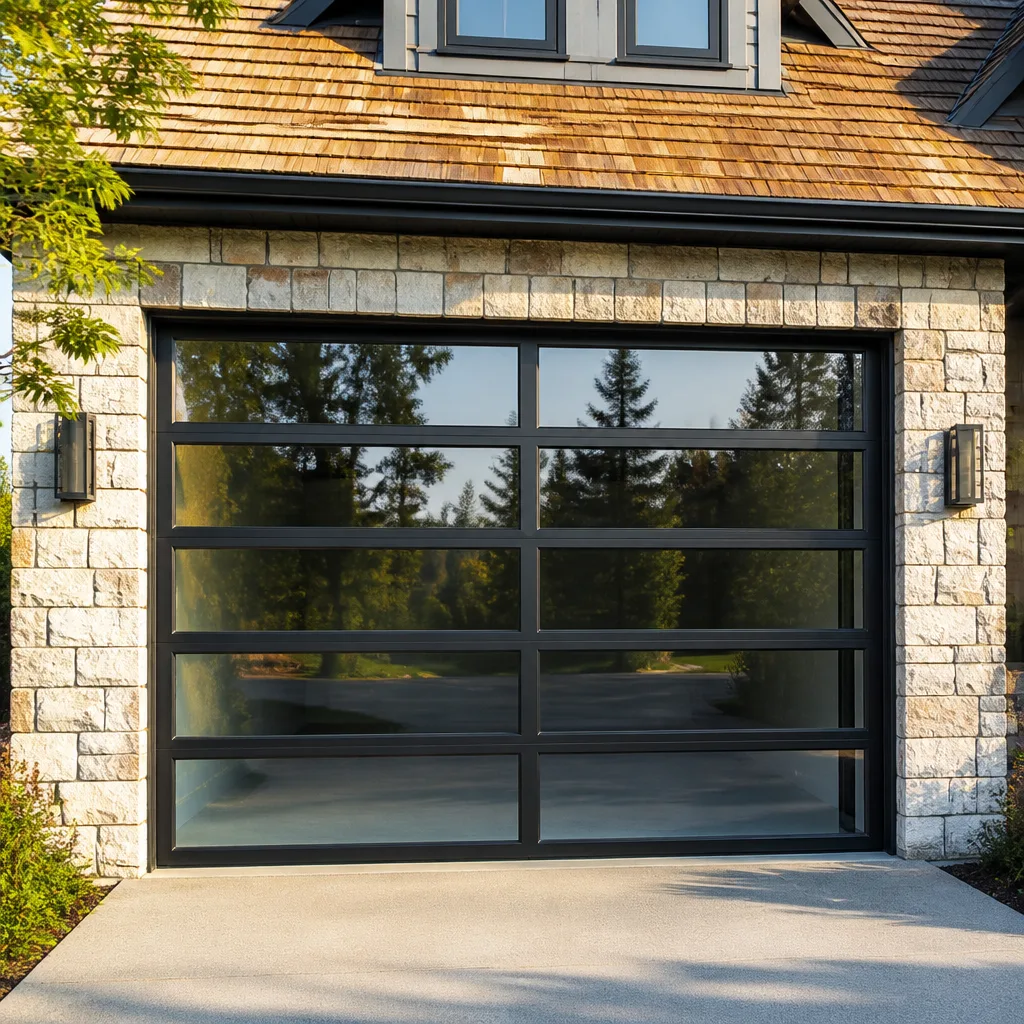 Full-view glass
 LiftMaster openers
 Chamberlain openers
Full 25-point door and opener safety check with every visit - springs, cables, rollers, tracks, and your LiftMaster or Chamberlain opener included
You get a price before we start. It does not change when the pro arrives.
Get your free estimateGarage Door Permits, Codes & Inspections in Portsmouth, VA: What You Need to Know
Here’s the part most homeowners get wrong: swapping a single-layer garage door for an insulated double-layer door on the same opening can trigger a Portsmouth permit requirement even though nothing about the opening itself changed. The door is heavier, the springs are different, and the assembly is no longer what the original approval covered. In our experience, plenty of these installs happen without anyone filing a thing, and the homeowner doesn’t find out until years later at a title search. This guide explains where the line actually sits in Portsmouth, what the Virginia code says about wind resistance, what a PCED inspector looks at, and how HOA rules in neighborhoods like Churchland add restrictions the city doesn’t.
Quick Answer
In Portsmouth, a garage door replacement that is truly like-for-like (same size, same weight class, same material, same opening) is generally treated as maintenance and does not need a building permit, while a change in door weight, material, size, or opening structure usually does. Any replacement in Portsmouth’s Coastal A or V flood zones has to meet Virginia Uniform Statewide Building Code wind-resistance requirements, and that’s where a permit and inspection most often come into play. When in doubt, the Portsmouth Department of Planning and Community Economic Development (PCED) building department makes the final call, not your contractor.
Styles & brands we work with
- Raised-panel steel
- Carriage house
- Modern flush
- Full-view glass
- LiftMaster openers
- Chamberlain openers
Table of Contents
- Does a garage door replacement need a permit in Portsmouth?
- What Virginia’s Uniform Statewide Building Code says about garage doors
- Coastal A and V flood zones in Portsmouth
- What a PCED inspector actually checks
- How an unpermitted install shows up at a title search
- HOA and historic district rules in Churchland and Prentis Park
- Springs, openers, and the work that never needs a permit
- What paperwork to keep after the job
Does a garage door replacement need a permit in Portsmouth?
Sometimes, and the deciding factor is whether the job changes the door’s weight, size, material, or the structure of the opening. Portsmouth treats a straight like-for-like swap as maintenance. That means the same door in the same opening, same dimensions, comparable weight and framing. Anything that shifts those variables pushes the job into permit territory, and that’s a distinction a lot of homeowners never hear explained.
The trouble is that “like-for-like” gets stretched in casual conversation. Consider the common upgrade from a basic single-layer steel door to an insulated double-layer or sandwich door. On paper it’s the same 16-by-7 opening. In reality the door is substantially heavier, and the springs, hinges, and possibly the track are now under different loads than the original approval assumed. That’s a structural change to the assembly, even though the rough opening is untouched.
Here’s the practical test we suggest when a homeowner asks us about permits before a Portsmouth install:
- Is the new door the same width and height? If not, the opening is being modified and you need to talk to the city.
- Is it the same material and weight class? Steel to steel at the same gauge is one thing; wood to steel or single-layer to insulated is another.
- Is the framing, header, or track layout changing? Any structural change requires a permit.
- Is the property in a flood zone? If yes, wind-resistance requirements kick in regardless of how simple the swap looks.
- Is there an HOA or historic overlay? Those can require approval even when the city doesn’t.
If any answer is “yes” or “I’m not sure,” call PCED before you order the door. It costs nothing to ask, and it protects the sale of your house years down the line.
What Virginia’s Uniform Statewide Building Code says about garage doors
Virginia uses a statewide code (the Uniform Statewide Building Code, or USBC) that Portsmouth enforces locally through PCED. For garage doors, the parts of the USBC that come up most often are the wind-resistance provisions and the requirements for attached garages acting as part of the building envelope.
Wind resistance is the big one in Portsmouth. A garage door is the largest moving opening on most homes, and in high-wind events it’s also one of the most vulnerable. If the door fails, the pressure can compromise the roof and walls behind it. That’s why the code treats garage doors on wind-borne-debris regions with specific requirements about labeled assemblies, anchorage, and the interplay between the door, the track, and the framing.
What that means for you in plain terms:
- The door assembly may need to be a labeled product rated for the design wind speed at your address, not just a door that “looks sturdy.”
- The anchorage and track attachment have to match the manufacturer’s published installation instructions for that rated assembly.
- Attached garages typically need a separation between the garage and the living space, and the door has to work with that assembly, not fight it.
- The inspector will want to see the manufacturer’s installation instructions and any evaluation or listing documentation for the assembly.
We work on Raynor, Clopay, Amarr, and Wayne Dalton doors, and the documentation requirements differ by product line. The window between “the door I want” and “the door that satisfies the code at my address” is tighter than homeowners expect. It’s worth confirming before you commit to a model.
Coastal A and V flood zones in Portsmouth
Portsmouth has real flood exposure, and that changes the math on garage door work in a way inland cities don’t have to think about. If your property sits in a Coastal A Zone or a V Zone, the garage door assembly is subject to stricter requirements than a door in an ordinary residential zone.
Coastal A Zones are areas landward of the V Zone boundary where wave heights during a storm are still significant enough to matter. V Zones are the velocity zones, where wave action and fast-moving water combine. In both, the USBC’s flood provisions and your local floodplain ordinance layer on top of the ordinary building code. The short version for a garage door:
- Coastal A Zone: the door and its anchorage have to meet the wind and water loads for that zone. A standard residential-rated door may not qualify.
- V Zone: these are the strictest. Doors in V Zones often need specialized flood-resistant assemblies, and the supporting structure has to comply too.
- Both zones: the permit and inspection process is the mechanism the city uses to confirm the assembly matches the zone requirement. There’s no shortcut around it.
You can look up your property’s flood zone on the city’s GIS maps or through FEMA’s flood map service before you order anything. If you’re not sure how to read the result, ask PCED. We’ve had homeowners in Portsmouth discover mid-project that the door they wanted wouldn’t pass in their zone. Better to know that before the door is on the truck. For the install side of the job, see our guide to Portsmouth Garage Door Repair Co.
What a PCED inspector actually checks
When a Portsmouth garage door replacement does require a permit, the inspection isn’t a rubber stamp. The inspector is verifying that the installed assembly matches the permitted scope and the code requirements for your property. Here’s what actually gets looked at, in order of how often it comes up:
- Permit and approved plans on site. If the permitted door is a specific model from a specific manufacturer, that’s what has to be installed.
- Manufacturer’s installation instructions. These need to be the ones for the actual door installed, and the install has to follow them. Where the instructions and the code disagree, the code wins.
- Wind-load labeling and documentation. Product labels, evaluation reports, or listing documentation showing the assembly meets the required design pressure for your address.
- Anchorage and attachment. The way the track, brackets, and hardware are fastened to the framing. The inspector checks that the anchorage matches the approved method, not just that it looks solid.
- Spring and balance inspection. The door has to open and close under control, stay in place at the halfway point, and operate without the operator connected. That’s a real test of whether the torsion springs were sized correctly for the new door’s weight.
- Safety features. Auto-reverse mechanism and photo-eye function, tested in the inspector’s presence.
- Separation between garage and living space. Where the code requires it, the door assembly and the wall or ceiling between the garage and the house get verified.
Bring the permit number, the manufacturer’s instructions, the product documentation, and a copy of the approved plans to the inspection. If something isn’t right, the inspector writes a correction notice and you get the fix done and re-inspected. The most common reason a Portsmouth inspection fails is a door substituted for a different model than the one permitted. That happens when the homeowner changes their mind after the permit is pulled without updating the paperwork.
How an unpermitted install shows up at a title search
An unpermitted garage door install doesn’t announce itself. It hides in the gap between what your property records say and what’s actually bolted to your house. When you sell, that gap becomes a problem.
Here’s the sequence during a typical sale in Portsmouth:
- The buyer’s title company pulls the permit history for the address.
- An appraiser or inspector compares the current garage door to what the records indicate was last approved or installed.
- If a structural or material change has no permit behind it, the buyer’s lender can require it be resolved before closing.
- Resolving it after the fact means a retroactive permit, which means an inspection of work that’s already been done, which means the possibility of corrections.
- If the current door doesn’t meet the code for the property’s flood zone, the fix can become substantial.
None of this is a disaster. It’s a delay, a cost, and leverage for the buyer if they choose to use it. But it’s entirely avoidable. In our experience, the homeowners who run into trouble years later are the ones who were told “you don’t need a permit for that” by a contractor who didn’t check the zone or the change in door weight. That advice was probably well-intentioned. It was also possibly wrong. The city’s permit records are the version that matters at closing, so the safest move is to ask PCED before you order.
HOA and historic district rules in Churchland and Prentis Park
Portsmouth’s neighborhood associations and HOA overlays add restrictions that sit on top of city code. A door that’s perfectly legal from PCED’s standpoint can still violate your HOA covenants, and if you’re in a historic district the architectural review requirements are separate from the building permit process.
What that means in practice:
- Churchland: HOA covenants here often control door color, panel style, and window configuration. A sectional door with windows may be fine in one subdivision and prohibited in the next.
- Prentis Park: this neighborhood’s historic character means exterior alterations can require architectural review approval before work starts, not after. Material changes to garage doors are usually on that list.
- Other Portsmouth neighborhoods: HOA overlays vary block by block. Ask your HOA board directly, in writing, before you choose a door.
We mention this because the permit question and the HOA question are separate, and homeowners often assume approval of one covers the other. It doesn’t. If your HOA covenants require a specific panel style and your permit is for a different style, you can pass the city inspection and still have a compliance problem with your association. City approval and HOA approval need to line up before the door is ordered, and the biggest cause of delay on a Portsmouth install is getting one without the other.
Springs, openers, and the work that never needs a permit
Most of the work we do on Portsmouth garage doors doesn’t touch the permit process at all. Spring replacement, opener repair, track alignment, roller and hinge replacement, and cable work are maintenance on existing legal assemblies. No permit, no inspection, no paperwork.
That’s not a reason to skip the professional for the dangerous parts. Torsion springs are under extreme tension, and handling them without the right tools and experience can cause serious injury. Extension springs have their own failure points. We handle spring work because it’s the most technically demanding part of the trade, and we don’t hand out step-by-step instructions for a reason. If your door is heavy, jumps, or won’t stay up at the halfway point, the springs are the first thing to check, and that’s a job for someone who does it every week. Our garage door spring repair page walks through what to watch for.
Opener work is similar. Replacing a LiftMaster, Chamberlain, or Genie opener, repairing a dead unit, or upgrading to a smart-home platform is not a structural change and doesn’t require a permit. The one thing to check is whether the new opener changes the force curve on the door enough that the balance or the safety reverse needs recalibration, which any qualified technician will test on the same visit.
If the door itself is failing beyond repair, that’s the point where the permit question comes back into play. We’re honest about that line. garage door repair is often the answer; sometimes it isn’t, and we’ll tell you when a replacement makes more sense than throwing money at a door that’s done.
What paperwork to keep after the job
If your Portsmouth garage door work involved a permit, keep the paperwork. The paper trail is the difference between a smooth home sale in eight years and a scramble. Here’s what to file away:
- The permit itself, with the permit number visible.
- The inspection sign-off or final approval from PCED showing the work passed.
- The manufacturer’s installation instructions for the actual door installed.
- Product documentation: the model number, any evaluation report, and any wind-load labeling that came with the assembly.
- The written estimate and invoice from the installer, itemizing the door model, the springs, the hardware, and the opener if applicable.
- Any HOA approval or architectural review decision if applicable.
Take photos of the installed door and the spring assembly. A close-up of the spring label, the serial number on the door, and the anchorage points is worth more than any verbal description when a future buyer or inspector needs to know what was installed. Store the photos with the other home documents in your file, not just on your phone. For opener-related work, the model number and installation record on file from garage door opener repair is worth having too.
Common Mistakes to Avoid
- Assuming like-for-like covers a heavier door. An insulated upgrade in the same opening is a different assembly, and Portsmouth treats it that way in most cases. Check with PCED before you order.
- Trusting a contractor who says “we don’t need a permit” without asking why. They might be right, but the reasoning matters. If the answer is “we never pull permits for garage doors,” that’s a red flag.
- Skipping the flood zone lookup. If your home is in Coastal A or V, the door and its anchorage have specific requirements that a standard residential door may not meet.
- Assuming HOA approval covers the city permit, or the reverse. In Churchland and Prentis Park these are separate processes, and getting one without the other leaves you out of compliance on one front.
- Not updating the permit if you change the door model after pulling it. The most common Portsmouth inspection failure is a door on the property that isn’t the model on the approved plans.
- Throwing away the manufacturer’s instructions and the product documentation. They’re what an inspector or a future buyer will want to see.
- Not photographing the finished install. Photos of the spring label, door serial, and anchorage are the easiest paper trail to reconstruct years later.
See the difference
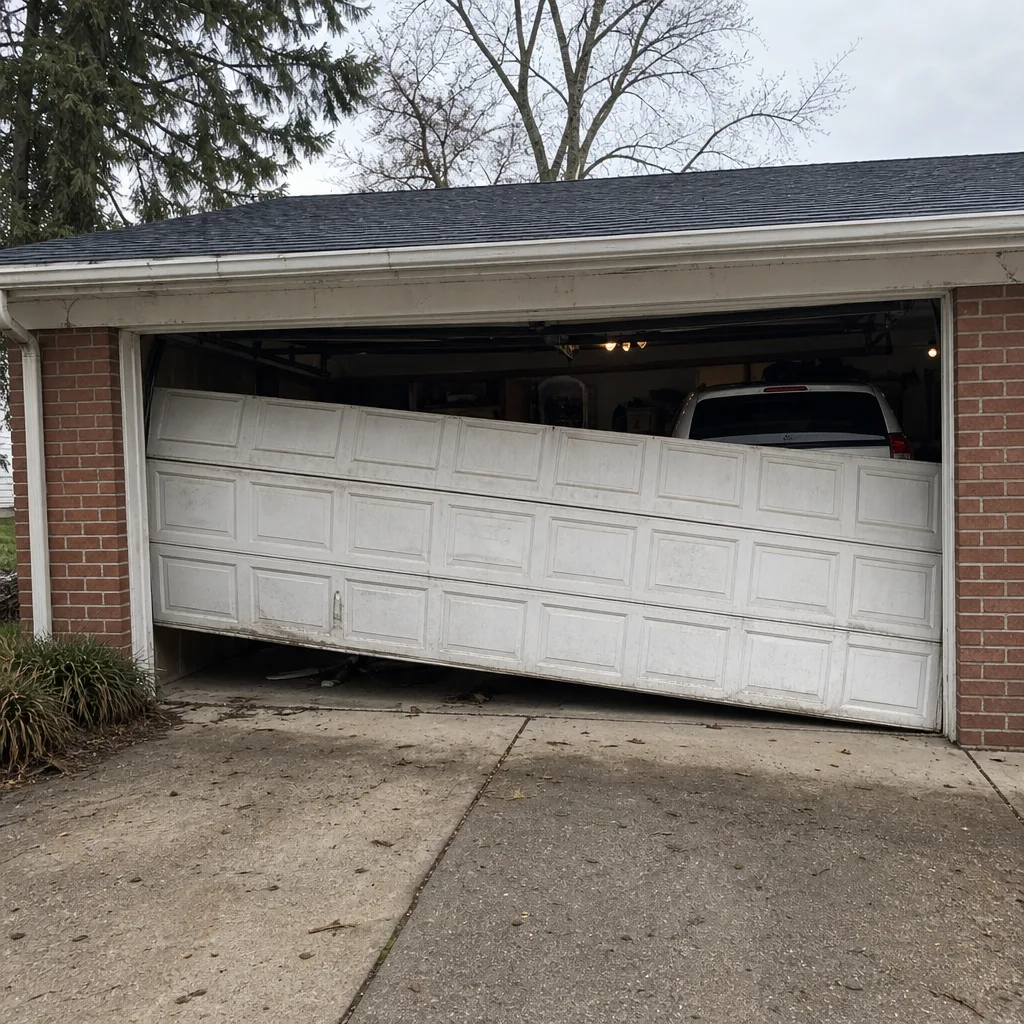 Before
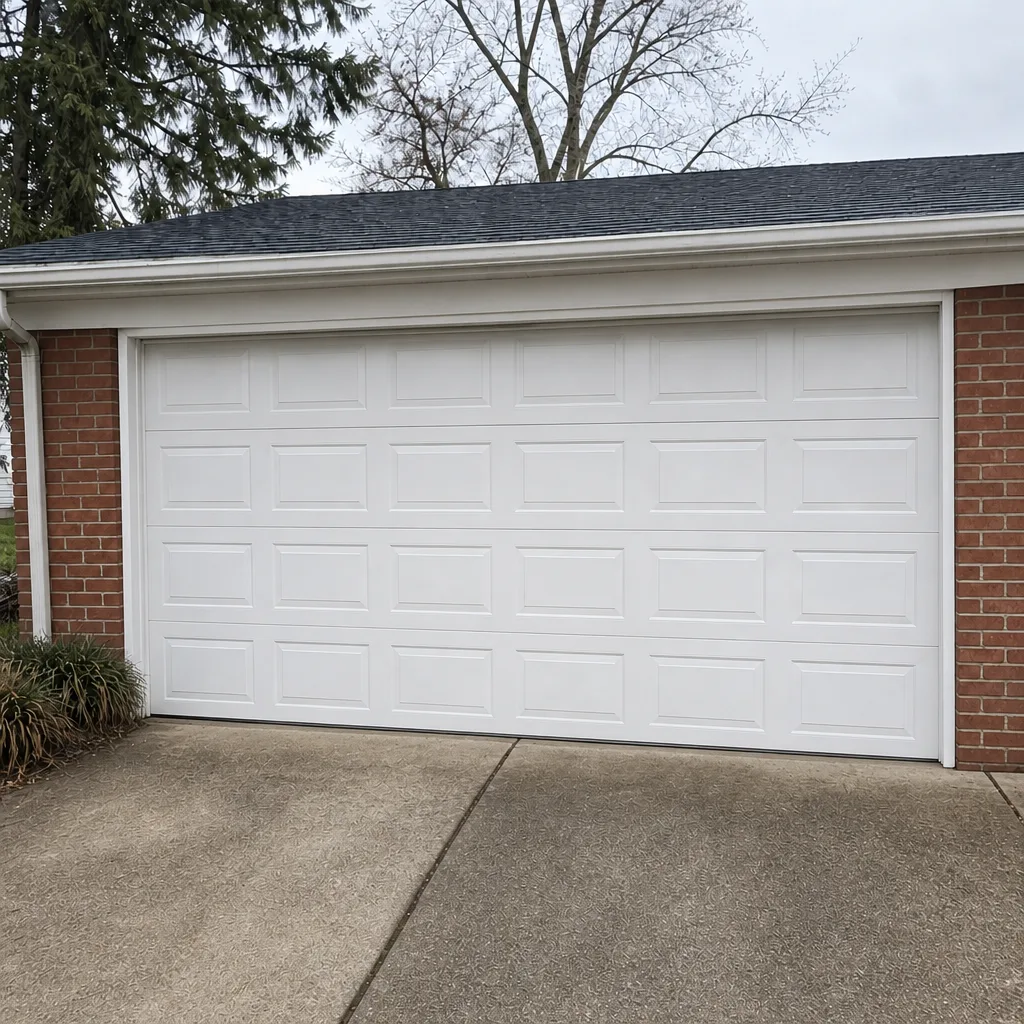 After
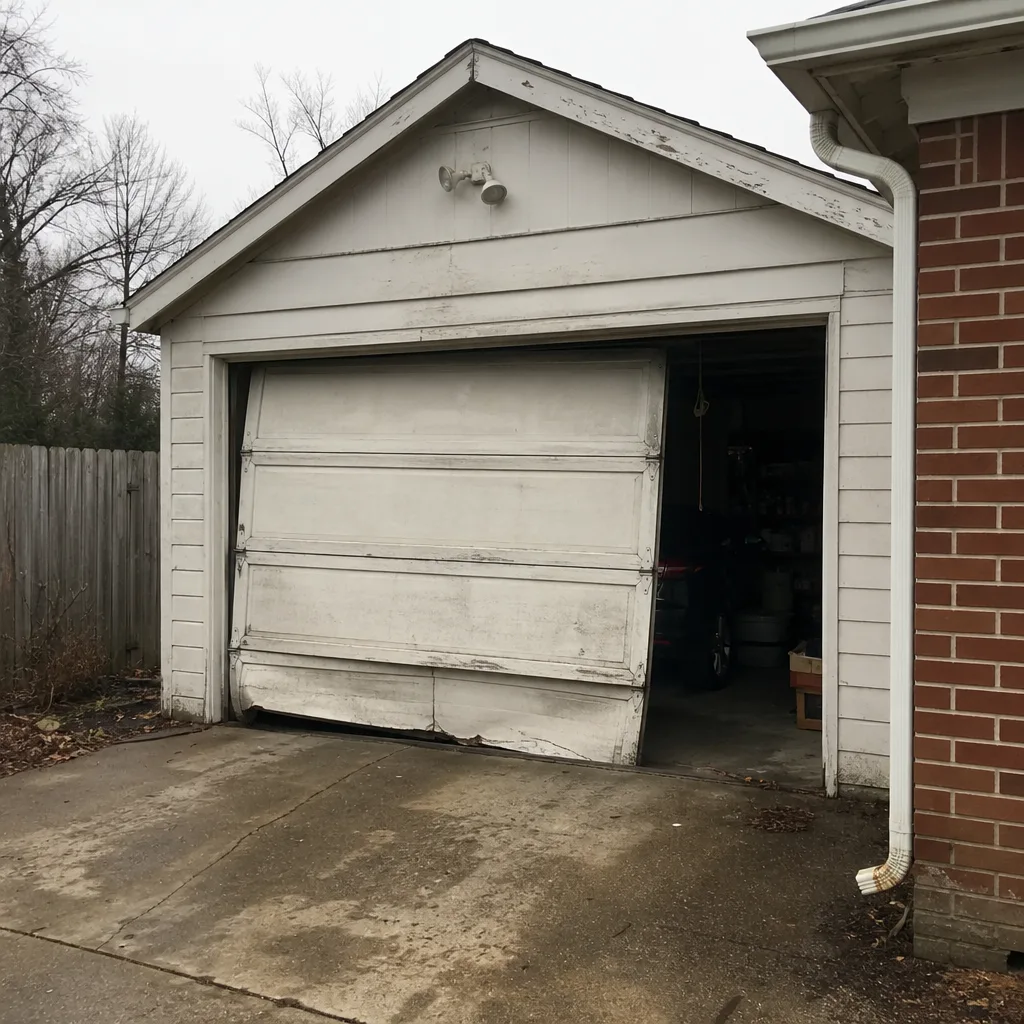 Before
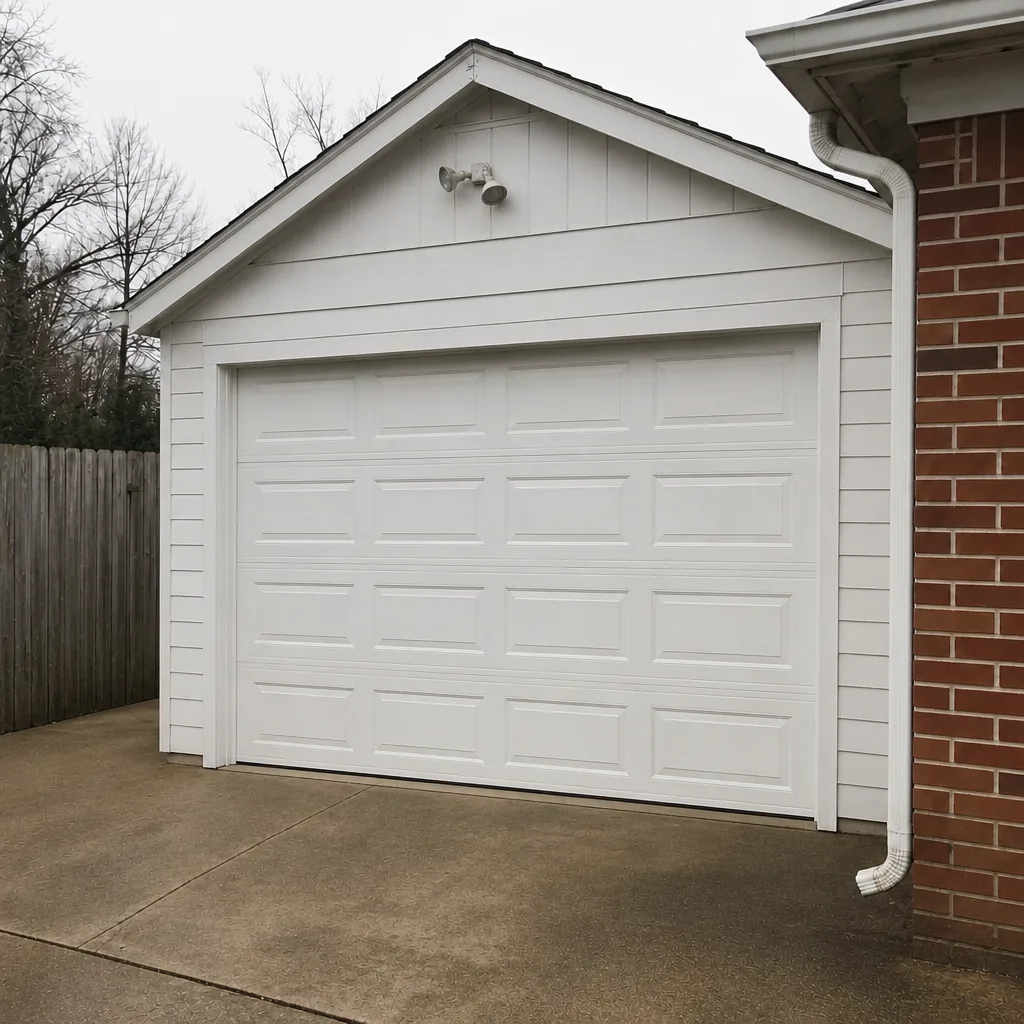 After
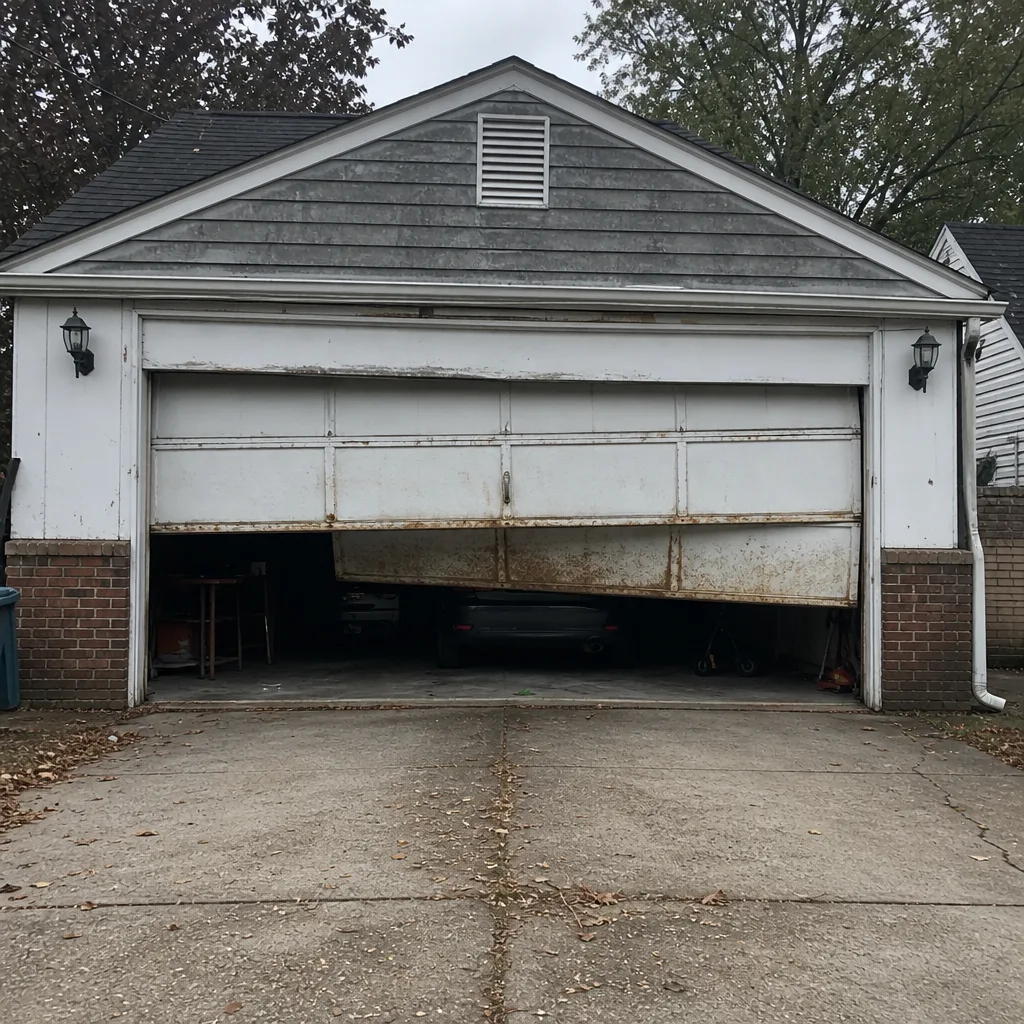 Before
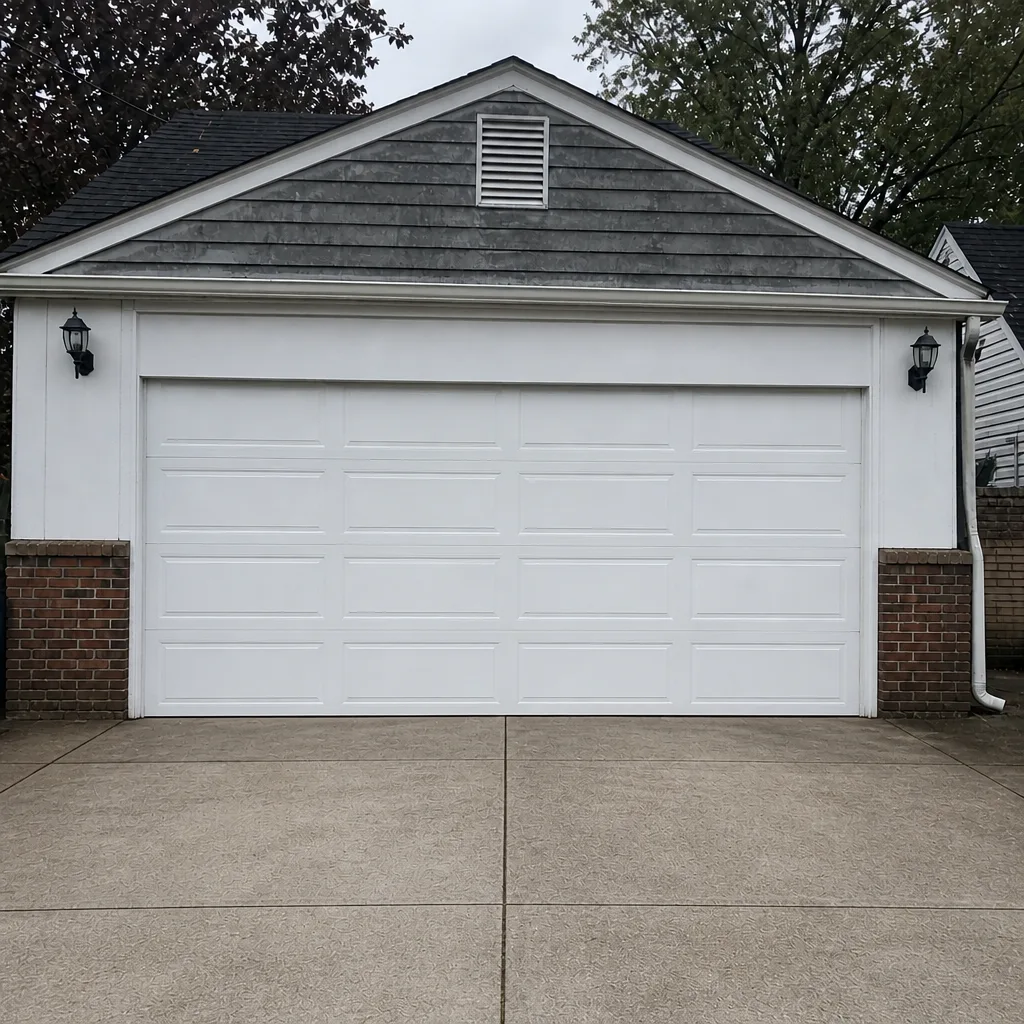 After
When to Call a Professional
Some garage door issues need a phone call rather than a research project. If your door won’t open, won’t close, or won’t stay in place, that’s a spring or balance problem and it’s the most dangerous part of the system to touch. If the opener runs but the door doesn’t move, that’s a diagnosis problem that usually takes ten minutes with the right tools on the same visit. If the door is visibly bent, off-track, or the framing around the opening is pulling away, get it looked at before anyone uses it again. And if a Portsmouth install is partway done and the previous installer has stopped responding, we can pick up where it left off, get the door working, and help you sort out the permit documentation.
Portsmouth Garage Door Repair Co offers free estimates in Portsmouth – call (888) 839-5070. We answer 24/7. Fast dispatch from 7am to 7pm, Sunday through Friday.
Frequently Asked Questions
It depends on the scope. A true like-for-like replacement (same size, weight class, material, and opening structure) is generally treated as maintenance and doesn’t require a permit, while a change in any of those usually does. If the property is in a Coastal A or V flood zone, the wind-resistance requirements push most replacements into the permit process. Call PCED before you order the door to confirm the answer for your address. For an exact quote on the work itself, call (888) 839-5070 – estimates are free.
Permit fees are set by the city and scale with the declared value of the work, so the only number that matters is the one PCED gives you at the counter for your specific door. Fees change, so we don’t quote them. Budget for the permit as a separate line from the door and installation cost, and ask PCED for the fee before you commit to a model. Call (888) 839-5070 for a free estimate on the installation side.
Yes, in most cases. The permit is issued for the specific assembly, so a substitution needs the permit updated before inspection. If a different-door scenario comes up mid-project, ask your installer to update the permit documentation with PCED before the final inspection is scheduled. Call (888) 839-5070 for a free estimate if you’re sorting out a stalled installation.
No. Replacing torsion or extension springs, repairing hardware, or swapping an opener is maintenance on an existing legal assembly and doesn’t involve the permit process. Springs are a safety-critical repair, though, and we recommend leaving the work to a trained technician every time. Call (888) 839-5070 for a free estimate – we handle spring work on Raynor, Clopay, Amarr, and most other brands.
Usually not, if the insulated door is heavier than the door it’s replacing. That common upgrade is often the exact case that requires a permit in Portsmouth. The assembly has changed weight, the springs and hinges are under different loads, and the original approval doesn’t cover the new door. Call PCED with the door’s weight and model number before you commit. Call (888) 839-5070 if you want a free estimate on the installation.
It varies block by block, but both neighborhoods commonly control door color, panel style, and window configuration, and Prentis Park may require architectural review approval before the work starts. Get the answer in writing from your HOA board before you order. HOA approval and the city permit are separate processes, and you need both when both apply. For the installation side, call (888) 839-5070 for a free estimate.
The Bottom Line
The garage door permit question in Portsmouth comes down to scope, flood zone, and HOA overlay, in that order. A true like-for-like replacement is usually maintenance and needs no permit. A change in door weight, material, or the opening structure usually does, and anything in a Coastal A or V zone comes with wind-resistance requirements that add weight to the permit question even when nothing else does. Unpermitted installs surface during a title search and complicate a sale, so the safest move is to confirm with PCED before ordering. Our technicians have up to 12 years of experience across the major door and opener brands, and we’re happy to talk through the scope before you commit to a model.
Portsmouth Garage Door Repair Co is a garage door specialty company, not a general contractor. Emergency response, spring repair, opener work, and full installation are what we do. Call (888) 839-5070. We answer 24/7. Fast dispatch from 7am to 7pm, Sunday through Friday. Closed Saturday.
Written by the team at Portsmouth Garage Door Repair Co.