
Last updated November 22, 2026
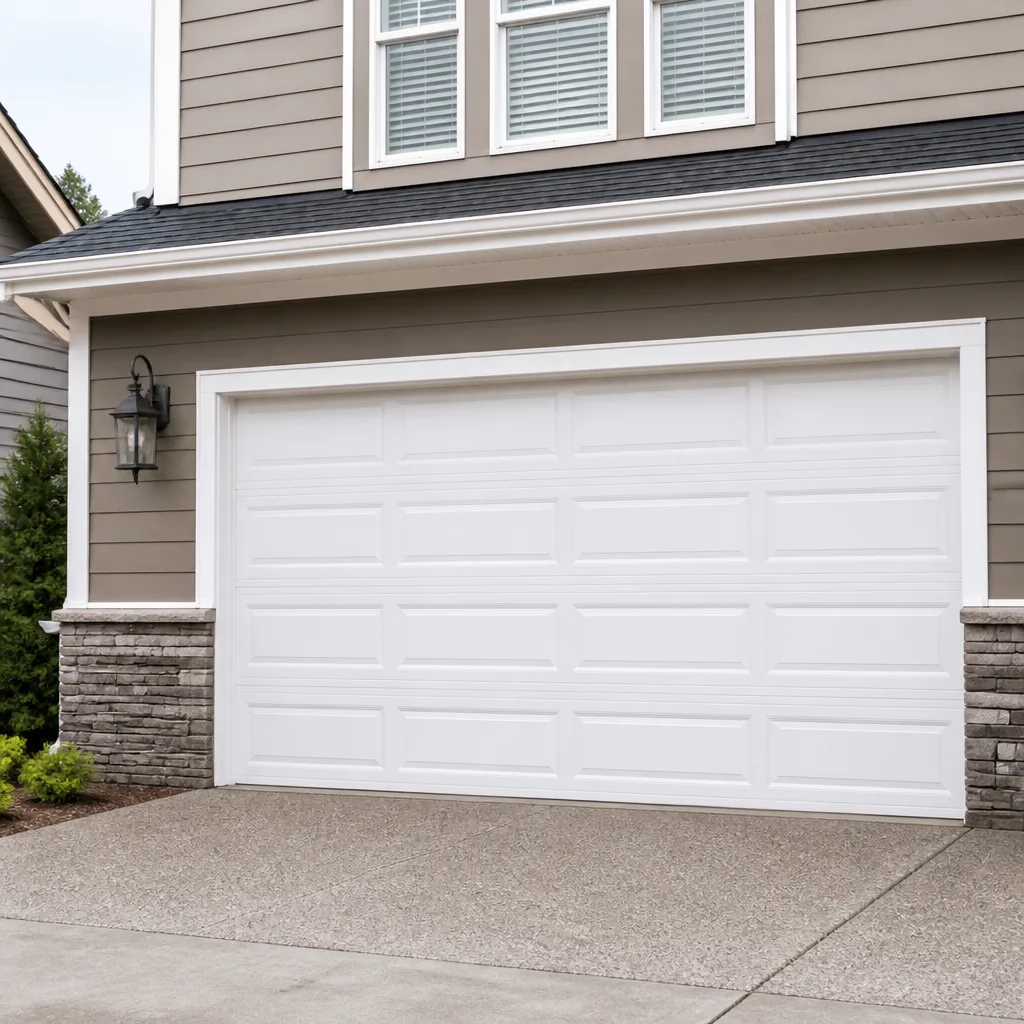 Raised-panel steel
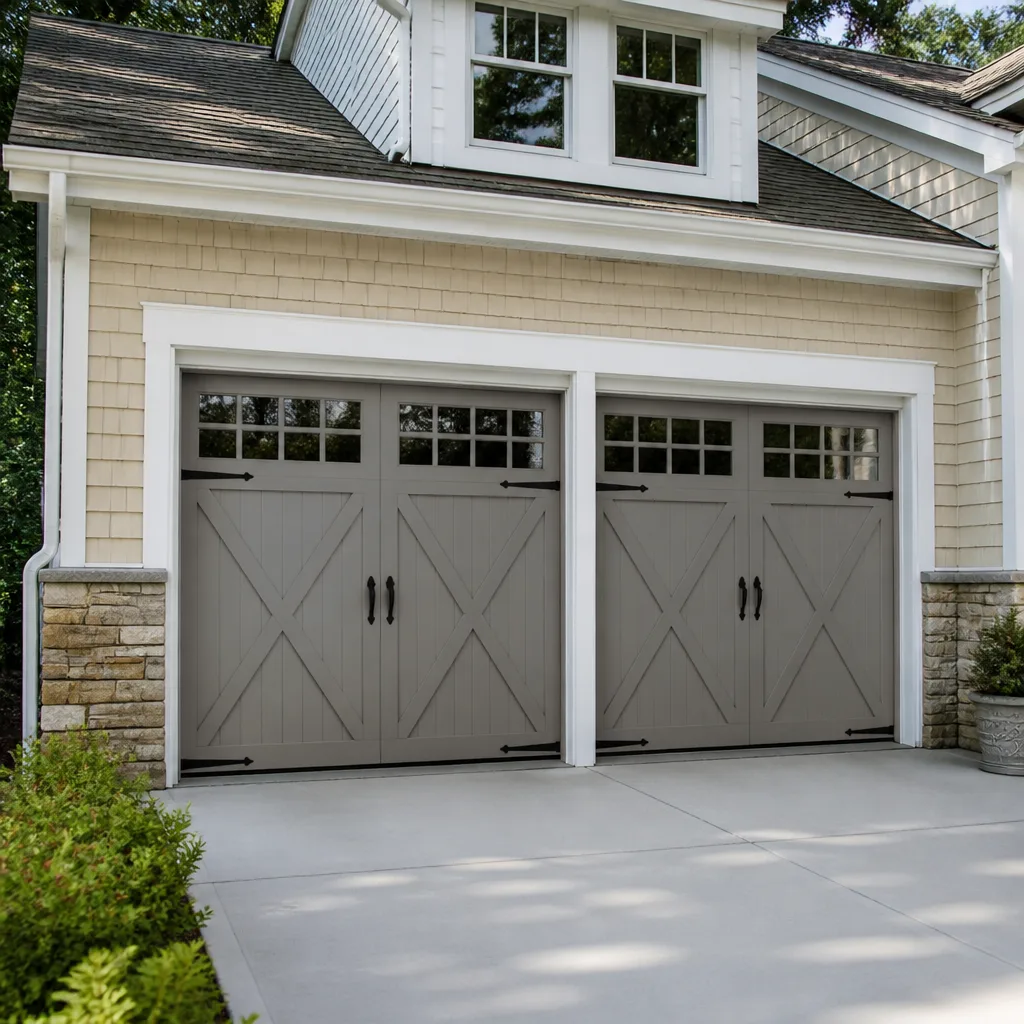 Carriage house
 Modern flush
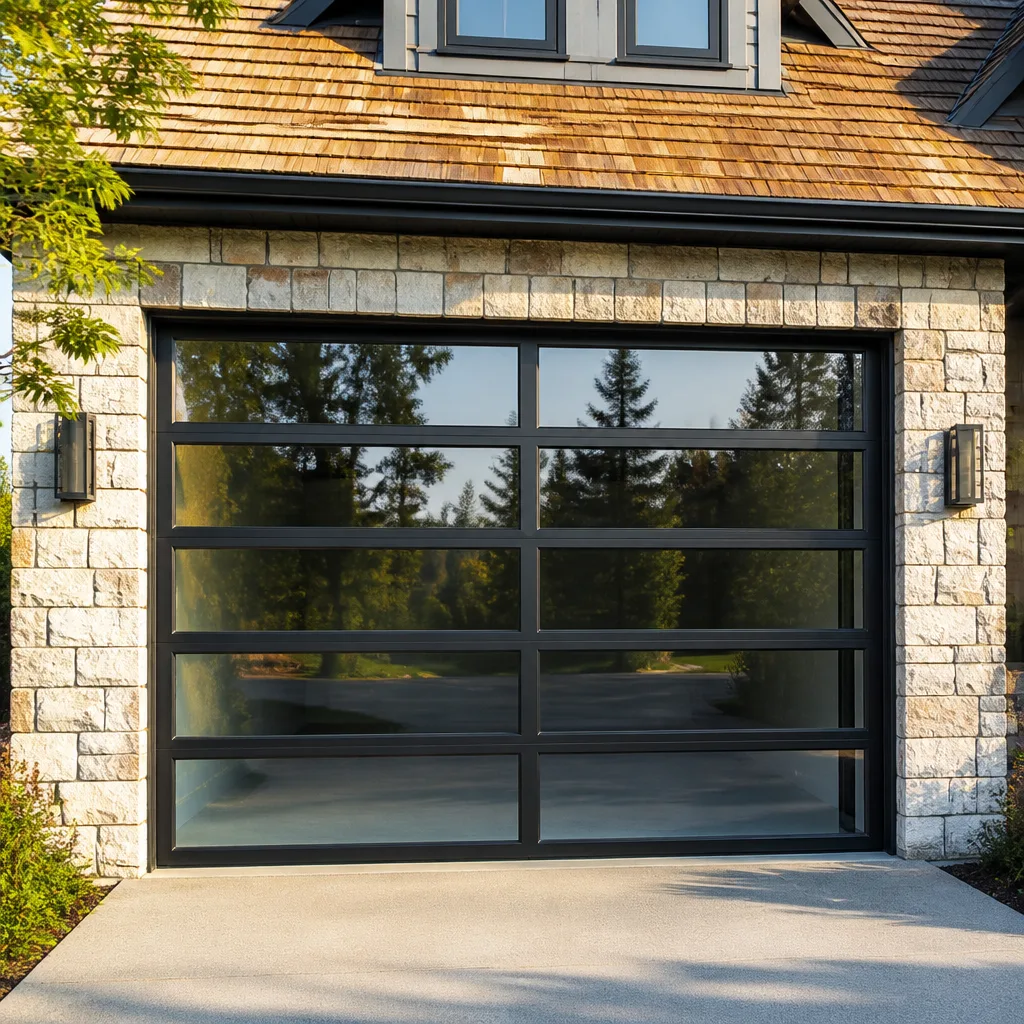 Full-view glass
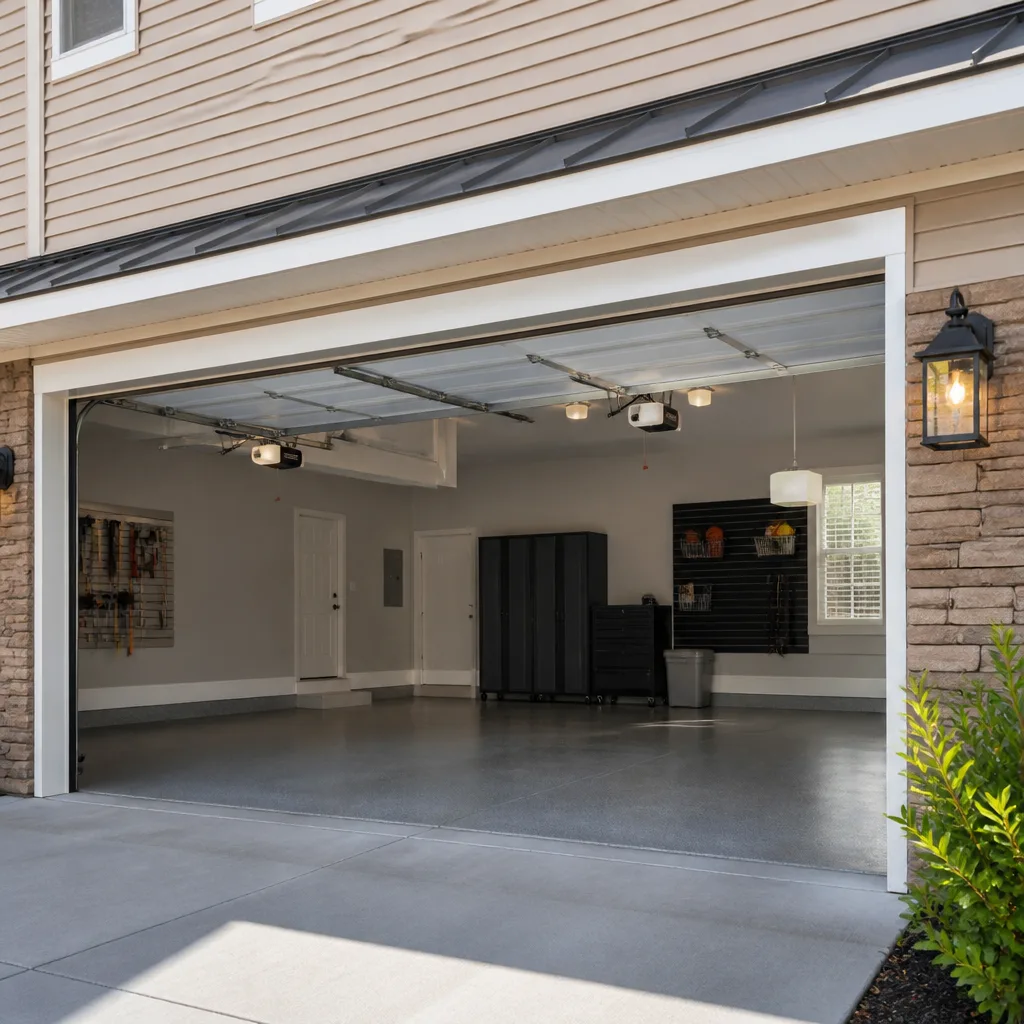 LiftMaster openers
 Chamberlain openers
Full 25-point door and opener safety check with every visit - springs, cables, rollers, tracks, and your LiftMaster or Chamberlain opener included
You get a price before we start. It does not change when the pro arrives.
Get your free estimateDIY vs Professional Garage Door: The Portsmouth Homeowner’s Decision Guide
Most homeowners assume the garage door is one of those things a handy person can just take care of. That assumption holds right up until the moment someone tries to loosen a torsion spring with a pair of locking pliers. Torsion springs store enough mechanical energy that an improper release can cause fatal injuries, and that’s not a liability disclaimer tacked onto the bottom of a brochure. It’s the reason professional spring work carries a different insurance classification than any other garage door task. This guide draws the line precisely: what you can safely handle in Portsmouth, what you shouldn’t touch, and how to know which side of that line a given repair falls on.
Quick Answer
Homeowners can safely handle weather seal replacement, safety sensor alignment, track cleaning, lubrication, and visual inspections. Torsion springs, cable drums, bottom brackets, and structural panel replacement require a trained technician because those components can release stored force suddenly and cause serious injury. Between those two extremes are tasks that fall into a gray area based on your comfort level with the door’s mechanics, and installation is its own category because Portsmouth’s permit process for new doors makes self-installation a compliance and resale issue, not just a skill question.
Styles & brands we work with
- Raised-panel steel
- Carriage house
- Modern flush
- Full-view glass
- LiftMaster openers
- Chamberlain openers
Table of Contents
- Where the DIY Line Actually Falls
- A Task-by-Task Breakdown
- The Maintenance Tasks You Can Do Yourselves
- Why Springs and Cables Are Different
- Permits, Code, and Resale in Portsmouth
- The Real Cost of a DIY Mistake
- When DIY Is Right: The Emergency Release
- Portsmouth Weather and Your Garage Door
Where the DIY Line Actually Falls
The useful way to think about garage door repair isn’t “easy vs. hard.” It’s “recoverable vs. unrecoverable.” A lubricated roller that gets quiet is a recoverable repair. A torsion spring that gets released under tension is not, because the failure mode is violent and immediate. That distinction is what separates a Saturday morning project from a task you should hand off.
We’ve seen homeowners successfully replace a bottom weather seal, realign a bent track with a rubber mallet, and reset a safety sensor in under an hour. Those are the kinds of tasks that reward patience. Where we’ve seen problems is when a homeowner with modest mechanical confidence decides to “just take a look” at the springs after watching a short video. The energy stored in a wound torsion spring is enough to move a door weighing well over a hundred pounds, and the same spring under the same tension will do significant harm to a hand or a face if it lets go unexpectedly.
Then there’s a middle category: opener programming, remote pairing, force adjustment, and belt or chain tension. These don’t carry injury risk, but they do require knowing the specific quirks of your operator. LiftMaster, Chamberlain, Genie, and Craftsman operators each use their own programming sequence, and a force setting adjusted incorrectly on a door with a worn spring will cause premature opener failure. Many homeowners in Portsmouth find it faster and cheaper to have garage door opener repair performed properly the first time rather than guessing at settings across a two-week trial-and-error cycle.
The key principle: if the task requires you to release or re-tension any component that holds the door’s weight, it isn’t a DIY task. That includes springs, cables, cable drums, and the bottom bracket assembly.
A Task-by-Task Breakdown
Here’s the definitive breakdown of what falls on each side of the line. This table is built for the question homeowners actually ask: “Can I do this myself, or do I need a technician?”
Safe for homeowners
- Bottom weather seal replacement – slides into a channel, no tension involved
- Safety sensor alignment – the photo-eye sensors at the bottom of each track; a flashlight beam check tells you quickly if they’re aligned
- Lubrication – hinges, rollers, and tracks with a proper garage door lubricant
- Track cleaning and minor straightening – removing debris and gently tapping a slightly bent track back into shape
- Remote programming and re-pairing – following the operator’s own programming sequence
- Visual inspection – checking for frayed cables, worn rollers, and loose hinges
- Manual release during a power outage – the red pull cord, when done correctly (see the emergency section below)
- Panel cleaning and light painting – cosmetic work with no mechanical component
Requires a technician
- Torsion spring replacement – the single most dangerous task on a garage door
- Extension spring replacement – also under heavy tension despite the different configuration
- Cable replacement – cables hold the door’s full weight and can whip when released
- Cable drum repair – the winding drums at the top of the shaft
- Bottom bracket repair – the bracket at the base of the cable
- Structural panel replacement – replacing a dented or bent panel affects the door’s balance and the tension on the springs
- Opener motor or gear replacement – electrical and mechanical simultaneously
- New door installation – permits, measurements, and the spring tensioning that follows
- Track replacement – refitting a track changes the geometry of the whole door
If a repair isn’t on the first list, it’s on the second for a reason. Not every item on the second list is catastrophic to get wrong, but each one has a failure mode where the homeowner loses control of stored force or the door’s weight. Dedicated garage door spring repair exists as a specialized service for exactly this reason – it’s not a generalist job.
The Maintenance Tasks You Can Do Yourselves
The good news is that a healthy garage door doesn’t need much. The maintenance that matters most is simple, cheap, and takes under an hour to complete. Here is the sequence that keeps a door operating correctly, followed in this order.
- Inspect the springs visually. You’re looking for a visible gap in a torsion spring or stretched-out coils on an extension spring. Don’t touch them. If you see either, stop and call.
- Check the cables. Look for fraying, kinks, or slack on either side. A slack cable is a sign the door is out of balance and needs a technician.
- Test the balance by hand. Disconnect the opener with the release cord, then lift the door to about waist height and let go. A balanced door stays roughly where you left it. A door that drifts down is under-tensioned; one that rises is over-tensioned. Either way, that’s a spring adjustment job for a technician.
- Lubricate the moving parts. Use a garage door lubricant (not WD-40) on the hinges, rollers, and the torsion bar bearings. Skip the tracks themselves – the track is meant to be dry so the rollers can roll rather than slide.
- Test the safety sensors. Wave a hand in front of each photo-eye. If the door doesn’t reverse, check for an obstruction or a misalignment before assuming the sensor has failed.
- Check the weather seal. With the door closed, look for daylight at the bottom edge. A split or compressed seal is a straightforward replacement. This matters more in Portsmouth than in most cities – a door with a poor bottom seal lets in both cold air in winter and humid air all summer, which feeds mold growth in an attached garage.
- Listen to the door. A door that has started to squeal, groan, or rattle is telling you something is wearing. The noise usually comes from a roller, hinge, or bearing, not the door itself.
That’s the entire homeowner maintenance list. Everything on it is safe with a flashlight and a grease gun. Nothing on it requires disconnecting or loosening a load-bearing part.
You’ll need a couple of tools: a flathead screwdriver, an adjustable wrench, a rubber mallet, a garage door lubricant, and a stepladder tall enough to reach the torsion bar for inspection without standing on the top rung. Wear safety glasses. Don’t stand directly underneath a spring or cable while inspecting them – stand to the side.
Why Springs and Cables Are Different
Torsion springs and cables are the only components on a garage door that store enough energy to cause fatal injuries if released improperly. That’s the difference between “hard to fix” and “dangerous to try.” A homeowner can spend an afternoon on a stubborn opener and walk away with nothing worse than frustration. A homeowner who makes a mistake on a torsion spring can lose a finger or worse, because the release is instant and there’s no second chance to correct the position.
Extension springs on older doors, particularly some Wayne Dalton and Craftsman configurations, are equally dangerous in a different way. Older installations may not have safety cables threaded through the springs, which means a spring that fails can travel several feet through the garage. A technician replacing an extension spring will add a safety cable if one is missing. That’s a small, quiet upgrade with real safety value, and it’s the sort of thing a DIY homeowner simply won’t think to check.
Cables hold the weight of the door and run under tension on the cable drums. When a cable lets go, it whips. We’ve handled garage door repair calls where a homeowner was trying to reduce slack on a cable and ended up with a door that dropped unevenly and bent a track. That’s the good outcome. The bad outcome is a trip to the emergency room.
This is where the professional’s role actually matters. Our technicians have up to 12 years of experience handling springs and cables with the proper winding bars and the right safety protocol. That expertise isn’t about doing something a homeowner couldn’t learn. It’s about doing it once, correctly, without a failed first attempt that leaves the door worse off than it was.
Permits, Code, and Resale in Portsmouth
Installing a new garage door in Portsmouth is a permit matter handled through the city’s Department of Planning and Community Development. If you’re replacing a door with an identical unit in the same opening, most routine replacements don’t trigger a full structural review, but any change to the opening size, the header, or the door’s structural attachment typically does. That’s not a technicality. A door installed without the required permit can surface during a home sale or an insurance adjustment, and the correction usually costs more than the permit would have.
Here’s what that means in practical terms:
- If you’re installing a new door, call the Portsmouth Department of Planning and Community Development first and ask what your specific replacement requires. The answer depends on whether you’re changing the opening or the door’s weight class.
- Most standard replacements in established neighborhoods like Cradock, Shea Terrace, and Port Norfolk can be handled under a simple permit, but the requirements vary by address and door type.
- Any door that changes the opening’s structural attachment should be evaluated by someone who understands the load the springs carry.
- A permit inspection is a useful document to keep with your home records. It’s the kind of thing that closes quickly during a resale when it exists and delays the closing when it doesn’t.
For repairs, no permit is generally required. Replacing a spring, a panel, or an opener is maintenance, not construction. The permit issue applies specifically to installation and structural changes to the opening.
For homeowners weighing whether a new door is worthwhile, we can walk through the options and the permit path as part of the estimate. Portsmouth Garage Door Repair Co handles installation as a full job, from measuring to the final tension adjustment.
The Real Cost of a DIY Mistake
The most expensive phrase in garage door repair is “I tried to do it myself, and now…” That usually means a door that’s hanging unevenly, a spring that released and bent a track, or an opener whose force settings were adjusted to compensate for a problem that didn’t get fixed. The follow-up call is longer and more involved than the original repair would have been, because now there’s reverse work to be done.
Here’s what those situations typically look like on a written estimate:
- Diagnostic and assessment – A technician needs to determine what the DIY attempt changed before any repair starts. This is labor, not a free walkthrough.
- Track straightening or replacement – When a door drops unevenly, the tracks usually take the hit. Straightening works if the deformation is small; replacement if it isn’t.
- Opener correction – Force settings that were adjusted to mask a failing spring can torch the opener’s gear assembly. A motor replacement is more than the original repair would have cost.
- Spring replacement with a possible double charge – If you replaced one spring and got it wrong, the technician is often replacing both springs to bring the door back to balanced tension. That’s the pair price, not the single spring price.
- Panel replacement – A structural panel that bent under an uneven door load rarely straightens cleanly. Replacement is the usual answer.
None of this is meant as scare tactics. It’s simply how the math works out. A repair that a technician handles correctly the first time is a single line item. A repair that a homeowner has already attempted and gotten halfway through is more work.
We quote every job in writing before we start. If a homeowner calls with a partially disassembled door, we’ll tell them plainly what it will take to finish the job and what it would have cost to start with us in the first place. The estimate is free, and the written price is what you pay – no surprise invoice at the end.
When DIY Is Right: The Emergency Release
There’s one situation where a homeowner intervention is not just appropriate but necessary: a power outage or dead opener with the car trapped inside. The manual release cord exists for exactly this, and pulling it correctly doesn’t damage anything. Pulling it incorrectly can.
Here’s the procedure that keeps the release hardware intact:
- Make sure the door is fully closed first. If the door is open and you release the carriage, the door can drop. If you need to pull the cord while the door is partially open, have a second person hold the door.
- Locate the red release cord hanging from the opener’s trolley carriage.
- Pull firmly straight down, not at an angle. The carriage disengages the door from the opener rail.
- Lift the door manually by the bottom rail – the wide bar at the bottom – keeping both hands centered. Don’t lift by a panel or a handle if the handle is decorative.
- Lift slowly. A balanced door should move easily. A door that fights you or feels heavier than expected has a bad spring. Don’t force it. Stop and let the door back down.
- Once the door is up, prop or hold it while you move the vehicle.
- Re-engage the carriage by pulling the release cord again or by reconnecting the carriage to the chain and running the opener briefly. Most modern LiftMaster and Chamberlain operators re-engage automatically when the door is closed and the opener is cycled.
The one thing to never do during a manual release: walk under a partially open door to retrieve an item. If the door is unbalanced (which is exactly the scenario that usually leads to a dead opener), it can come down on its own.
If the release cord won’t pull or the carriage won’t re-engage afterward, that’s a service call. Don’t force it – the release linkage can be bent. Opener repair after a botched release is a common call.
Portsmouth Weather and Your Garage Door
Portsmouth’s climate puts specific stress on a garage door that other cities don’t. The combination of hot, humid summers and the occasional nor’easter means the door is cycling through temperature swings that work on the springs, the panel joints, and the weather seal year-round. A door that lives in a dry climate may go longer between spring replacements than a door in Hampton Roads. That’s not a claim about your specific door, just a general pattern.
What that means for the DIY question:
- Weather seals fail faster here. The heat and humidity accelerate the breakdown of the flexible seal at the bottom and sides. Replacing it is genuinely a homeowner task and worth doing every couple of years.
- Panel joints collect moisture. Check the bottom panel for rust at the seams after heavy rain. This is inspection, not repair – if you see rust, it’s a technician conversation, not a sanding project.
- Storm damage is more common than people expect in Portsmouth. A door that was struck by debris or took on water needs a structural check. That’s not a task to try at home.
- Extreme temperature swings affect spring tension. A door that worked fine in spring may feel heavy in January. That’s not usually a DIY fix – it’s a sign the spring has lost tension or the door is out of balance. A technician should test it.
For homeowners in neighborhoods near the water – Shea Terrace, Port Norfolk, and areas along the Elizabeth River – the humidity load on a garage door is higher than in the inland parts of the city. The seals, the hinges, and the moving parts all wear faster. The good news is that maintenance is cheap. The bad news is that a door left to deteriorate without even the basic maintenance will eventually need a repair that a homeowner can’t safely do.
The seasonal rhythm that works best for a Portsmouth garage door: a proper inspection and lubrication in the spring, a bottom-seal check before the summer humidity arrives, and a visual once-over in the fall before the cold. That’s about an hour of work a year.
Common Mistakes to Avoid
- Using WD-40 on garage door hinges and rollers. It’s a solvent, not a lubricant. It thins the existing grease and attracts dust, which makes wear worse over time. Use a proper garage door lubricant designed for the job.
- Lubricating the tracks. This is one of the most common garage door mistakes we see in Portsmouth. The track is supposed to stay dry so the rollers roll rather than slide. Greasing it makes the door sluggish and eventually damages the rollers.
- Adjusting the opener’s force setting to compensate for a bad spring. The force setting is a safety feature, not a power knob. Cranking it up to mask a failing spring burns out the opener’s gear assembly and defeats the door’s safety reverse, which is a genuine hazard for children and pets.
- Replacing one spring instead of the matched pair. Torsion springs are installed as a matched pair with the same cycle rating. When one fails, the other is at the end of its life too. A single-spring replacement leaves a door that will fail again within months.
- Attempting to re-tension a torsion spring without winding bars. A screwdriver or locking pliers in a torsion system is a recipe for a serious injury. There’s no safe shortcut on this one.
- Ignoring a safety sensor that’s been intermittently tripping. A door that closes on its own after a few tries isn’t “being finicky.” It’s telling you the photo-eye alignment is off, and a misaligned sensor on a door with a worn spring can cause a real pinch hazard.
- Installing a new door without checking Portsmouth’s permit requirements. A door installed without the required permit can surface during a resale, and the correction costs more than the permit would have. Call the city’s planning department before ordering the door, not after.
See the difference
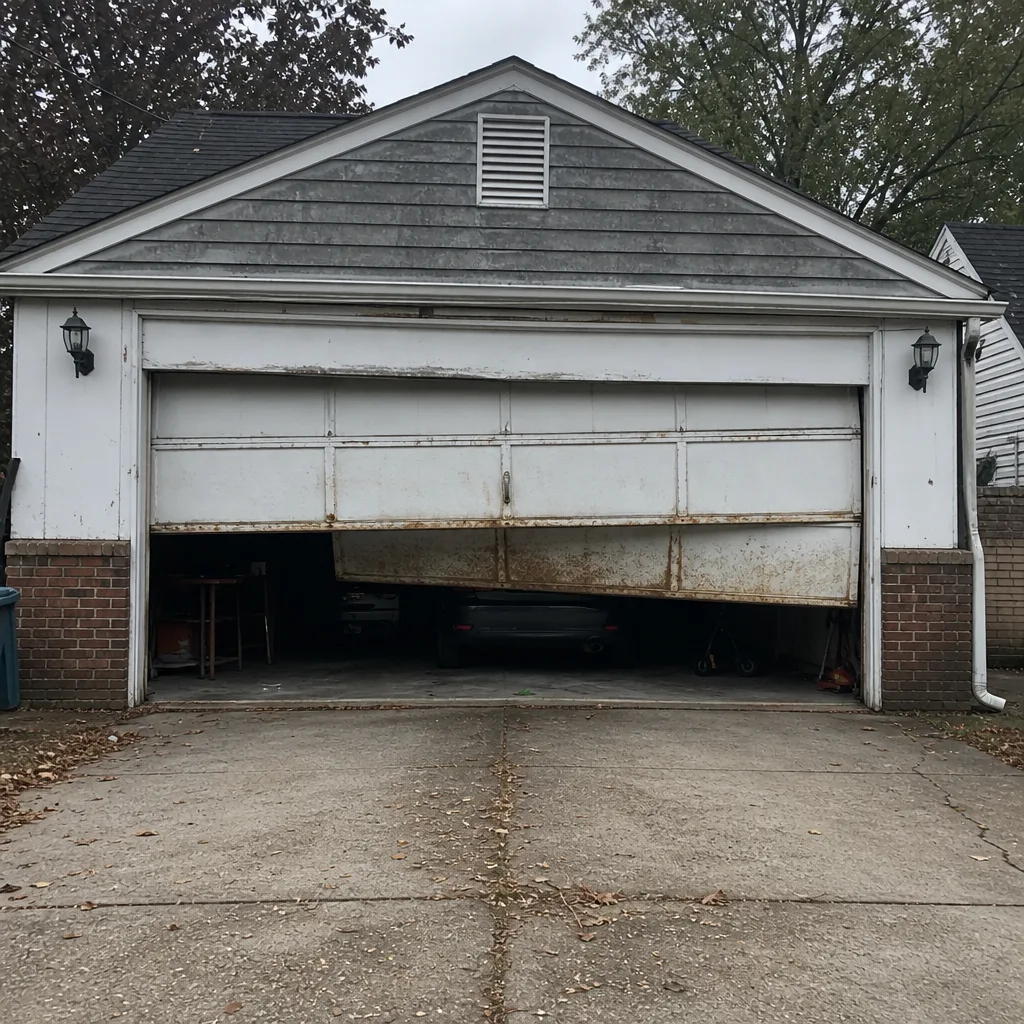
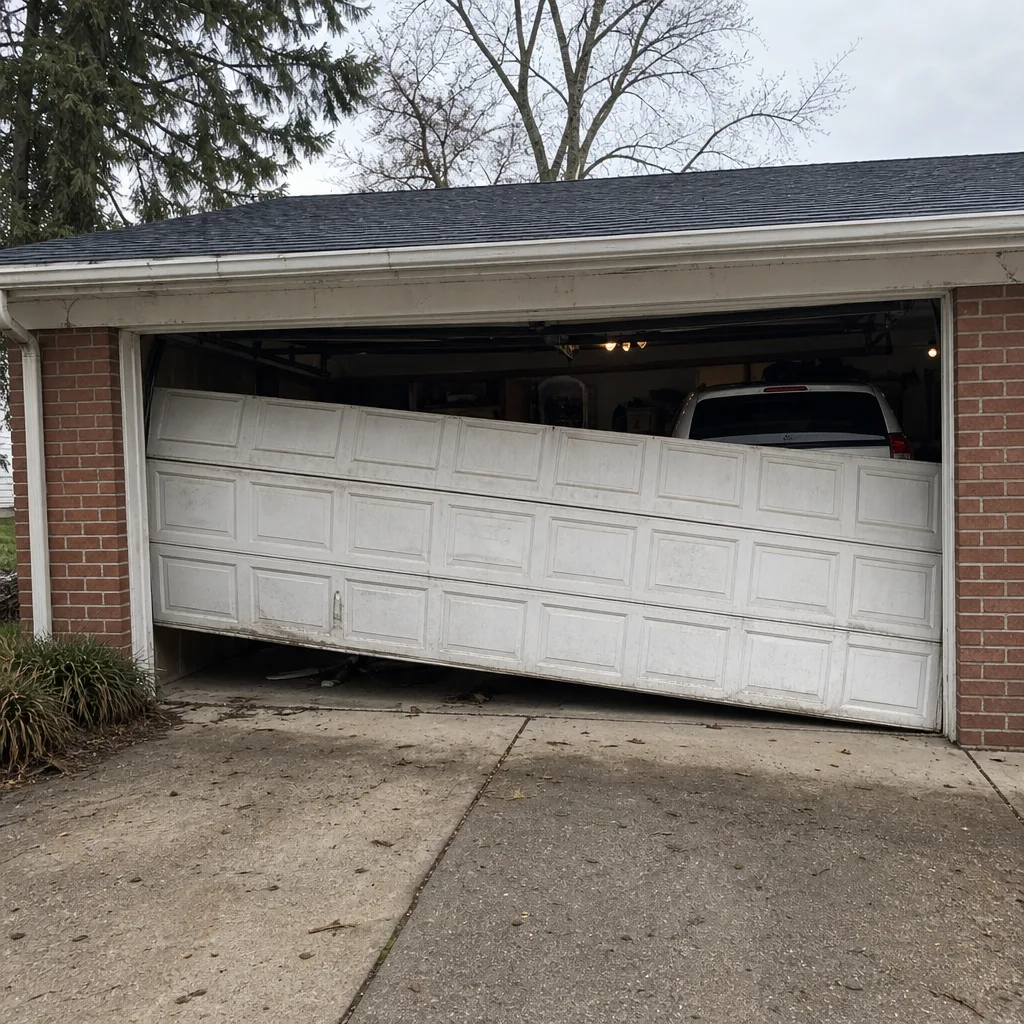 Before
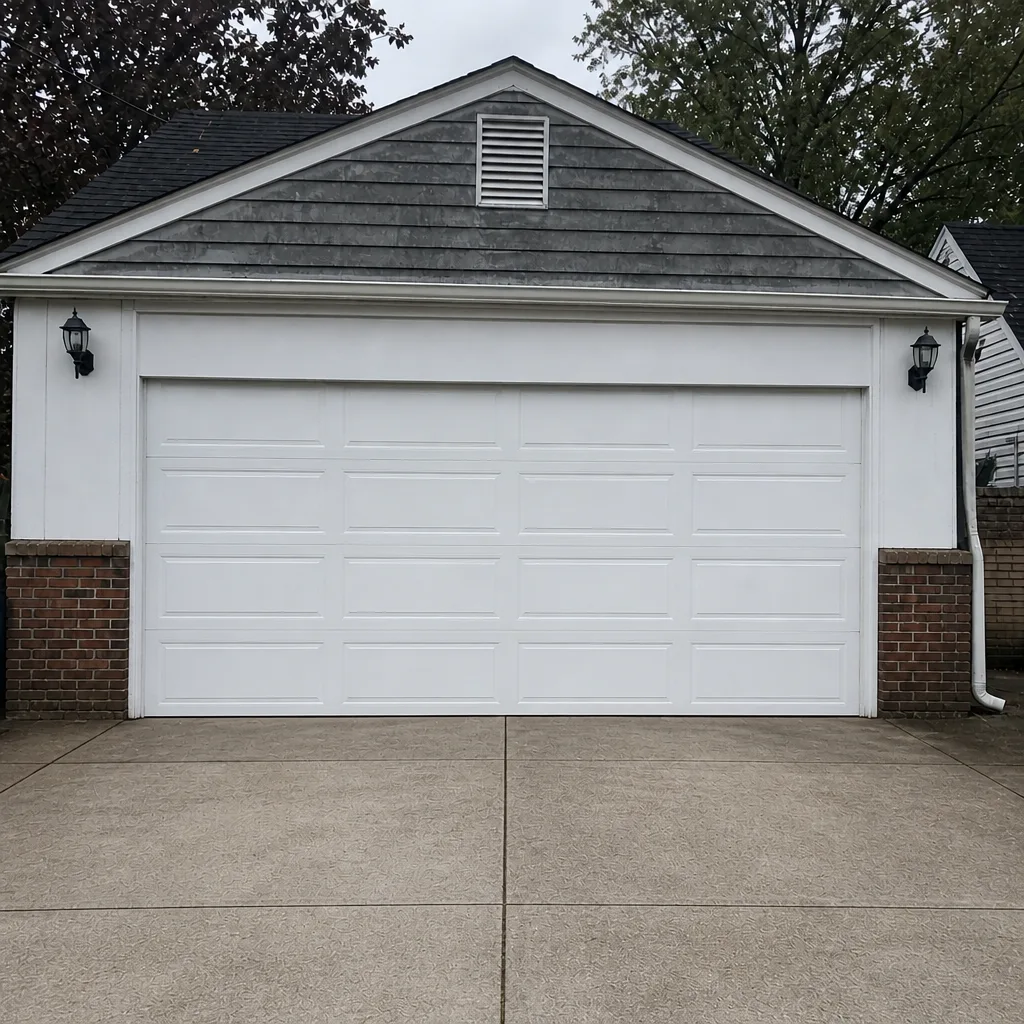
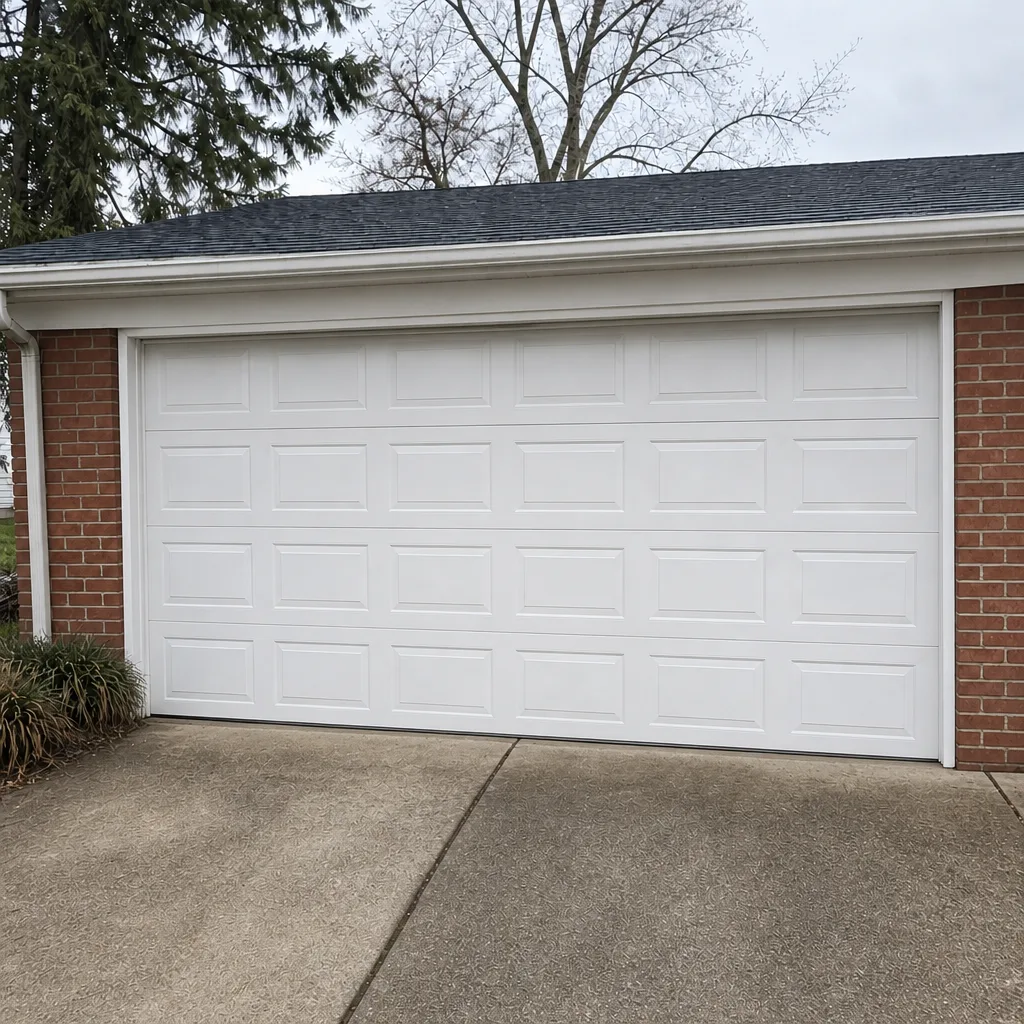 After
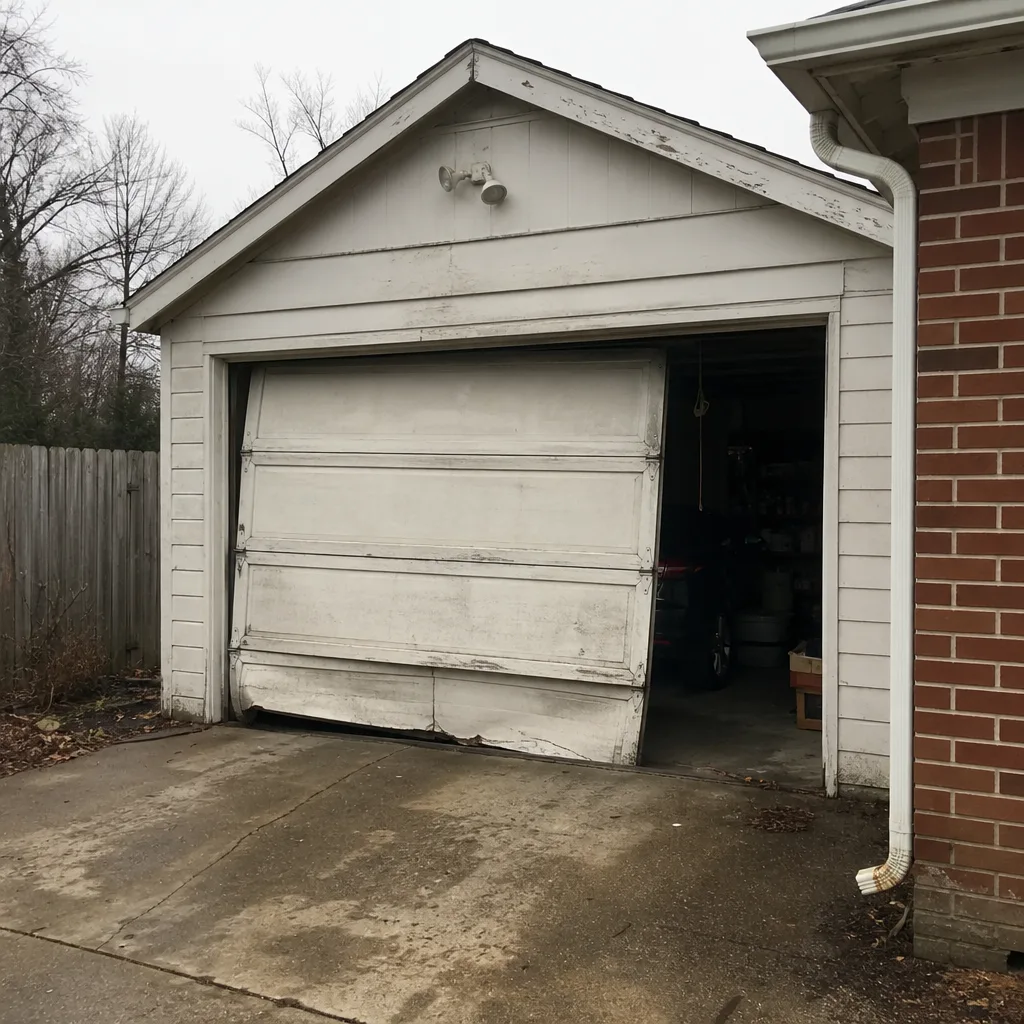 Before
 After
 Before
 After
When to Call a Professional
Call a professional if you have a broken spring, a door that has dropped on one side, a slack or frayed cable, an opener that runs without moving the door, a door that reverses randomly, or any repair where you’d need to release a component holding the door’s weight. Call if the door won’t open at all and there’s a car trapped inside the garage. And call if you’ve started a repair yourself and gotten halfway – the second half is usually more expensive to finish than it would have been to start. Portsmouth Garage Door Repair Co offers free estimates in Portsmouth – call (888) 839-5070. We answer 24/7. Fast dispatch from 7am to 7pm, Sunday through Friday.
Frequently Asked Questions
No. Torsion and extension springs store enough energy to cause fatal injuries if released improperly, and that risk applies regardless of how confident you are in your mechanical skills. Spring work requires specific tools (winding bars), a specific procedure, and training. This isn’t a job most homeowners should try. Call (888) 839-5070 for a free estimate on spring replacement – we quote the price in writing before any work starts.
It depends on the door. Replacing a door with an identical unit in the same opening is typically a simpler permit, but any change to the opening size or the structural attachment usually requires a permit through Portsmouth’s Department of Planning and Community Development. Call them directly to confirm your specific replacement before ordering a door. For the installation itself, we handle the measurement and can walk you through what the permit process will involve.
Pull the red manual release cord straight down to disengage the door from the opener, then lift the door by the bottom rail with both hands centered. Lift slowly. If the door feels heavy or fights you, let it back down and stop – that’s a sign of a spring problem, and the door may come down on its own. Afterward, re-engage the carriage by pulling the cord again or cycling the opener with the door closed.
Disconnect the opener using the release cord and lift the door by hand. A balanced door moves easily and stays where you leave it. If the door moves smoothly by hand but the opener struggles, the problem is the opener. If the door itself fights you, the door’s balance or springs are the issue. That test narrows down which repair is needed. Call (888) 839-5070 if you want an on-site assessment – the estimate is free.
The written quote is the price. We don’t quote one number and then surprise you with a different one after the door is disassembled. If the technician finds something during the repair that genuinely changes the scope (for example, a bent track found once the door is off the opener), we stop and quote the additional work before proceeding. The price is agreed before any work starts.
Yes. The local professionals we connect you with are licensed and insured as their state requires. We work on doors and openers from the major manufacturers – including LiftMaster, Chamberlain, Genie, Clopay, Amarr, Wayne Dalton, Craftsman, and Raynor – so no referral is needed regardless of what’s installed. Call (888) 839-5070 with your door’s make and model for the fastest quote.
The Bottom Line
The DIY question for a garage door isn’t about your skill level or your confidence. It’s about which specific tasks have a failure mode that’s dangerous, unrecoverable, or a compliance problem in Portsmouth. Weather seals, sensor alignment, lubrication, and visual inspections are genuinely within reach and worth doing yourselves. Springs, cables, cable drums, bottom brackets, structural panels, and full installations belong with a trained technician, both for safety and for the permit trail on resale. If you’ve started something and gotten halfway, that’s the point to call – it’s cheaper to finish from there with a professional than to keep going. When in doubt, get an estimate and a written price before doing anything at the door. The estimate is free, and the written quote is the price you pay.
Ready to hand it off? Call (888) 839-5070 for a free estimate. We answer 24/7. Fast dispatch from 7am to 7pm, Sunday through Friday.
Written by the team at Portsmouth Garage Door Repair Co.